Support independent arts journalism by joining our Patreon! Currently $5/month.

About Superconductor

Our motto: "Critical thinking in the cheap seats." Unbiased, honest classical music and opera opinions, occasional obituaries and classical news reporting, since 2007. All written content © 2019 by Paul J. Pelkonen. For more about Superconductor, visit this link. For advertising rates, click this link. Follow us on Facebook.
Showing posts with label Liszt. Show all posts

Thursday, May 23, 2019

Concert Review: Two Tickets, No Paradise

Gianandrea Noseda conducts at Carnegie Hall.
by Paul J. Pelkonen
Gianandrea Noseda. Photo © 2017 Fondazione Teatro Regio di Torino.
The Carnegie Hall calendar is released every year in the final week of January, but not everything on that august and immense document comes to fruition. The concert originally planned for this Sunday would have featured Gianandrea Noseda conducting Verdi’s grand opera  I Vespri Siciliani in its five-act entirety with the Teatro Regio di Torino. Its substitute: a two part choral concert with Mr. Noseda leading the National Symphony Orchestra, who are based in Washington D.C. at the Kennedy Center.

Friday, March 22, 2019

Concert Review: Wide Boys

Thomas Adès conducts the Boston Symphony Orchestra.
by Paul J. Pelkonen
Thomas Adès: Photo by Jesse Costa for the Boston Symphony Orchestra

Although the first conductors were themselves composers, the wearing of both hats at the helm of a symphony orchestra is always cause for comment. On Wednesday night, the British composer Thomas Adès, who is currently in the new role of "Artistic Partner" with the Boston Symphony Orchestra, led that band at Carnegie Hall in a program featuring the New York debut of his Piano Concerto.

Thursday, March 15, 2018

Concert Review: Dead Man's Party

Lara St. John and Matt Herskowitz rock The Crypt Sessions.
by Paul J. Pelkonen
Underground music: Matt Herskowitz and Lara St. John entombed.
Photo by Andrew Ousley for The Crypt Sessions.
At last night's installment of The Crypt Sessions, the esteemed series of chamber music and concert recitals that takes place in the sepulchre of the Church of the Intercession at W. 155th St. and Broadway, host (and curator) Andrew Ousley staked the claim that the Canadian violinist Lara St. John was a "force of nature." The violinist, in concert with her performing partner Matthew Herskowitz, was offering something special in the house of the dead. The program was Lavuta an hourlong mixtape of fiddle tunes and folk-inspired music from Eastern Europe, covering a vast triangle of land from Moscow to Jerusalem to Budapest. 

Friday, November 3, 2017

Concert Review: An Orchestra of Ten

Marc-André Hamelin returns to Carnegie Hall. 
by Paul J. Pelkonen
Marc-André Hamelin and his orchestra.
Photo by Canetty Clarke © 2017 Hyperion Records.
The Canadian-born Boston-based pianist Marc-André Hamelin is not the biggest star to play his instrument. He doesn’t gyrate on his bench, flail his arms or wear short skirts that scandalize traditionalists. No. On Wednesday night, he came to Carnegie Hall, programmed unbelievably difficult stuff, and then blew the audience through the back wall of Stern Auditorium.

The sad part is, this hallowed venue was only half full to hear a musician of this caliber.

Thursday, December 29, 2016

The Year in Reviews 2016: Recitals and Chamber Music

We look at the best intimate concerts of a troubled 2016.
by Paul J. Pelkonen
The Danish String Quartet played last works by Shostakovich and Schubert, a highlight
of 2016. Photo © 2016 The Danish String Quartet.
2016 may have been a difficult year, with a lot of musical high points. Here, Superconductor cherry-picks the ten best small scale vocal recitals, chamber concerts and piano recitals of the year that was, presented in chronological order. All hyperlinks connect to Superconductor reviews written by Paul J. Pelkonen.

Thursday, December 1, 2016

Concert Review: First Cake, Then Ice Cream

The pianist Boris Berezovsky returns to New York.
by Paul J. Pelkonen
The pianist Boris Berezovsky onstage at the Mariinsky Theater..
Photo copyright 1996 mariinsky.ru.
When the Russian virtuoso pianist Boris Berezovsky last gave a recital in New York City, Bill Clinton was president and Zankel Hall didn't evenexist. So Tuesday night marked the pianists debut at Carnegie’s modern subterranean venture, billed with a finger-busting program of piano études by Bartók, Ligeti and Liszt.

Sunday, November 20, 2016

Concert Review: And Then Things Got Difficult

Bezhod Abduraimov makes his main stage Carnegie Hall debut.
by Paul J. Pelkonen
The pianist Bezhod Abdumairov and friend.
Photo courtesy Harrison Parrott.
In February of 2015, the young Uzbek pianist Bezhod Abduraimov made his debut at Carnegie Halls Weill Recital Hall. On Thursday night, Mr. Abduraimov made his second visit o the Hall that Music  Built. This concert marked his debut on the big stage of Stern Auditorium, with a fierce and intense program of works by German, Austrian and Russian composers.

Monday, February 22, 2016

Concert Review: Village Raves and Watery Graves

Juraj Valčuha at the New York Philharmonic.
Conductor Juraj Valčuha led the New York Philharmonic this week.
Photo © 2015 Frankfurt Radio Symphony Orchestra.
Although the New York Philharmonic has finally and decisively appointed a new music director, there is still a spirit of healthy competition on its podium between young conductors deigning to be heard before one of the most loyal audiences in New York. This week it was the turn of Juraj Valčuha, a Slovakian firebrand who offered an interesting program of works from central Europe. 

Concert Review: Business As Unusual

The Budapest Festival Orchestra returns to Carnegie Hall.
by Paul J. Pelkonen
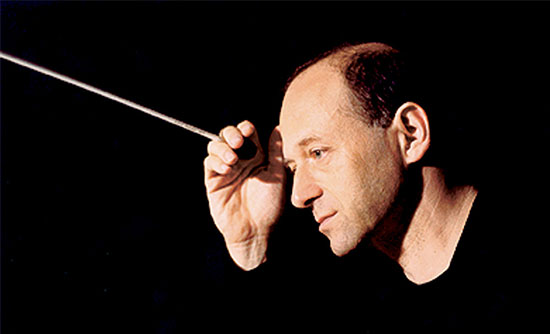
Man and baton: Budapest Festival Orchestra music director Iván Fischer
in a pensive moment. Photo © 2015 Budapest Festival Orchestra/Channel Classics.

Founded in 1983, the Budapest Festival Orchestra is a relatively recent addition to the ranks of central Europe's great ensembles. Under the direction of Iván Fischer, these Hungarian players always offer something fresh, from Lincoln Center stagings of the great Mozart operas to powerhouse readings of the great works of the 19th and 20th century. On Thursday night, the Hungarian band returned to Carnegie Hall for a conventional concert program (overture, concerto, symphony) that proved, in its execution to be anything but ordinary.

Friday, January 22, 2016

Concert Review: Taking Twin Peaks (by strategy)

Marc-André Hamelin returns to Carnegie Hall.
by Paul J. Pelkonen
Marc-André Hamelin grabs a slice of the piano.
Photo © Marc-André Hamelin courtesy Hemsing Associates.
When Canadian virtuoso Marc-André Hamelin visits Carnegie Hall, he usually plays downstairs in the sleek subterranean confines of Zankel Hall. However, Wednesday night's concert was on the big stage of Stern Auditorium. He offered a carefully curated program that explored many aspects of his art, including composition. Each half started simply and increased in difficulty, climaxing in works by Ravel and Liszt. 

Saturday, August 29, 2015

Film Review: Just Don't Lend Him Money

Sir Richard Burton as Richard Wagner.
by Paul J. Pelkonen
Obsessive genius: Sir Richard Burton as Richard Wagner in Wagner.
Image © 1983 Hungarofilm/Kultur.
The turbulent life of composer Richard Wagner (1813-1883) is a fascinating and at times repellent subject. Tony Palmer's film is now available on Amazon Prime, allowing the curious and the dedicated to take a leisurely tour through this  expansive retelling of the convoluted life of the German composer. Divided here into three manageable episodes of three hours each, it is an experience that all serious Wagner lovers should try at least once. Then again, the same may be said of a trip to Bayreuth.

Tuesday, July 21, 2015

Concert Review: The Double Black Diamond

Marc-André Hamelin at Hunter College.
by Paul J. Pelkonen
Marc-André Hamelin gets in touch with nature.
Photo from Wikimedia Commons.
Any recital by Marc-André Hamelin, the extraordinary Canadian pianist and composer is a cause for celebration for piano lovers, drawn to his combination of sober musicianship and always-impressive technical skil. This Sunday, Mr. Hamelin appeared at the International Keyboard Institute and Festival, playing a challenging program of Liszt and Chopin along with Toward the Center, a large-scale modern composition by Yehudi Wyner, a contemporary American composer who has taught at Harvard, Yale and Brandeis.

Tuesday, March 10, 2015

Concert Review: A Blizzard of Notes

Kirill Gerstein in recital at Zankel Hall.
by Paul J. Pelkonen
Kirill Gerstein and his hammered friend.
Photo by Marco Borggreve. 
The ability to navigate difficult passages on the piano with aplomb is a key to the life of a concert pianist. On Monday night, Kirill Gerstein visited Carnegie Hall's downstairs Zankel Hall with a program of works that stretched his technique to the limit. Mr. Gerstein is a competition-winning Russian-born artist, who has dedicated himself in recent years to the classroom. A recital from Mr. Gerstein is thus a rare event, and the pianist chose a program loaded with technical challenges.

Monday, February 23, 2015

Concert Review: The Virtuoso in Winter

Marc-Andre Hamelin plays the 92nd St. Y.
by Paul J. Pelkonen

Marc-André Hamelin. Photo by Sim Canetty Clark for Colbert Artists Management.

The annual appearance of Marc-Andre Hamelin in a solo piano recital is an occasion that few lovers of keyboard mosic would dare miss. Yet Saturday night's thick, wet snowstorm made travel to the 92nd St. Y a difficult endeavor for some. Those in attendance heard the acclaimed virtuoso play a varied program, featuring the music of Debussy, John Field and Liszt alongside one of his own compositions.

Friday, February 21, 2014

Concert Review: The Modern Orpheus

Jonas Kaufmann enthralls Carnegie Hall in his recital debut.
by Paul J. Pelkonen
Take him to your Lieder: Jonas Kaufmann.
Photo © 2013 Sony Classical.
The German tenor Jonas Kaufmann is among the most popular artists currently appearing at the Metropolitan Opera. His potent, versatile voice and dark good looks appeal in roles like Don José, Parsifal and Werther. For Thursday night's concert, the singer's recital debut at Carnegie Hall, Mr. Kaufmann turned his attention to lieder, offering a carefully curated program that instructed as it enthralled.

Saturday, May 4, 2013

Concert Review: Winning the Bear

Evgeny Kissin plays Carnegie Hall.
by Ellen Fishbein
The pianist Evgeny Kissin returned to Carnegie Hall on Friday night.
Photo © EMI Classics.
On Friday night, pianist Evgeny Kissin presented a program at Carnegie Hall that was a thoughtful reflection on the passage of time. Sticking close to the standard repertory, the pianist tracked the development of piano music from Haydn through the works of Beethoven, Schubert and Liszt.

Wednesday, February 6, 2013

Concert Review: Five Thousand Fingers

Daniil Trifonov makes his Carnegie Hall recital debut.
by Paul J. Pelkonen
Daniil Trifonov. Photo © 2012 Decca Classics.
For any young musician making their way in the world of classical music, a first solo recital at Carnegie Hall is a big deal. For the young Russian pianist Daniil Trifonov, who started his lessons at the age of five and now makes his first solo appearance at the legendary concert venue at the age of 21, the stakes on Tuesday night were huge.

For this program, Mr. Trifonov chose a program balancing standard repertory with the flashy musicianship one hopes to see from a promising young piano-slinger. With long, seemingly boneless fingers and a keen musical mind, Mr. Trifonov has formidable physical tools that allow him to follow in his country's long tradition of pianistic skill. This concert was his chance to show that he is the next potential carrier of that flame.

The concert opened with Alexander Scriabin's dream-like Sonata-Fantasie, a piece with contrasting slow and fast movements. Mr. Trifonov hunched his lanky frame over the keys, seeming to burn with concentration as he drew this composer's unique, diaphanous textures out in the slow movement. Notes peeped through the gossamer of sound, coalescing into themes. In the second movement, the left hand rhythms were played with an almost over-eager drive, propelling the work's rhythm to a blazing finish.

Friday, June 1, 2012

Concert Review: The Return of the Flash

Lang Lang at Carnegie Hall.
Lang Lang. Photo by Felix Broede for Deutsche Grammophon. © 2011 Universal Classics.
The pianist Lang Lang is a formidable talent. At Tuesday night's recital at Carnegie Hall, the last major subscription concert of the 2012 season, Mr. Lang gave a performance that favored style over musical substance.

Mr. Lang has made no secret of his idolization of Franz Liszt, even releasing a Sony collection called My Piano Hero. His playing is not just Lisztian in its prodigious technical ability--he also incorporates a free-form, Romantic approach to tempo and structure. Here, he offered works Bach, Schubert and Chopin. While the written notes were always played, this concert seemed to err, if it can be said, on the side of virtuosity.

Thursday, March 29, 2012

Maurizio Pollini Cancels Concerts

Garrick Ohlsson, Louis Lortie, Maria João Pires to step in at Carnegie Hall.
by Paul Pelkonen
Maurizio Pollini lights up in London.
 Perhaps he heard about Mayor Bloomberg's smoking ban?
Breaking news from the Carnegie Hall press office: Italian virtuoso pianist Maurizio Pollini has been forced to cancel all of his planned spring appearances due to illness. This includes both recitals at Carnegie Hall, and a series of May concerts in New York and Philadelphia with the Philadelphia Orchestra.

This is the second year in a row that Mr. Pollini has been forced to cancel his U.S. obligations. A similar announcement appeared in the New York Times in March of last year. A set of concerts with the Philadelphia Orchestra has also been nixed.


Mr. Pollini will be replaced for the April 29 concert by American soloist Garrick Ohlsson, who has agreed to do an all-Liszt recital at the Sunday afternoon concert. This will be the second such program by Mr. Ohlsson in New York this year. A review of the artist's  January recital at the 92nd St. Y is here on Superconductor.

For the May 6 performance, Canadian pianist Louis Lortie will play two sonatas by Beethoven (the Waldstein and Les Adieux) and a selection of Chopin.

At the May 18 concert at Carnegie Hall, Mr. Pollini's substitute will be the award-winning Portuguese pianist Maria João Pires. Ms. Pires will play the Second Chopin Piano Concerto, accompanied by Charles Dutoit and the Philadelphia Orchestra. This concert is part of an ongoing celebration of Mr. Dutoit's tenure with the Philadelphia Orchestra. He is stepping down at the end of this season to make way for incoming music director Yannick Nézet-Séguin.

Monday, January 23, 2012

Concert Review: Giant vs. Patriot

Garrick Ohlsson plays Liszt.
Piano reflections: Garrick Ohlsson.

On Sunday afternoon, piano lovers took a break from the NFL playoffs to see the piano giant Garrick Ohlsson do battle with the Hungarian patriot Franz Liszt at the 92nd St. Y. Mr. Ohlsson offered a program displaying stunning technique, split between familiar, but challenging works and serious examples of the composer's catalogue. 

Mr. Ohlsson is a formidibale artist who cemented his reputation recording the complete works of Liszt's friend Chopin. In turning to the flashier Liszt, he brings that same sense of sober, scholarly reconsideration to this music.

Liszt was the masters of the art of transcription, writing over 200 piano pieces adapted from orchestral music, songs, or other instruments. Fittingly, the concert opened with his piano version of Bach's Fantasia and Fugue in G minor.

This one of Bach's greatest organ works, a vast exploration of the cosmos through the complexity of figured bass. Mr. Ohlsson leant on his sustain pedal to create the ringing, overlapping sounds of Bach's organ. He then lifted his massive right foot for the fugue, playing with the delicate lines with a light touch that belied the complex sounds that blossomed forth as the work came to its climax.

Inspired by Schubert's Wanderer-Fantasie, Liszt's Sonata in B Minor revolutionized the form by condensing four movements into one.  Mr. Ohlsson used tremendous hand and wrist control to explore its complexities. The last two movements, a harrowing ride into the piano's minor-key bass register was followed by a slow elevation to the more "blessed" upper regions of the keyboard.

The second half of the concert featured four of Liszt's most compelling virtuoso pieces, displaying different aspects of both the soloist and instrument. As the recital progressed, it was clear that Mr. Ohlsson was presenting these four works as a kind of pastiche sonata, a mega-work for keyboard on a massive scale.

Les jeux d'eaux à la Villa d'Este is from the third book of Années de la pèlerinage, an expansion that Liszt wrote late in his life. It points the way towards Debussy and Ravel. Feux follets is fiendishly difficult, demanding fast, light playing from the soloist. The opening pages contain (among other things) the inspiration for the bells from Wagner's Parsifal.

This "mega-sonata" concluded with another devilishly challenging work, the Mephisto Waltz No. 1. Based on an episode from Nicholas Lenau's Faust, the Waltz recreates dancing villagers and the devil's fiddle from that legend. The staccato rhythms with great control, giving way to virtuoso runs that seemed to explode from the lid of the piano.

One encore was offered: the searching, inpressionistic Klavierstücke in A. These floating, fragmented melodies were played with restraint and beautiful tone. This rarely heard abstraction showed that even in his last years, Franz Liszt still pointed the way forward.

Trending on Superconductor

Translate

Share My Blog!

Share |

Critical Thinking in the Cheap Seats