Support independent arts journalism by joining our Patreon! Currently $5/month.

About Superconductor

Our motto: "Critical thinking in the cheap seats." Unbiased, honest classical music and opera opinions, occasional obituaries and classical news reporting, since 2007. All written content © 2019 by Paul J. Pelkonen. For more about Superconductor, visit this link. For advertising rates, click this link. Follow us on Facebook.
Showing posts with label Der Ring des Nibelungen. Show all posts

Thursday, April 4, 2019

Metropolitan Opera Preview: Siegfried

The third and least-loved part of the Ring has some of its most sublime music.
by Paul J. Pelkonen
Badger, badger, badger, badger....the dragon Fafner emerges in Act II of Siegfried.
Photo by Ken Howard © 2011 The Metropolitan Opera.
What's more than five hours long and has very few women in it? The answer for opera lovers is Siegfried, the third segment of Wagner's massive tetralogy The Ring of the Nibelung. The Met offers three performances this spring.

Sunday, March 10, 2019

Opera Review: The Return of Robot Monster

The Met brings back the Ring, and the "Machine."
by Paul J. Pelkonen
Striking it rich: Tomasz Konieczny had a strong Met debut as Alberich in Das Rheingold.
Photo by Ken Howard © 2019 The Metropolitan Opera.
Albert Einstein once said that the definition of insanity is doing the same thing over and over again and expecting different results. Which might account for why the Metropolitan Opera chose this spring to revive its huge, hideously expensive and critically pounded Robert Lepage staging of Wagner's Der Ring des Nibelungen. There are three cycles this season, and a few extra performances of the opera. Saturday afternoon marked the start of Cycle I, a sold-out Das Rheingold that, unaccountably still had a few empty seats.

Wednesday, August 22, 2018

Stairwell to Heaven

A case for the Siegfried Idyll as Wagner's best work.
by Paul J. Pelkonen
The house in Tribschen (Lucerne) Switzerland where Richard and Cosima Wagner lived in 1870.
It is now the Richard Wagner Museum and you can visit its official site here.
You won't hear it in an opera house. In fact you very rarely hear it performed in a concert hall. The Siegfried Idyll, Wagner's 1869 work for chamber orchestra written as a birthday/Christmas present for his second wife is neither fish nor flesh. It is an orchestral poem that built from the same leitmotivs as the score of Der Ring des Nibelungen, and it very well might be the best thing that Wagner ever wrote.

Monday, July 11, 2016

The Wagner Project: Die Walküre

The second chapter of the Ring remains its most familiar.
by Paul J. Pelkonen
James Morris (standing) as Wotan in the final scene from Die Walküre. 
Jane Eaglen (lying prone) is Brunnhilde.
Photo by Marty Sohl © 2004 The Metropolitan Opera.
This is the opera people think of when they think of Wagner. The Ride of the Valkyries. The Magic Fire scene. Thick orchestrations. Pulse-pounding passions. And some of the composer's best and most enduring music. There's nothing quite like Die Walküre. On a good night (or in a good recording) this is a four hour story that unfolds with the pace of a breakneck car chase--one involving flying horses.


Friday, August 28, 2015

Recording Recommendation: The Shoe-String Ring

Valhalla on just $1.50 a day.
by Paul J. Pelkonen
The original cover of Die Walküre. Clearly not marketing the music.
All Photos by Christopher Whorf © 1968, the artist.

Hans Swarowsky's recording of the complete Ring Cycle was made in 1968 in Nuremberg. The sessions were a by-product of the Soviet invasion of Prague, which forced most of the Czech Philharmonic to flee to southern Germany. Under Mr. Swarowsky, the so-called "South German Philharmonic" dashed off these recordings quickly, releasing the entire cycle on the budget Westminster Gold label as a bargain-basement alternative to the Decca Ring with Georg Solti and the Vienna Philharmonic.

Tuesday, May 19, 2015

DVD Review: No Glove, No Love

Daniel Barenboim conducts the La Scala Das Rheingold.
by Paul J. Pelkonen
A game of thrones: Johannes Martin Kränzle as Alberich in Das Rheingold.
Photo by Koen Broos © 2013 La Scala ArtHaus Musik.
(This is a repost in anticipation of forthcoming reviews of the rest of this Ring  later this week.)

There are a lot of familiar theatrical ideas at work in this Das Rheingold, a DVD issue of the 2010 La Scala production of Wagner's Der Ring des Nibelungen. Digital back projections, dancers serving as scenery (and occasionally, props and furniture) and little square pools of water onstage for the singers to splash in are not new. However, director Guy Cassiers succeeds in combining all these elements to present the "preliminary evening" of the Ring in a fresh and intelligent way. With an emphasis on acting and singing over technology and spectacle, this is a production for these economically uncertain times.

Tuesday, October 8, 2013

Obituary: Patrice Chéreau (1944-2013)

French opera director forged legendary Bayreuth Ring.
by Paul J. Pelkonen
A scene from Patrice Chéreau's production of Das Rheingold 
with Alberich (Hermann Becht) flanked by "working girl" Rhinemaidens.
Image ©  1980 Deutsche Grammophon/Universal Classics.
Patrice Chéreau, the French director who revolutionized the staging of Wagner operas with his 1976 production of Wagner's Der Ring des Nibelungen died yesterday of lung cancer. He was 68.

Mr. Chéreau shot to international fame with his staging of the Ring, which re-imagined Wagner's medieval legends as a modern economic parable. Gods became greedy industrialists. Nibelungs: oppressed factory workers. As Das Rheingold opened, the Rhinemaidens were reimagined as street hustlers, plying their trade in front of a huge hydroelectric dam.

Saturday, April 13, 2013

Metropolitan Opera Preview: Siegfried

The third part of Wagner's Ring presents the greatest challenge for the tenor voice.
by Paul J. Pelkonen
Deborah Voigt wakes up on the Machine in Act III of Siegfried.
Photo by Ken Howard © 2011 The Metropolitan Opera.
Although it's part of the Met's much-hyped Robert Lepage production of the Ring Cycle, Wagner's Siegfried might have the worst reputation among the ten operas that are considered to be the German composer's main body of work. Wagner conceived the opera as the "light-hearted" section of the Ring. (In all fairness, it does have a happy ending!)

Thursday, April 4, 2013

Once More Unto the Planks

Gearing up for another Ring Cycle.
by Paul J. Pelkonen
Siegfried (Jay Hunter Morris, left) rows up the Rhine as the Gibichungs look on.
Act I, Scene 1 of the Met's production of Götterdämmerung.
Photo by Ken Howard © 2012 The Metropolitan Opera.
I wasn't all that enthusiastic about seeing the Ring again.

I'll admit that in the buildup to the 2010 premiere of the Metropolitan Opera's new Robert Lepage production of Der Ring der Nibelungen, I was excited, even enthusiastic. I had enjoyed the concerts and theatrical productions that I'd seen him put on: Peter Gabriel's Growing Up tour, the Met's fully staged 2008 Le Damnation de Faust and Cirque de Soleil's Ka in Las Vegas.

Wednesday, July 18, 2012

The Sons of the Batman

When criticism leads to...threats?
by Paul J. Pelkonen
Sometimes, I think this guy had it right: Heath Ledger as The Joker.
Promotional art for The Dark Knight.
© 2008 Warner Brothers/Detective Comics. Batman® is a registered trademark.
This post isn't really about classical music, opera, or modern music. It's about criticism, what it is, and why I choose to do it. It's also about...Batman.

 It started as a reaction to a recent news story involving movie critic Marshall Fine, whose review of the new Batman film The Dark Knight Rises (on his site Hollywood and Fine sparked vigilante-like rage from fans of the Caped Crusader on the film site Rotten Tomatoes.

Mr. Fine's negative (if even-handed) review of the film triggered an ugly upswell of comment from fans of the movies. Some of those comments were vulgar. Others were actually threatening, as if the writers were going to don cowls, fire up Batmobiles, and exert "street justice" in the name of their favorite superhero. One thinks of director Christopher Nolan's dead-on depiction of the "Sons of Batman" in the blockbusting, earlier film The Dark Knight.

Tuesday, January 10, 2012

Valkyries on the Potomac

Washington National Opera to finally stage the complete Ring.
Act I of Die Walküre in Francesca Zambello's production of Der Ring des Nibelungen.
Photo courtesy of the San Francisco Opera.
Raw naked greed. Unnecessary construction projects. And workers at each other's throats after going unpaid. All on the banks of the Potomac.

No, we're not talking about the 112th Congress. According to a report by Anne Midgette in the Washington Post, the Washington National Opera has announced that it will (finally) present their complete production of Der Ring des Nibelungen, directed by new WNO Artistic Adviser Francesca Zambello. The production will be staged at the opera house in the Kennedy Center in 2016.

Act I of Siegfried in Francesca Zambello's production of Der Ring des Nibelungen.
Photo courtesy of the San Francisco Opera.


Ms. Zambello's production of the Ring was originally planned to premiere in 2009. WNO staged Das Rheingold in 2006, Die Walküre in 2007, and Siegfried in May of 2009. But a radical drop in donations, caused by the 2008 financial crijsis led to the company nixing the premiere of the last segment, Götterdämmerung. The longest opera in the Ring, which has the most expensive and difficult technical requirements of any Wagner opera, was presented in 2009 in two concert performances.

The complete Zambello Ring Cycle had its full premiere at the San Francisco Opera in 2011. It is colloquially known as the "American Ring." The director makes Wagner's Germanic story the vehicle for a pell-mell ride through American history, presenting the gods as old-fashioned capitalists and Siegfried as an industrial worker. Uniquely, the staging is visualized as paralleling the American expansion westward, with Hunding's hut as a prairie settlement, Mime's cave as a trailer house and the Gibichung Hall atop a skyscraper.

Act II of Götterdämmerung in Francesca Zambello's production of Der Ring des Nibelungen.
Photo courtesy of the San Francisco Opera.
The San Francisco run also afforded Jay Hunter Morris the opportunity to make his debut in of the title role Siegfried, a part which he repeated with great success at the Metropolitan Opera in October of 2011. Mr. Morris will sing his first Götterdämmerung at the Metropolitan Opera on Jan. 27.

In other WNO news, the company is also planning New American Works, an initiative to present home-grown operas to audiences. The plan is three-fold, with 20-minute works commissioned from student composers, hour-long operas by composers on the rise, and productions of reliable works by what the company is calling "American Masters." Ms. Midgette's article also pointed out that since the WNO is officially part of the Kennedy Center, the Opera can use the smaller theaters in the Center to present chamber works and experimental operas. 

Casting details for the Ring are not available. The full 2012-2013 Washington National Opera season will be announced in March.

Thursday, October 27, 2011

Descent Into Nibelheim

An examination of intervals in the score of The Ring.
Page from the score of Götterdämmerung belonging to a sound effects engineer.
From Bamboquiri's Flickr.com page, © the photographer.
The other night, I was listening to the 1967 recording of Das Rheingold, specifically to the opening scene, when I heard something new in the score. This recording, made at the Bayreuth Festspielhaus and conducted by Karl Böhm is an old friend--I've owned one copy of it or another for the last 15 years. 

The Prelude to Rheingold is a single E Major chord, played by a pedal contrabass tuba and eight horns. The horns play the chord in an ascending eight-part canon for the first 90 seconds of the opera, breaking the chord into three notes: E, G, and B. This pattern repeats and overlaps as the horn calls sound together. 

Then Wagner pulls the most extraordinary sonic trick. As each horn climbs the ladder of the chord, you hear an artificial interval created: descending from B back down to E. This new interval foreshadows all the descending figures that will appear in the score of the Ring, from the atonal interval that indicates the enslavement of the Nibelungs by Alberich, to the minor-key drop intervals that characterize Mime (a third) and Hagen (a fourth) in the later operas.

It's no coincidence that the "rising" figures indicate Wagner's heroic characters. The Walsung motif ends on a higher note than its start, and the Sword theme (heard in the first act of Die Walküre) rises up a steep three-note climb. Siegfried's horn-call is another rising figure, as is the brash "heroism" theme that appears when he is first mentioned in Die Walküre. It only acquires any sort of descent when it it heard in Götterdämmerung, having been influenced by Brunnhilde's basket of motives and indicating the mature hero ready to do battle.

Those descending themes come back in force in the score of Götterdämmerung, chiefly surrounding the evil machinations of Hagen--Alberich's son. This grim figure's music dominates the latter half of the first act and all of the second, from the swirling "Hagen chords" that dominate the begining of that act to the great battle cry of "Hoi-ho!" Even Siegfried, confronted by the plot against him, has to pull off an octave-drop in this scene (kind of the sword theme in reverse) to try to get out of the trap he has fallen into. It doesn't work.

With all of these ups and downs (and yes, I'm aware that the 12-note scale indicating Wotan's spear is a descending figure) what of items like the Ring, Valhalla, and the Tarnhelm? These are all represented by figures that undulate up and down, indicating their neutral status in the battle of good vs. evil. It's also interesting that the "Redemption of Brunnhilde" theme heard at the very end of the cycle ascends and descends before landing on the D Major chord that brings the Ring Cycle to an end.

Thursday, August 18, 2011

Breaking Down Valhalla

The Madness of the Met's New Ring Schedule.

Gary Lehman as Siegfried: waking the cast for an 11am curtain?
Photo by Brigitte Lacombe © 2011 The Metropolitan Opera
In the last few decades, attending Wagner's Ring Cycle at the Metropolitan Opera House was a simple, if expensive affair.

The options were:

A) Four matinee performances on Saturday afternoons (timed to coincide with the live broadcasts.)
B) All four operas the way Wagner intended: in the course of a week.
Monday: Rheingold at 8pm. Tuesday: Walküre at 7. Thursday: Siegfried at 6:30.
Saturday Götterdämmerung starting at 6pm.
The operas ended at midnight. It was all very civilized, and felt like Bayreuth...on the Hudson.

The production was good, too.

Well, this year's schedule changes all that. Three cycles are offered, and the scheduling options are bizarre.

Cycle I starts on April 7th with a Saturday night Das Rheingold that goes curtain-up at 9pm. (So much for earlier start times!)
Die Walküre has its season premiere on the following Friday (the 13th) at 6:30pm Good scheduling for a production that had two onstage accidents (with singers falling off the "Machine" set) last spring.
Siegfried (with Gary Lehman) is a matinee on April 21st, starting at 11am. Tickets should be easy to get for non-subscribers, if they decide to get up that early.
Finally, Götterdämmerung (with Stephen Gould as Siegfried and Katerina Dalayman as Brunnhilde) starts on Tuesday night at 6pm, which means that opera-goers with jobs (the only ones who can afford the doubled ticket prices) will be leaving work early and racing to the opera house. Considering that the first act is two and a half hours long, expect List Hall and the downstairs viewing lounges to be jammed.

The other cycles are a little better. Cycle II opens with an 8:30 Rheingold on April 26. Die Walküre is April 28, again a "rehearsal schedule matinee" at 11am. Siegfried is Monday night at 6pm, and Götterdämmerung is Thursday, May 3 at 6. Ms. Dalayman sings Brünnhilde.

Cycle III is similar. Das Rheingold bows on May 5, a Saturday night performance at 8:30pm. Die Walküre is Monday, May 7 at 6:30pm. Siegfried is Wednesday at 6pm. The final Götterdämmerung is at 11am on Saturday, May 12. The last cycle pairs Ms. Voigt with Mr. Gould.

To order tickets to this year's performances of Der Ring des Nibelungen, visit the official subscription page at the official site of the Metropolitan Opera.

Friday, July 29, 2011

"Ghost" Busting

New Director May Pull Valhalla Out of the Fire
Kaboom! Director Michael Bay and his ideas for Götterdämmerung
We're about two months away from the opening of the Metropolitan Opera season, and three months away from the premiere of Siegfried, the third part of the company's new Ring cycle designed and directed by Robert Lepage.

Or is it?

According to an item on parterre box, the Canadian director is considering bringing in a "ghost director" to work on Siegfried and Götterdämmerung, the last two operas in the massive mythological cycle. No information was given on who this might be--whether it's an assistant director from the house or another big-name professional.

Mr. Lepage's Ring has met with mixed reviews for the first two installments. Das Rheingold was stagey and beset with blocking problems, including a conspicuous pair of non-threatening Giants.


Die Walküre went off smoothly, despite an Act I set that looked shipped in from IKEA and the bizarre decision to have a double play Brunnhilde as she slept on top of her mountain. Speculation: this arrangement could have been made to ensure extra rehearsals for Deborah Voigt's summer run of Annie Get Your Gun at the Glimmerglass Festival.

Since we here at Superconductor have no information beyond the parterre snippet, the time has come to engage in rabid speculation as to who this "ghost director" might be. Here's five candidates:

Herbert von Karajan: Sure, he's dead. But the former Austrian conductor would probably like finish his incomplete cycle at the opera house from the 1970s. Could the spirit of von Karajan descend from the heavens above Austria and lead an inspired Götterdämmerung? Barring that, could he direct?


Julie Taymor: The trials and tribulations of the U2-written musical Spider-Man: Turn Off The Dark were one reason the Met's technological issues with the Ring didn't hold the headlines. Ms. Taymor might return to the scene of her triumphant Die Zauberflöte. Her dragon is better-looking anyway.

Otto Schenk: The people's choice! Herr Schenk directed the company's wildly successful staging of the Ring that held the boards at the Met for 20 years. I'm sure that there's a container somewhere in New Jersey that still has the old sets, and that they can be whipped back into shape for the complete cycles planned for next Spring. But that would make too much sense.

Stephen Wadsworth: He's directed the Ring in Seattle. Last year, he took just six weeks to stage the Met's new Boris Godunov after German director Peter Stein cancelled in mid-July. The most likely candidate on this list.

Michael Bay: The Hollywood filmmaker understands the manufacture of "entertainment" where huge, clanking machinery takes higher priority than the safety of performers, and heart-warming drama is replaced by soulless technology and ginned-up computer-generated special effects. The man who gave us Transformers, Revenge of the Fallen and Dark of the Moon is the guy they should have hired in the first place.

Saturday, July 23, 2011

Harry Potter and the Sorcerous Score

"Ahh music. A magic beyond all we do here."--Albus Dumbledore,
from Harry Potter and the Philosopher's Stone by J. K. Rowling
French promotional poster for Harry Potter and the Sorceror's Stone.
Image © Warner Brothers Pictures used here for promotional purposes only.

So this evening I was relaxing at home, watching (for the umpteenth time) Harry Potter and the Sorcerer's Stone (or Philosopher's Stone as it's known outside the U.S.) That's the first movie in the recently completed film series, for you Muggles who read my blog.

Sunday, May 29, 2011

The Ring Goes West

 San Francisco Opera opens Siegfried: Three Cycles to Follow
Siegfried (Ian Storey) and Brunnhilde (Nina Stemme) in San Francisco Opera's new Götterdämmerung.
Photo by Karin Cooper © 2011 San Francisco Opera.
The venerable San Francisco Opera kicked off the 2011 season today with the debut of Siegfried, the penultimate opera of Wagner's Ring Cycle.

The cast of the eagerly anticipated San Francisco Ring includes Ian Storey as Siegfried and the spectacular Nina Stemme as Brunnhilde. Mark Delevan sings the role of Wotan. Donald Runnicles conducts.

The production, by Francesca Zambello, is a revival of the "American Ring" originally created for the Washington National Opera. However, this run of the Ring includes the world premiere of her version of Götterdämmerung, which (for budgetary reasons) was never staged in D.C. Götterdämmerung premieres on June 5.

In related news, Ms. Zambello has accepted the post of general manager with the D.C. opera company. The director and producer will split her time between the Kennedy Center and her duties at the Glimmerglass Opera in Cooperstown, NY.

The company will then perform three complete cycles of Wagner's Ring, starting on June 14 with Das Rheingold, and ending with the last Götterdämmerung on July 3. More information, and tickets for the upcoming productions (if any are left) can be found on the company's official Ring site.

Monday, May 23, 2011

CD Review: The Grand Master's Wagner

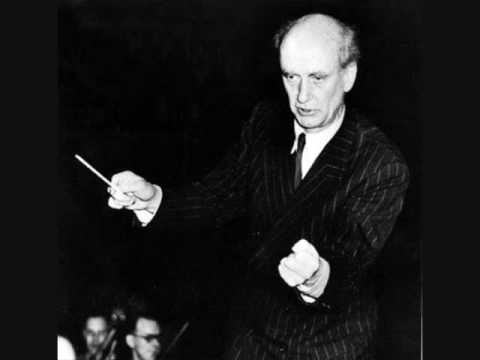
The conductor Wilhelm Furtwängler, in action.
The last decade has seen a slew of bargain-box reissues of Wagner's Ring Cycle. The latest of these, issued by EMI on May 17th in North America to (hopefully) coincide with the composer's 198th birthday, is Wilhelm Furtwängler's second recording of the four operas, made for Italian radio in 1953.

Furtwängler is celebrating his 125th birthday this year. One of the most controversial, and important Wagner interpreters of the 20th century, he was a born Romantic. Specializing in Wagner, Bruckner and Beethoven, he conducted with an organic feel, letting tempos fluctuate in order to mine greater meanings and depths of expression. On these discs, new and exciting details of the score come forth. As expected, the orchestra stretches and flexes under his baton, taking the music in fascinating new directions.

Examples of this idiosyncratic approach include an ultra-slow version of the charging Act III prelude from Siegfried, the rapid Rhine Journey, and the devastating heaviness brought out in Hagen's Watch.. This is always one of the most difficult parts of Götterdämmerung, and the maestro does the right thing: speeding up with anticipation as the scene changes back to Brunnhilde's rock, and then pausing, seeming to stop breathing as the next scene starts.

Big climactic moments, like the Entrance of the Gods, the Magic Fire scene and of course, the Immolation are heard with a new freshness that makes this set hold up on repeated listens. The orchestra plays beyond their abilities, as the maestro makes his Italian band sound like Bayreuth's finest. And yes, it's in mono sound, but the voices sound fresh and immediate, with details leaping out of the orchestra. There is an audience--they applaud enthusiastically at the end of each act--but they make minimal noise otherwise.

The singing is very good. Ludwig Suthaus recorded Tristan with Furtwängler in 1952, and that experience pays off in his Siegfried. Wolfgang Windgassen sings Siegmund here, a rarity for the tenor who preferred the role of Siegfried. (He also sings Loge in Das Rheingold.) Soprano Martha Mödl was recorded here at the height of her powers. brings all of her resources to Brünnhilde, creating a compelling portrait over three operas.

These discs also preserve Ferdinand Frantz' memorable portrayal as Wotan, the deal-breaking god of Das Rheingold, the tormented father in Die Walküre and the sad and lonely Wanderer of Siegfried. This is a towering performance. Gottlob Frick is a brutish Hunding. Josef Griendl a memorable, venomous Hagen. And in Siegfried, tenor Julius Patzak shows that the role of Mime can be sung, not screeched.

Wagner lovers and Furtwängler aficionados probably own this set already. But if you've only heard of the conductor, or only heard whispers of his legendary podium prowess, this is worth checking out. Sure, the packaging is ugly and somewhat unimaginative. There's no libretto included. But for top-notch Wagner at about $4 per disc, the price is certainly right.

Tuesday, May 10, 2011

CD Review: Wagner at the Met--Before Levine

The Sony Met Broadcasts of Die Walküre and Die Meistersinger von Nürnberg
Birgit Nilsson as Brünnhilde.
From the singer's archives.

These bargain-priced recordings are live broadcasts from 1968 (Die Walküre) and 1972 (Die Meistersinger.) They date from the fertile period right before James Levine rose to power at the opera house, and feature first-class casts of Wagner singers, generally in peak form. These are CD issues of live broadcasts, and are an invaluable purchase for any Wagnerian who wants to hear how great these operas sound in front of an audience.


The first of these is Die Walküre, with a dream cast of Birgit Nilsson, Leonie Rysanek and Jon Vickers as Siegmund. Nilsson is in exceptional form here, ringing off clarion tones with seemingly impossible ease. She is matched by the late, great Thomas Stewart, an underrated bass-baritone who sang the role of Wotan on the Karajan recording of this opera.

The Wälsung twins Siegmund and Sieglinde feature the near-ideal pairing of Jon Vickers and Leonie Rysanek. The two singers share great onstage chemistry from the first lines, and the first act crackles with repressed Wagnerian sexual energy. The onion in their ointment is the Hunding of Karl Ridderbusch, another underrated singer. He brings black, resonant tone to the most unsympathetic role in the opera. Croatian conductor Berislav Klobučar leads a brisk, invigorating performance in the model of his teacher, Clemens Krauss.

Theo Adam as Hans Sachs.
Photo © Hamburg State Opera
Die Meistersinger was recorded four years later, with a strong cast anchored by Theo Adam's performance as Hans Sachs and James King's turn as Walther von Stolzing. Mr. Adam sounds completely at home in the live setting, indulging his sadomasochistic side at the expense of his apprentice David (Loren Driscoll) and singing with firm, dark tone. James King's clarion tenor is an ideal fit for Walther, and the Prize Song is sung with power and grace.


It also features the appearance of soprano Pilar Lorengar in a rare Wagnerian turn as Eva, Walther's love interest. Benno Kusche is a brusque, funny Beckmesser who involves the audience in his comic acts of artistic self-destruction, drawing them to laugh out loud in the second act.

This set was made two decades before the Met installed its titles system, so the presence of audience laughter testifies to the comic brilliance of Mr. Adam and Mr. Kusche. James Morris, who would take on the role of Sachs at the Met in the 1990s, appears here as Hans Schwarz, the stocking-weaver.

A recording like this one features the choristers tramping around Ye Olde Nuremberg in the third act, and there are problems balancing the onstage brass and percussion in the final scene. But the stage noises actually add to the feel of listening to a live performance, with the benefit of audience laughter in the second act. Thomas Schippers conducts a sprightly reading of the score and the Met orchestra and chorus are generally excellent.

Wednesday, May 4, 2011

Opera Review: A New Machine, Part II

A Second Look at the Met's Die Walküre
The assembled Valkyries in Act III of Die Walküre at the Met.
At the top of the set: Deborah Voigt as Brunnhilde with Eva-Maria Westbroek as Sieglinde.
Photo by Ken Howard © 2011 The Metropolitan Opera
Monday night's performance of Die Walküre at the Metropolitan Opera showed considerable improvement from the opening night. The cast continued to settle into their roles, and the performance went off without any technical glitches from "the Machine", the multi-million dollar mechanical set that is repeatedly reconfigured into appropriate backgrounds for the action of the opera.

This performance also afforded a chance to hear Eva-Maria Westbroek as Sieglinde. Ms. Westbroek was ill at the premiere, and did not sing in Act II and III. Restored to health, she displayed a powerful, rounded soprano that turns round and full in her lower register and rises to an impressive height at the top.

She is also a good physical onstage match for Jonas Kaufmann as Siegmund, and their love scene, conducted with fervor by James Levine, brought the first act to a thrilling close. However, she sounded pinched in the third, and "O heiliges wunder" did not bloom fully as it should. Mr. Kaufmann repeated his excellent portrayal from the opener. With singing like this, one regrets that his character dies at the end of Act II.

Deborah Voigt plays Brunnhilde as a spunky, enthusiastic teenager in her opening scene. The character underwent a harsh schooling in the long monologue by her father Wotan (Bryn Terfel.) Ms. Voigt displayed flawless "Hojotohos", maintaining lyric line through those difficult leaps. The Annunciation of Death was beautifully sung, though taken at a glacial pace by Mr. Levine. She also seemed to find more depth in her interpretation in the third act, displaying a deep emotional connection with Mr. Terfel.

Bryn Terfel sounded more comfortable as Wotan, singing with greater power and warmth. His first scene with Stephanie Blythe's searing Fricka went superbly well, with both singers more comfortable with the precarious set. Mr. Terfel used his strength as a lieder singer to maintain narrative drive through Wotan's monologue, aided by a bulbous, ocular movie screen that rises from the depths– like the god's missing, glaring eye.


He was even better in the third act, raging at the Valkyries and then singing a moving, proper Farewell to Brunnhilde. The annoying mannerisms (like the strangled cry of "Geh!" at the end of Act II) were gone, replaced by a greater warmth of tone and fluidity of line throughout the opera. As Hunding, Hans Peter König remains a scary Santa Claus, singing with a rich, impressive bass that menaces even when his bearing does not terrify.

This production has been plagued by onstage problems, particularly with actors mounting and dismounting the moving planks of the machine set. No slips happened on Monday, although the planks did thud distractingly as they flapped up and down to depict Brunnhilde's flying horse. In the combat scene at the end of Act II,  Siegmund's sword, Nothung, failed to break. Ms. Voigt scooped it up and hid the unbroken weapon (behind her leg) as she escorted Sieglinde offstage.

Saturday, April 23, 2011

Opera Review: Machines (Back to Humans)

The new Die Walküre bows at the Met
Father knows best: Bryn Terfel and
Deborah Voigt  in Die Walküre.
Photo by Ken Howard,
© 2011 The Metropolitan Opera

The best thing about Robert Lepage's new staging of Die Walküre (which premiered at the Metropolitan Opera on Friday night) is that the performances are so absorbing that you simply forget about the hype and the problematic multi-million dollar set, and get pulled into the great drama of the Wälsungs, Wotan, and Brünnhilde.

The Met has assembled a strong cast. Deborah Voigt's voice has widened and developed a steely edge, both of which helped her Brünnhilde. She sings the role rather than screams through it, tossing off ringing battle-cries and achieving real tenderness in her lengthy scenes with Bryn Terfel's Wotan.

The Annunciation of Death (taken at a very slow tempo by James Levine) was her best scene of the evening. She entered slowly, like a reluctant little girl who did not want to do her father's dirty work. In her dialogue with Siegmund, (Jonas Kaufmann) she was torn between loyalty and emotion as Brünnhilde discovered her budding humanity. The low point: a stumble-and-tumble at the bottom of the set, just minutes into Act II. Ms. Voigt recovered adroitly, and it did not affect the rest of her performance.

Mr. Terfel is a dark and stormy Wotan. The voice is just a shade under-sized for this part, never opening out into the smooth, ardent richness that is heard in the best interpretations of the role, However, he is a strong actor, and is willing to drop all the way down to a hissed pianissimo in the most anguished moments. His monologue (helped by some interesting visuals) was a riveting experience, even though his anguished shouts at the end had trouble getting over the raging orchestra.


This was Mr. Kaufmann's first Wagner performance in New York, and he was by far the best part of this cast. He was desperate from the rise of the curtain, cautious during his long narrative scene, and then he opened out his big voice with a clarion "Wälse!" as he looked frantically for a weapon. Mr. Kaufmann's sturdy stage presence and perfect German diction make him the best Siegmund to sing at this house in many years. As he seized both the sword and his sister Sieglinde, his final cry of "so blühe denn, Wälsungen-Blut!" rose to an ecstatic, swelling high note. Then, he held it, riding over the crashing wave of the orchestra and drawing a storm of applause.

There were two Sieglindes on the stage last night. Eva-Maria Westbroek was suffering from illness, although it did not appear to affect the strength of her performance in Act I. Her cover, Margaret Jane Wray, was excellent in the second and third acts. Hunding, accompanied by a posse of hunters, was sung with power and menace by Hansr-Peter König. Mr. Lepage's decision to make the Neiding warlord an older, almost grandfatherly figure made the villain even more chilling.


Stephanie Blythe was a regal Fricka, appearing on a red leather throne surrounded by supplicating rams. Ms. Blythe's scene with Wotan brought out the complexities of power dynamics within their marriage, especially when the King of the Gods knelt at her feet. Her final address to Brünnhilde was a melodic feast, as her sturdy mezzo dripped scorn upon Wotan's bastard daughter.

Much has been made of Mr. Lepage's set, the multi-million dollar device dubbed "The Machine". These two dozen spinning, moving, computer-controlled grey planks that serve as a canvas for digital imagery of the natural world, and as a stormy backdrop for a spectacular Ride of the Valkyries. While Rheingold was dominated by abstract rocks, Walküre featured the birch forests and rocky landscapes of Mr. Lepage's native land.

The opening image of the forests outside Hunding's hut recalled the paintings of Tommy Thompson and the Group of Seven. The hut itself looks like a winter cottage in the Laurentians, with wooden beams and a realistic ash-tree. The first scene of Act II evoked the rocky Canadian Shield. The Valkyrie Rock recalled the high Rockies of Alberta and the photography of Ansel Adams, with the addition of a slow-falling avalanche. The Magic Fire is ignited digitally, on a lava waste. The effects are impressive, and a vast improvement on Das Rheingold.

Trending on Superconductor

Translate

Share My Blog!

Share |

Critical Thinking in the Cheap Seats