Support independent arts journalism by joining our Patreon! Currently $5/month.

About Superconductor

Our motto: "Critical thinking in the cheap seats." Unbiased, honest classical music and opera opinions, occasional obituaries and classical news reporting, since 2007. All written content © 2019 by Paul J. Pelkonen. For more about Superconductor, visit this link. For advertising rates, click this link. Follow us on Facebook.

Wednesday, February 2, 2011

Concert Review: Nordic Combined at the Philharmonic

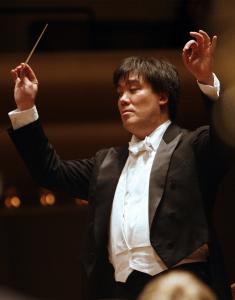
Alan Gilbert. Photo by Chris Lee
At the last concert before the New York Philharmonic unveils their 2011-2012 season, Alan Gilbert led a vital, intriguing combination of Beethoven, Sibelius, and Carl Nielsen. The concert featured two guest appearances from soprano Karita Mattila, who sang works by Beethoven and Sibelius while wearing two different gowns.

Beethoven's Eighth Symphony is one of his shortest and least-played. This cheerful little piece with its far-ranging opening theme allowed Mr. Gilbert to show his considerable skill in classical repertory. As the second theme entered, the Philharmonic's music director played Beethoven's little game of "hide-the-theme" with great glee. The second movement, with its repeating, metronomic rhythm was played with precision. The Minuet moved with the courtly precision of another century and the bucolic Rondo allowed the orchestra's winds and strings a chance to stretch.

Ms. Mattila then joined the orchestra for "Ah! Perfido!", a Beethoven stand-alone concert aria. Beethoven was a master pianist and orchestrator, but less skilled at writing for the voice. Ms. Mattila produced hearty tones, singing the aria's climactic passage with a full forte that overpowered the orchestra.

She and Mr. Gilbert sounded far more balanced in the three songs by Sibelius that opened the second half of the concert. These works, set to texts in the Finnish composer's preferred language of Swedish, were sang with great care and naturalism by the soprano, expertly accompanied. She ended her appearance with a brief encore, an a capella rendition of a traditional Finnish folk song. It was sung with great charm and emotion.

Carl Nielsen (1865-1931) a tonal symphonist from Denmark whose six quirky works in that genre provide symphony lovers with a great deal of enjoyment. Although Feb. 1 was the anniversary of Nielsen's Symphony No. 4, (The Inextinguishable) Mr. Gilbert programmed the Second instead. Entitled The Four Tempraments, its movements explore four different aspects of the human personality in accordance with the archaic medical belief that the body is ruled by four "humors": choleric, phlegmatic, melancholic and sanguine.


Those are the subtitles of the four movements of this brassy, engaging work which was led with great flair by Mr. Gilbert. The Philharmonic's famous brass section, led by Joseph Alessi and Philip Myers, had a field day with Nielsen's muscular choleric movement, charging pell-mell over a rich texture of strings. Mr. Gilbert conducted the phlegmatic movement with great lethargy, showing that he got the composer's joke. The melancholic adagio produced some of the evening's most beautiful playing. The sanguine finale roared forth, presenting the extroverted, raging side of the personality with a full-blooded performance.

This concert marks the start of a Nielsen initiative by Mr. Gilbert, who intends to revive interest in the composer by programming all six of his symphonies in coming seasons. If Tuesday night's performance is any indication, this bold move will provide Philharmonic audiences with something to look forward to in the seasons to come.

The Punxsatawney Playlist: Music For Eternity

"OK, campers. Rise and shine! And don't forget your booties 'cause it's cooooold out there today!"--Groundhog Day
A scene from Groundhog Day, with Bill Murray playing Rachmaninoff.
 © 1993 Columbia Pictures/Sony Entertainment
For some, February 2nd is the longest day of the year.

In the film Groundhog Day the day Bill Murray found himself trapped in Punxsatawney, PA for what (literally) seemed like an eternity. (According to director Harold Ramis, it was actually about ten years.) Over the course of the film, he experiences Feb. 2, 1993 over and over, spending his days as a romantic lover, a bank robber, and eventually, a decent human being...

...who can play the piano real good.

Part of the fictional Phil Connors' path to redemption is an infinite series of daily piano lessons with a local instructor. By the time the movie ends, he has progressed to playing a jazzy improvisation on the Eighteenth Variation from Sergei Rachmaninoff's Rhapsody on a Theme by Paganini.

So with Mr. Connors in mind, here's a list of musical works I wouldn't mind spending eternity with. No particular order.

1) Bach: The Well-Tempered Clavier Book I & II.
These 48 preludes and fugues in all the major and minor keys are the touchstone of modern keyboard playing, be it on the piano, harpsichord, or (possibly) calliope. Bach's work is immortal, and endlessly rewarding to the listener. (If I had to choose: piano, please.)

2) Wagner: Parsifal
Yeah, I know. You'd expect The Ring to be in this spot. But Parsifal offers an endless contemplation of the very meaning of time and space in the course of three acts. Not to mention, it's about why living forever may not be the best deal.

3) Schubert: String Quintet in C Major
My favorite piece of chamber music. I wrote about this yesterday in the Schubertiade piece. It deserves to make the list twice.

4) Beethoven: 32 Piano Sonatas
OK, I'm cheating. But this is eternity we're talking about. If I have to pick just one I'll take the mighty Hammerklavier, a work that like many music lovers, I'm still trying to wrap my brain around 200 years after its publication.

5) Richard Strauss: Eine Alpensinfonie
This symphony/tone poem depicts (in 22 movements and 45 minutes) man's struggle for existence. The fun part: all that philosophy is disguised as a travelogue--the story of a journey up and down an Alpine peak, with a thunderstorm wetting the descent.

6) Liszt/Beethoven: Piano Transcriptions of the Nine Symphonies
The beauty and power of Beethoven's symphonies, redesigned to be played by only ten fingers. After contemplating the brilliance of Beethoven's invention, you can spend the rest of eternity trying to figure out how the hell Liszt managed it.

7) Mozart: Le Nozze di Figaro
It's still my favorite Mozart opera, filled with endless melodic invention--and it sounds fresh every time you hear it. Figaro is a score full of small miracles. As it's eternity, a recording that includes the Barbarina and Basilio arias in Act IV is preferred.

8) Verdi: Requiem
Some writers joke that this setting of the Latin death mass is in fact, Verdi's best opera. Elevating the composer's art from the stage to the church, the Requiem throbs with power and musical invention.

9) Brahms: Piano Concerto No 1
Brahms' profound first concerto carries all the weight and power of a great Beethoven work, redolent with the thick musical textures that characterize this composer's music. The challenging piano part is endlessly rewarding, particularly in the long, singing Adagio.

10) Wagner: Der Ring des Nibelungen.
OK. I give. I'm a Wagnerite. And I couldn't imagine eternity without the political machinations of Das Rheingold, the passion of Die Walküre, the optimism of Siegfried or the complex profundity of Götterdämmerung. Not to mention Hagen's dirty jokes in the second act.


As you contemplate eternity, watch Phil's piano solo!

Tuesday, February 1, 2011

An Extremely Violent Tribute To Philip Glass

Highway traffic, from the experimental film Koyaanisqatsi: Life Out of Balance ©1983 MGM/UA.
Yesterday, Jan. 31 was Philip Glass' birthday. Last year, we celebrated with a "minimalist" version of the song "Happy Birthday." You can find a link to it here.

This year, I didn't feel like typing out those words over and over, or paying copyright dues to Jessica Hill.

A few years ago, this great American minimalist composer received this interesting (albeit extremely gory) tribute to his film Koyannisqatsi: Life Out of Balance. Made by I & S studios. Enjoy!


All video content © Gracie Films/20th Century Fox.

Happy Birthday, Mimi!

Vissi d'arte: Renata Tebaldi as Floria Tosca
© 1959 Decca/Universal Music Group.
The Met's current revival of La Bohème coincides with the 115th anniversary of Puccini's opera, which premiered on February 1, 1896. Today is also the birthday of Renata Tebaldi, the creamy-voiced Italian soprano who was one of the great voices of the 20th century.

After a long career on the stages of Europe and America, Tebaldi retired from singing opera performances. Fortunately she was a prolific artist at the height of the LP and stereo boom, recording many operas. Some of them were core repertory (Tosca (1959), Don Carlos (1965).) But she also recorded a variety of verismo operas (La Wally, (1968) Adriana Lecouvrer (1961) that are rarely seen today.

Here's a quick guide to five great recordings featuring Tebaldi.

1) La bohème (Decca, 1959)
This is one of the better recordings of Bohème in the catalogue, and definitely belongs in the top three. La Tebaldi's second recording of the opera features her as a sweet, smooth Mimi, her voice well matched with an all-star cast of Bohemians. (Where else but this recording would you find Carlo Bergonzi (Rodolfo), Ettore Bastianini (Marcello) and Cesare Siepi (Colline) sharing an apartment?

2) La Gioconda (Decca, 1967)
Almacore Ponchielli's classic potboiler is well-served on this sweeping set, the best studio recording of this underperformed operas. This Gioconda features the familiar pairing of Tebaldi with Carlo Bergonzi. Her "Suicidio!" in Act IV is everything that aria should be. Lamberto Gardelli conducts, showing his expertise in Italian repertory.

3) Turandot (RCA Living Stereo, 1959)
Tebaldi never recorded the role of Puccini's ice princess, but she was a heart-warming, melting Lìu on two different recordings. The better one is the Erich Leinsdorf set from RCA, which features the "Battle of Sweden" matchup of Jussi Björling and Birgit Nilsson in the Riddle Scene. But the best moment is Tebaldi's heart-rending "Signor, ascolta," complete with theatrical sobs that do not sound fake or forced.

4) Otello (Decca, 1960)
Herbert von Karajan's first studio recording of Verdi's Shakespearean opera is the recording to test your stereo on (or to leave on "repeat" if you can't stand your neighbors.) Thanks to John Culshaw's engineering, this classic Vienna recording of the opera features fine sound effects and the "aural theater" that was a Decca hallmark. Tebaldi is paired with Mario del Monaco (for the second time) as the murderous Moor. This is an essential set.

5) Aida (Decca, 1959)
Another pairing of Tebaldi and Bergonzi, with von Karajan conducting and John Culshaw manning the controls. This Aida is 52 years old, and it remains a benchmark recording of Verdi's Egyptian opera. Tebaldi's big voice is up to the challenge of "Ritorna vincitar!" and "O, patria mia," but it is the experience of the Vienna players slamming through the Triumphal March that you'll never forget.


Footage of Renata Tebaldi and Jussi Björling as Mimi and Rodolfo in Act I of La bohème.

Trending on Superconductor

Translate

Share My Blog!

Share |

Critical Thinking in the Cheap Seats