Support independent arts journalism by joining our Patreon! Currently $5/month.

About Superconductor

Our motto: "Critical thinking in the cheap seats." Unbiased, honest classical music and opera opinions, occasional obituaries and classical news reporting, since 2007. All written content © 2019 by Paul J. Pelkonen. For more about Superconductor, visit this link. For advertising rates, click this link. Follow us on Facebook.
Showing posts with label aria. Show all posts

Wednesday, September 23, 2015

Metropolitan Opera Preview: Turandot

Three very different casts and three runs for Puccini's final opera. 
by Paul J. Pelkonen
The executioner Pu-Tin-Pao (Left) confronts a giant Chinese dragon in the first act
of the Metropolitan Opera's production of Puccini's Turandot.
Photo by Marty Sohl © 2015 The Metropolitan Opera.
This umpteenth revival of the Metropolitan Opera's everything-into-the-wok Franco Zeffirelli production of Puccini's Turandot appears in three separate runs this season. Christine Goerke, Lise Lindstrom, Jennifer Wilson and Nina Stemme are the four formidable sopranos who will sing the hellishly difficult title role. This is one of the last surviving Zeff productions in the Met repertory along with La bohéme, and is a feast for the eyes as well as the ears.

Thursday, February 7, 2013

Opera Review: Finding Nemorino

Anna Netrebko returns in L'Elisir d'Amore.
by Paul J. Pelkonen
The guy behind her has a bigger hat: Anna Netrebko as Adina in L'Elisir d'Amore.
Photo by Ken Howard © 2012 The Metropolitan Opera.
The Metropolitan Opera has revived its season-opening production of L'Elisir d'Amore for a few performances, giving more opera-goers a chance to see director Bartlett Sher's take on Donizetti's most famous comedy. (An earlier Superconductor review was of the opening night telecast, seen among the neon and bustle of Times Square.)

For no apparent reason, director Bartlett Sher refashions this opera buffa as a Verdi-esque clash between oppressive soldiers and would-be guerrilla fighters during the Risorgimento. As Dr. Dulcamara (Erwin Schrott) sells his brand of snake oil to the local peasants, his two assistants distribute single-action rifles from the back of his pushcart. The soldiers under Belcore's command are more threatening than usual, underlining the idea of political and personal tensions that will eventually erupt in violent revolution.

This production (seen Wednesday, Feb. 6) continues to revolve around its two leads, the inspired pairing of tenor Matthew Polenzani and star soprano Anna Netrebko. They both seem more comfortable in their roles, with the show-boating and jitters of opening night ditched in favor of a more natural style of comedy. There's a sweetness that wasn't there before in Ms. Netrebko's performance--she seemed more involved in the character even as she tossed off a virtuosic display of bel canto singing. Her tone was firm and assured in the big solo numbers yet rich and melting in her final duet with Nemorino.

Thursday, September 27, 2012

Opera Review: A Golden Turandot

Reposted from The Classical Review.
by Paul J. Pelkonen
Maria Guleghina as the Princess Turandot. Photo by Marty Sohl © 2012 The Metropolitan Opera.
The Metropolitan Opera celebrates the 25th anniversary of the 
company’s over-the-top 1987 Franco Zeffirelli production of Puccini’s 
Turandot this year. At Wednesday’s opening night, the show 
looked and sounded surprisingly fresh, serving as a gilt framework for an evening of tremendous vocal performances from the three principals.

Read the whole review by Superconductor's Paul J. Pelkonen, exclusively on The Classical Review.

Friday, February 3, 2012

Concert Review: The Pants Come Off

Susan Graham returns to Carnegie Hall.
Angelic, yet heroic: the sublime Susan Graham.
Mezzo-soprano Susan Graham is a paradoxical artist. Her rich, agile instrument is lush and seductive, but New Yorkers usually see the tall Texan in travesti roles: Cherubino in Le Nozze di Figaro, Octavian in Der Rosenkavalier.

This recital, her first solo appearance at the Hall in five years, ignored that image with a program focusing on heroines from history and literature. It opened with the singer coming onstage in a shell-like white gown, to sing "Tell Me, Some Pitying Angel." In Henry Purcell's scena, the Virgin Mary worries about the absence of her Son. Ms. Graham used several different approaches to this music, producing smooth, sweet tone but also evoking the Madonna's distress.

She then produced a ravishing effect in a second monodrama: Berlioz' La morte d'Ophelia. Ms. Graham sounds especially at home in French repertory, producing ravishing tone and lush, smooth vowels. This was the Ophelia of Berlioz' obsession, a Romantically heightened version of Shakespeare couched in rich piano figurations supplied by accompanist Malcom Martineau. (This is also one of Berlioz' few works for that instrument.)

Then, Ms. Graham embarked on a fascinating exercise. She sang a cycle of art songs by Schubert, Schumann, Liszt, Duparc, Tchaikovsky and Hugo Wolf, all depicting this tragic heroine Mignon from Goethe's play Wilhelm der Meister. The works increased and developed in harmonic richness, starting with Schubert's sturdy accompaniment and climaxing in the Wagnerian excesses of wolf. New light emerged from each song, as Ms. Graham explored different aspects of her personality in multiple musical voices and three different languages. A tour de force. 

The second half of the program began with a change in wardrobe and attitude for the mezzo. She offered another monodrama, the little-known Lady Macbeth by composer Joseph Horovitz. This is a different, more melodic take on the character than that in Verdi's opera, with tremendous opportunity for psychological exploration in the spare, haunting chords. Ms. Graham shifted rapidly from the Letter Scene, to the Murder, then bringing pathos to her final "to bed, to bed, to bed" at the end of the Sleep-walk.

Mr. Martineau and Ms. Graham then leapt into Fiançalle pour Rire, a cycle of six songs by François Poulenc that sit in the center of this singer's comfort zone. She alternated between joy and grief in these moving songs, based on poems by Louise di Vilmorin and reflecting on the rapid cycle of emotions caused by the onslaught of World War II.

The program seemed short, but a note in Playbill mentioned further selections "to be announced from the stage." These proved to be an entertaining potpourri, in a lighter vein. Highlights included comic songs by Cole Porter ("The Physician" and Stephen Sondheim ("The Boy From...") The concert ended with "Sexy Lady," a reflection on Ms. Graham's own career on the operatic stage, which pastiched the travesti scenes of Strauss and Mozart with the alternating with the original music of composer Ben Moore. 

Listen to Susan Graham's 2006 Carnegie Hall performance of "Sexy Lady."
The concert ended with Ms. Graham returning for one last song: À Chloris by Reynaldo Hahn. Introducing this melodie as her "favorite song", Ms. Graham caressed its curves with her lush instrument, crafting a sensual spell that stopped the audience in its tracks to reflect on the brilliance and invention of this sublime singer. With singing like this, who needs trousers?


Contact the author: E-mail Superconductor editor Paul Pelkonen.

Wednesday, February 2, 2011

Concert Review: Nordic Combined at the Philharmonic

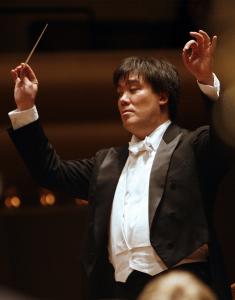
Alan Gilbert. Photo by Chris Lee
At the last concert before the New York Philharmonic unveils their 2011-2012 season, Alan Gilbert led a vital, intriguing combination of Beethoven, Sibelius, and Carl Nielsen. The concert featured two guest appearances from soprano Karita Mattila, who sang works by Beethoven and Sibelius while wearing two different gowns.

Beethoven's Eighth Symphony is one of his shortest and least-played. This cheerful little piece with its far-ranging opening theme allowed Mr. Gilbert to show his considerable skill in classical repertory. As the second theme entered, the Philharmonic's music director played Beethoven's little game of "hide-the-theme" with great glee. The second movement, with its repeating, metronomic rhythm was played with precision. The Minuet moved with the courtly precision of another century and the bucolic Rondo allowed the orchestra's winds and strings a chance to stretch.

Ms. Mattila then joined the orchestra for "Ah! Perfido!", a Beethoven stand-alone concert aria. Beethoven was a master pianist and orchestrator, but less skilled at writing for the voice. Ms. Mattila produced hearty tones, singing the aria's climactic passage with a full forte that overpowered the orchestra.

She and Mr. Gilbert sounded far more balanced in the three songs by Sibelius that opened the second half of the concert. These works, set to texts in the Finnish composer's preferred language of Swedish, were sang with great care and naturalism by the soprano, expertly accompanied. She ended her appearance with a brief encore, an a capella rendition of a traditional Finnish folk song. It was sung with great charm and emotion.

Carl Nielsen (1865-1931) a tonal symphonist from Denmark whose six quirky works in that genre provide symphony lovers with a great deal of enjoyment. Although Feb. 1 was the anniversary of Nielsen's Symphony No. 4, (The Inextinguishable) Mr. Gilbert programmed the Second instead. Entitled The Four Tempraments, its movements explore four different aspects of the human personality in accordance with the archaic medical belief that the body is ruled by four "humors": choleric, phlegmatic, melancholic and sanguine.


Those are the subtitles of the four movements of this brassy, engaging work which was led with great flair by Mr. Gilbert. The Philharmonic's famous brass section, led by Joseph Alessi and Philip Myers, had a field day with Nielsen's muscular choleric movement, charging pell-mell over a rich texture of strings. Mr. Gilbert conducted the phlegmatic movement with great lethargy, showing that he got the composer's joke. The melancholic adagio produced some of the evening's most beautiful playing. The sanguine finale roared forth, presenting the extroverted, raging side of the personality with a full-blooded performance.

This concert marks the start of a Nielsen initiative by Mr. Gilbert, who intends to revive interest in the composer by programming all six of his symphonies in coming seasons. If Tuesday night's performance is any indication, this bold move will provide Philharmonic audiences with something to look forward to in the seasons to come.

Trending on Superconductor

Translate

Share My Blog!

Share |

Critical Thinking in the Cheap Seats