Support independent arts journalism by joining our Patreon! Currently $5/month.

About Superconductor

Our motto: "Critical thinking in the cheap seats." Unbiased, honest classical music and opera opinions, occasional obituaries and classical news reporting, since 2007. All written content © 2019 by Paul J. Pelkonen. For more about Superconductor, visit this link. For advertising rates, click this link. Follow us on Facebook.
Showing posts with label Avery Fisher Hall. Show all posts

Saturday, June 6, 2015

Concert Review: Mozart and the Crash Cart

A Friday matinee turns deadly at the New York Philharmonic.
by Paul J. Pelkonen
Pianist Jeffrey Kahane conducted Mozart at the New York Philharmonic this week. 
On certain, rare occasions, the weekly routine of a New York Philharmonic subscription concert at Avery  Fisher Hall is broken by an extraordinary event. Such an event happened at Friday's 11am matinée performance. The concert featured pianist and conductor Jeffrey Kahane leading a thoroughly conventional program: Mozart's Symphony No. 38 sandwiched between two of his piano concertos: No. 21 in C Major and the heaven-storming No. 20 in D minor.

Friday, February 13, 2015

Concert Review: Let the Games Begin

Stephane Denève debuts with the Philharmonic.
by Paul J. Pelkonen
The conductor Stéphane Denève made his long-awaited New York Philharmonic debut.
Photo by Stu Rosner © 2015 The Boston Symphony Orchestra.
Under ordinary circumstances, the podium debut of a promising international conductor with the New York Philharmonic would be a pleasurable, if minor note in the course of a long orchestra season. However, with the sudden announcement last Friday that Alan Gilbert would step down as the orchestra's music director (effective 2017) the first concert program under Stéphane Denève felt like the beginning of a long series of auditions for Mr. Gilbert's job.

Friday, November 28, 2014

Concert Review: A Feast With no Stuffing

Jaap van Zweden conducts the New York Philharmonic.
by Paul J. Pelkonen
Score! Jaap von Zweden on the podium.
Photo by Hans van der Woerde, courtesy IMG Artists.
Sometimes in the middle of a season, you need to hear a fresh approach. That maxim may have been in the mind of New York Philharmonic administrators when they booked Dutch conductor Jaap van Zweden for two weeks this year. Mr. van Zweden has garnered awards in his run as music director of the Dallas Symphony Orchestra. He brings a brisk clarity to the music, and as Wednesday night's concert showed, the players responded with alacrity.

Sunday, November 23, 2014

Concert Review: The Weight of the War

Jaap van Zweden leads the Shostakovich Eighth
by Paul J. Pelkonen
Conductor Jaap van Zweden returned to the New York Philharmonic.
Photo © 2014 The Dallas Symphony Orchestra
The Dutch conductor Jaap van Zweden has built a steady reputation in recent years, both with the Dallas Symphony Orchestra (where he serves as music director) and a series of yearly guest visits to the New York Philharmonic. On Friday afternoon, Mr. van Zweiden led the latter orchestra in a program of Mozart and Shostakovich, contrasting the former's Sinfonia Concertante with the latter's heavyweight Symphony No. 8.

Friday, October 17, 2014

Concert Review: By the Time He Gets to Phoenix

Esa-Pekka Salonen returns to the New York Philharmonic.
by Paul J. Pelkonen
Esa-Pekka Salonen in action.
Photo courtesy toe Los Angeles Philharmonic.
On Thursday night, Esa-Pekka Salonen returned to the podium of Avery Fisher Hall to lead the New York Philharmonic in the first of three concerts this week. The acclaimed Finnish composer, who rose to fame in this country as the former leader of the Los Angeles Philharmonic, was the first major guest conductor at the Philharmonic this young season. The program: early works by two composers who were also famous conductors: Ludwig van Beethoven and Igor Stravinsky.

Friday, August 1, 2014

Concert Review: The Prodigy as Prodigal Son

Mostly Mozart opens (formally) in style.
by Paul J. Pelkonen
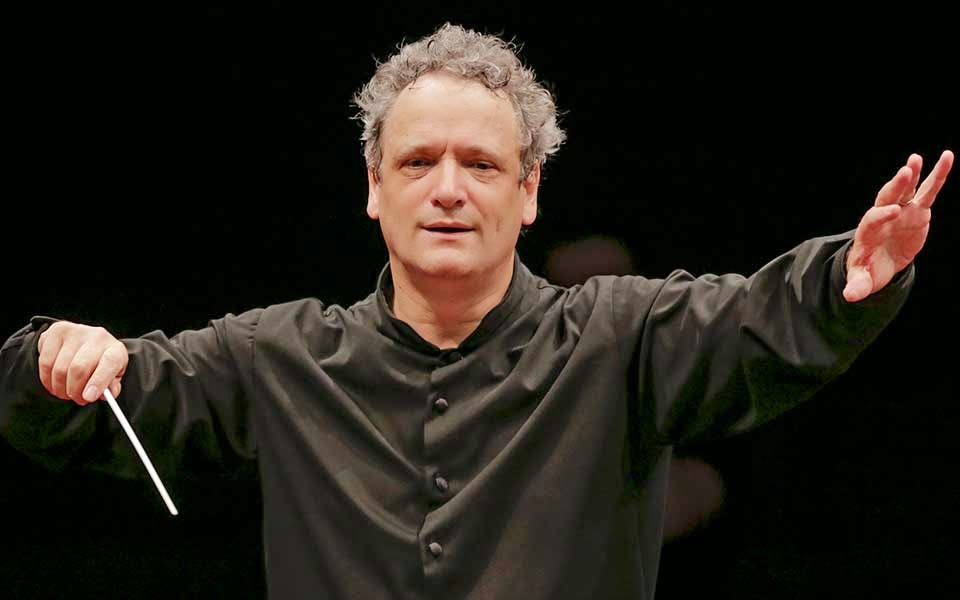
Conductor Louis Langrée returns to lead Mostly Mozart.
Photo © 2014 Lincoln Center for the Performing Arts.
The Mostly Mozart Festival is the oldest of Lincoln Center's summer performing arts extravaganzas. In recent years, the stewardship of music director Louis Langrée has led to a resurgence in quality. The addition of a special concert stage reconfigures Avery Fisher Hall into a more intimate venue. The audience is seated in part on the Philharmonic stage,  and the musicians play on a specially constructed platform under a set of baffles designed to brighten the sound of the room.

Tuesday, November 5, 2013

Concert Review: Don't Let Them Be Misunderstood

The Cleveland Orchestra returns to Lincoln Center.
by Paul J. Pelkonen
Franz Welser-Möst leads the Cleveland Orchestra at Avery Fisher Hall.
Photo by Stephanie Berger for the Cleveland Orchestra © 2008.
Franz Welser-Möst and the Cleveland Orchestra have been absent from Lincoln Center since 2008 when they presented a five-day festival pairing the symphonies of Anton Bruckner with music by John Adams. On Monday night, conductor and orchestra returned to Lincoln Center for another combination of classical and modern composers: in this case Ludwig van Beethoven and Olivier Messiaen. This unusual, but effective pairing was a major concert of this year's White Light Festival, the performing arts center's annual Fall exploration of the numinous in the lively arts.

Thursday, September 26, 2013

Concert Review: On Holiday in Eden

Yo-Yo Ma joins the New York Philharmonic for opening night.
by Paul J. Pelkonen
Alan Gilbert. Photo by Chris Lee © 2013 The New York Philharmonic.
The opening of the New York Philharmonic is usually an occasion for audience favorites--a strict adherence to the overture-concerto-symphony format that has been a winner over this venerable ensemble's 172-year history.

At Wednesday night's season premiere gala concert (which was filmed for broadcast later this year on PBS' Live From Lincoln Center music director Alan Gilbert broke that formula. This concert offered not one but two Philharmonic premieres, both featuring guest cellist Yo-Yo Ma. These were framed by popular works by Maurice Ravel, putting both works in context with the Swiss composer's Spanish-flavored works.

Sunday, July 21, 2013

Opera Review: Twisting, Turning Through the Never

Lincoln Center Festival presents Michaels Reise um die Erde.
by Paul J. Pelkonen
The Archangel Michael (trumpeter Marco Blaauw) solos over New York in Michaels Reise um die Erde.
Image © 2013 La Fura dels Baus.
It was Saturday night, and  Avery Fisher Hall was in darkness, apart from a black-light glow illuminating a curtain concealing the massive stage. This was the setting for the North American premiere of Karlheinz Stockhausen's Michaels Reise um die Erde ("Michael's Journey Around the World.") This was the third and final performance of the work (itself a component of Stockhausen's week-long mega-opera Licht) at this year's Lincoln Center Festival. The music was by Ensemble musikFabrik, and the staging by Carlus Padrissa from Catalan theater group La Fura dels Baus.

Tuesday, June 25, 2013

Concert Review: Journey Into Modernity

The New York Philharmonic plays Haydn, Wagner and Rouse.
by Ellen Fishbein
Alan Gilbert. Photo from nyphil.tumblr.com
The New York Philharmonic is reaching the last stages of its current Gilbert's Playlist mini-festival. On Thursday night, the program was a collision of Joseph Haydn, current composer-in-residence Christopher Rouse and Richard Wagner. The combination, in the words of music director Alan Gilbert, sparked "artistic electricity."

Monday, November 19, 2012

Concert Review: Checking the Baggage

Esa-Pekka Salonen conducts Mahler's Ninth. 
by Paul J. Pelkonen
Esa-Pekka Salonen. Photo by Mat Hennek © Deutsche Grammophon
It's not every day that a familiar conductor can present a well-known and well-loved repertory symphony in such a way that the listener hears it with fresh ears. But that's exactly what happened Sunday at Avery Fisher Hall, when Finnish composer-conductor Esa-Pekka Salonen led the Philharmonia Orchestra in Mahler's Ninth Symphony.

No other symphony has the baggage of the Mahler Ninth. It's the composer's last completed work. Mahler did not live to hear it played. And the opening, descending dotted rhythm phrase that forms the motto of the entire 90-minute symphony was associated (by Leonard Bernstein, no less) as representing the composer's own damaged, faltering heart.

That's quite a legacy. However, in performing ths symphony on Sunday night, Mr. Salonen chose to lay sentiment aside. He took a clear, assured approach which offered the audience new inroads into the mysteries of these four strange movements. Throughout, this performance had a clarity of texture in the strings. The Philharmonia horns sounded noble and mournful, but not over-wrought.

Saturday, November 3, 2012

Crane Business Weekly


Performances are scheduled though Carnegie Hall is still dark.
by Paul J. Pelkonen
This dangling crane on W. 57th Street has closed Carnegie Hall.
Photo from JoeMyGod.
A sunny, if cold weekend is upon us, and as New York continues to struggle back from the devastating hammer-blow of Hurricane Sandy, here's an update on what's going on.

In some good news for Brooklynites, subway service has resumed along the 4, 5, 6 between Brooklyn and Manhattan. The MTA and Con Ed are still working on draining the subway tunnels for the R and A trains, hard hit by the flooding.

Carnegie Hall is unable to open its doors due to the damaged construction crane dangling over W. 57th St. The entire block (and the 57th St. N, Q, R train station) remains closed. The Friday evening recital with Murray Perahia has been moved to Avery Fisher Hall. The crane is scheduled for removal this weekend.

The New York Philharmonic is open, with concerts tonight at Avery Fisher and a 5pm Sunday chamber performance of the Arnold Schoenberg arrangement of Mahler's Das Lied von der Erde. The concert, at the Lincoln Center Rose Theater (located in the Time Warner Center) features piano soloist and Philharmonic Artist-in-Residence Emanuel Ax.

The Metropolitan Opera is proceeding with business "as usual." Today there's a matinee performance of Thomas Àdes' The Tempest and an evening show of Le Nozze di Figaro. Next week, look for more news about the company's new production of Un Ballo in Maschera which opens next Thursday.

Here's some classical comfort food to get you through this difficult time. I know it helps me.


Thursday, October 25, 2012

Concert Review: The Leadership Gap

Valery Gergiev conducts Brahms at Lincoln Center.
by Paul J. Pelkonen
Valery Gergiev led the London Symphony Orchestra on Wednesday night at Avery Fisher Hall.
The London Symphony Orchestra are one of England's most prominent, an ensemble known for its lush, vibrant string sound, powerful brass and precise approach to music making. However, on Wednesday night's concert at Avery Fisher Hall, the second of two Lincoln Center performances devoted to the music of Johannes Brahms, those qualities were dimmed by the conducting of current LSO Principal Conductor Valery Gergiev.

Balance problems were audible from the opening bars of the Piano Concerto No. 1. The stern opening theme sounded blurred, the familiar pauses slightly out of "whack." Those issues persisted as the theme moved around the orchestra and developed. At the first repetition of the tutti (just before the entry of the piano soloist) a clamor of many voices replaced Brahms' mighty shout.

Pianist Denis Matsuev was better, playing the complicated, and fully integrated solo part with power and precision. The bear-like Siberian pianist proved himself a sensitive, lyric artist as he integrated himself into the orchestral fabric, bursting forth in flourishes of melody and an occasional flash of brilliant prestidigitation.

Wednesday, September 12, 2012

The Superconductor 2012-2013 Season Preview: New York Philharmonic

Starting and ending with Stravinsky, an exciting year at the Philharmonic.
by Paul J. Pelkonen
Music director Alan Gilbert. Photo by Chris Lee © 2010 The New York Philharmonic
The 2012-2013 season promises some big changes at the Philharmonic. Emanuel Ax, the pianist who has played 100 concerts with the ensemble over the years, joins the orchestra as Artist-in-Residence. Also, Christopher Rouse is the new Composer-in-Residence, replacing Magnus Lindberg. With a new orchestra contract in place and music director Alan Gilbert at the helm, this should be an exciting year for New York's hometown orchestra.

Here's twelve things that we're excited about seeing next season.
  • In an egalitarian gesture, the 2012 season opens on Sept. 19 with an "ordinary" subscription concert conducted by Alan Gilbert. György Kurtág's ...quasi una fantasia... starts the year off, followed by Leif Ove Andsnes playing Beethoven's third Piano Concerto. The concert ends with Stravinsky's The Rite of Spring conducted by Mr. Gilbert. (There will be a gala opening too on Sept. 27, but that's probably not as exciting.)
  • On Oct. 4, new Artist-in-Residence Emanuel Ax pairs Bach's D minor Keyboard Concerto with the Schoenberg Piano Concerto, followed by Mozart's Linz Symphony. Alan Gilbert conducts.
  • The Nielsen Project continues Oct. 10, as Alan Gilbert conducts four concerts featuring the Danish composer's concertos for flute, violin and clarinet, paired with Tchaikovsky's Little Russian Symphony.
  • The Philharmonic is working with Lincoln Center's White Light Festival this year. On Nov. 4 at the Rose Theater, Emanuel Ax will lead a chamber-sized performance of Mahler's Das Lied von der Erde in a reduced orchestration by Arnold Schoenberg.
  • Kurt Masur and Lorin Maazel return to the Philharmonic this season. Mr. Masur offers two weeks of Brahms starting on Nov. 8. Mr. Maazel will lead works by Sibelius, Tchaikovsky, Lutoslawski and Shostakovich, starting Jan. 16, 2013.
  • The first concerts of 2013 (starting Jan. 3)  feature French pianist Jean-Yves Thibaudet, playing the Grieg Piano Concerto. Pittsburgh Symphony Orchestra maestro Manfred Honeck conducts the program, which also includes Beethoven's Symphony No. 7.
  • The Philharmonic continues its tradition of performing great Broadway musicals with Carousel. Rodgers and Hammerstein's operatic show will be staged at Avery Fisher Hall and directed by James Brennan. Carousel runs for five performances and will open Feb. 27.
  • March has become the time of the season when the Philharmonic focuses on a single composer in a spring festival. This year, they offer The Bach Variations. The month-long festival, mounted in collaboration with the 92nd St. Y kicks off with a March 3 symposium. March 6 marks the first concert. The series will feature choral works (the Magnificat, the Mass in B minor) orchestral works and a collaboration with Hungarian pianist András Schiff. Mr Schiff will also make his debut as a conductor on April 3.
  • Christopher Rouse's presence as the orchestra's new Composer in Residence will be felt (and heard) throughout the season, especially at a series of four concerts featuring soloist Joshua Bell and Charles Ives' daunting Symphony No. 4, a massive work that requires two conductors.
  • This year's free Memorial Day Concert at the Cathedral of St. John the Divine (May 27) features Bruckner's Third Symphony, as Alan Gilbert continues his survey of the major works by this heavyweight Austrian composer. For those wishing for better acoustics, the Bruckner Third will also be played in subscription concerts starting April 24, 2013.
  • June 6 is D-Day, as in Luigi Dallapiccola. The Philharmonic presents his one-act opera Il Prigionero, a 1948 work that offers a powerful statement about political oppression. This concert is presented as part of June Journey: Gilbert's Playlist, a season-ending series of concerts highlighting the many influences and personal musical taste of the New York Philharmonic's music director. 
  • The season ends with the welcome return of visionary designer Doug Fitch (Le Grand Macabre, The Cunning Little Vixen.) This time, the Brooklyn-based artist will mount Stravinsky's Petrushka, a ballet score about a love-struck puppet that meets a violent end.

Friday, June 8, 2012

Concert Review: Mainly Mozart

Pinchas Zukerman leads the New York Philharmonic.
by Paul J. Pelkonen
And he plays violin too: Pinchas Zukerman. Photo from the National Arts Centre.
The violinist Pinchas Zukerman played the dual roles of soloist and conductor this week at the New York Philharmonic. For these concerts, Mr. Zukerman chose concert repertory more in keeping with the forthcoming Mostly Mozart festival than the big sounds normally associated with this orchestra.

In the world of classical music, the New York Philharmonic looms as a heavyweight ensemble, storming through orchestral showpieces and presenting vast edifices by Mahler and Bruckner. So it was refreshing to hear the skill of its players in a chamber orchestra setting, especially led by a world class soloist.

The results, heard on Thursday night, were a charming combination of Bach, Mozart and Stravinsky. Mr. Zukerman played the solo parts in the Bach Violin Concerto and Mozart's Turkish Concerto, leading the orchestra from the bow of his violin. He then traded bow for baton, leading Stravinsky's Concerto for Orchestra and Mozart's Symphony No. 39. Although the Israeli musician is better known for his solo work, he has over four decades experience as a conductor.

Monday, March 26, 2012

Concert Review: The Keeper of the Keys

Murray Perahia in recital at Lincoln Center
by Paul Pelkonen
Piano man: Murray Perahia. Photo © 2010 courtesy Sony Classical.
In the course of a long concert season, some recitals and concerts are akin to a religious ceremony. Such a one was Sunday's afternoon concert at Avery Fisher Hall, featuring Bronx-born pianist Murray Perahia. The lights of this great hall were down very low, creating an atmosphere of religious contemplation. A celestial beam lit the stage, as New York's own high priest of solo piano music strode to his instrument.

As a hometown hero with impeccable taste and technique, Mr. Perahia is beloved by New York concert-goers. Yet he has earned their frustration as well, with a series of cancellations and health problems stemming from a 1995 operation to remove a bone spur from his right hand. This forced him to retire from performance for three years. Those physical problems, coupled with the artist's ongoing residency in Berlin have conspired to make a recital by this artist a special event.

The repertory for this recital was conservative, with the three "B's" (J. S. Bach, Beethoven, Brahms) in the first half and Chopin and Schubert in the second. Mr. Perahia began with No. 5 of Bach's French Suites, his hands performing a complex terpsichore on the keys through the seven dance movements. The closing Loure and Gigue were lyric and uplifting, a strong argument for performing this music on the modern instrument.


Beethoven wrote his piano sonatas for the wood-framed fortepiano of his day, destroying a few in the process. The 27th Sonata in E minor is one of his most unconventional. Consisting of just two movements, its tense opening and cheerful Rondo are testaments to the composer's volatile personality. Mr. Perahia's playing was conservative, focusing on the deep humanism of the writing and the composer's gift of phrase.

The first half of the program ended with Brahms' late Klavierstücke--four piano miniatures from the composer's late period. Mr. Perahia announced Brahms' solemn presence through the cascade of heavy chords that open the first Intermezzo. From there he turned to warm, glowing melodies, leading a gorgeous waltz in the middle section of the second piece.

Mr. Perahia's recent releases have included a disc of Brahms works, and his affinity for the composer's complex scheme and variations showed in the third Intermezzo, a kind of scherzo based on just four notes. Finally it was time for the vast, cinematic sweep of the Rhapsody in E Flat Major, which ends the set with a noble theme borrowed six years later by Brahms' friend Jean Sibelius for his tone poem Finlandia.

The second half opened with Schubert's Sonata No. 19 in A, a work of sunny optimism with none of the obsession with death that plagued this young composer in his later years. Mr. Perahia made the sunlight of Schubert's Vienna shine into the dark cavern of Avery Fisher Hall, playing the three movements with lyric grace. The Andante flowed smoothly from his fingers, and the final movement had a fierce, determined joy.

That ferocity and determination extended to the four Chopin works chosen by Mr. Perahia to end the concert. This ws not the simpering, soft Chopin of the salon, but music of a brusque, business-like determination. The C# minor Polonaise had a heroic swagger, its dance rhythms etched by the soloist in bold strokes. The murderously difficult Prelude No. 8 in F# minor followed. A tiny two-minute beast among the composer's 24, its nickname is "Desparation." Mr. Perahia kept a cool head and executed the tricky right-hand figures with his customary skill.

The Mazurka No. 4 is just three minutes in length. Mr. Perahia showed that this brief work is packed with musical ideas and expressive possibilities. The little tetralogy ended with the muscular Scherzo No. 4, the last of the set. Mr. Perahia returned to Chopin's heroic mode here. The brash opening theme gave way to a slow, sad minor. The work ended with a mighty struggle to return to the major key. Mr. Perahia injected a note of triumph and achievement into the resonant final chords.

Monday, November 14, 2011

Concert Review: Keeping His Day Job

Fabio Luisi leads the Vienna Symphony at Lincoln Center.

A conductor, always on call: Fabio Luisi.
Photo by Barbara Luisi.
Sunday's matinee concert featuring the Vienna Symphony offered New Yorkers a chance to see conductor Fabio Luisi in one of the jobs he held before becoming Principal Conductor at the Metropolitan Opera. Mr. Luisi is Chief Conductor of this Viennese ensemble. He offered orchestral comfort food: Rachmaninoff's Piano Concerto No. 2 (with soloist Lise de la Salle), paired with Beethoven's reliable Seventh Symphony.

As originally scheduled, this program was more interesting. Mr. Luisi had scheduled this concert (the first of two) to end with Franz Schmidt's impressive but rarely played Symphony No. 4. But in a late change, the Schmidt yielded to the more familiar Beethoven. This might have been due to Mr. Luisi's other commitments. 

In September, Mr. Luisi was promoted at the Met, following an injury suffered by reigning Met Music Director James Levine. On short notice, Mr. Luisi added the company's new productions of Don Giovanni and Siegfried to his already full schedule. In doing so, he was forced to cancel a number of European commitments, including a new Rome production of Salome and (presumably) the time reqired to rehearse the Schmidt Fourth.

These are familiar, "safe" favorites were played and executed with thorough professionalism by the Vienna Symphony. While lacking the name-recognition of the Vienna Philharmonic, the two orchestras have some things in common. Both give concerts at the Musikverein, with the Symphony also playing at the Theater an der Wien. They share a preference for the traditional Viennese horn in F, and a relatively low proportion of females onstage.

The solo part in the Rachmaninoff was taken by Ms. de la Salle, a 23-year-old pianist of formidable talent and technique. She established the bell-like opening interval with a firm hand, before rolling forward into the opening theme. Balance problems existed in this movement, with Mr. Luisi's accompaniment drowning out the piano's voice in the opening phrases. Eventually, the problem was corrected and the piano's voice emerged over the orchestra.

The second movement was better, allowing the grace of Ms. de la Salle's playing to emerge. She exchanged thoughtful commentary with the solo clarinet, playing one of Rachmaninoff's most famous themes. Mr. Luisi brought out the melancholy character of this movement, indulging in some very Russian-sounding orchestral reflections, played with Austrian polish and tone.

The final Allegro allowed the talents of this young artist to shine fully, with thrilling, sometimes staccato keyboard runs She displayed the necessary blend of precision, force and athleticism needed with this composer's challenging piano parts. Ms. de la Salle then obliged the thunderous approval with an encore, a delicate, almost gossamer performance of Debussy's prelude Des pas sur la Niege ("Footprints in the Snow.")

Mr. Luisi then had the opportunity to show his orchestra's chops with a robust Beethoven Seventh.  The opening had the right drama and power, providing contrast to the manic main theme that followed. Conducting without a score, the slender maestro danced in rhythm on the podium. At times, he seemed to pull Beethoven's dancing themes out of the strings with his whole body and will.

The funeral march (made famous in last year's Oscar™-winning The King's Speech was played with weight and a steady hand. The last two movements, expressions of joy at the defeat of Beethoven's idol-turned-nemesis Napoleon, had a celebratory air, with triumphant playing from the Vienna horns. 

Monday, October 24, 2011

Concert Review: Reality Check

Britten's War Requiem at the White Light Festival.
Okey-Dokey. Conductor Gianandrea Noseda led huge forces in Sunday's War Requiem.
Photo by John Super © 2011 London Symphony Orchestra.
The enormous resources called for in Benjamin Britten's War Requiem were almost beyond the means of Avery Fisher Hall on Sunday afternoon. They included the full strength of the London Symphony Orchestra and Chorus, a small chamber orchestra (drawn from LSO players and squeezed in around the conductor's podium), three vocal soloists and the American Boychoir. The kids had to sing through a door leading offstage.

In these tight quarters, the spacious antiphonies of this complicated work (premiered in 1962 at the dedication of the new Coventry Cathedral following the destruction of the original by Luftwaffe bombs in 1940) didn't quite work. Giandrea Noseda did an admirable job of marshaling his forces, achieving a remarkable aural balance of the four groups. He conducted with vigor.

The London Symphony Chorus was a force unto itself, declaiming the Latin text of the mass with the authority of the Metatron. The fiery incantations of the Dies Irae (featuring ear-splitting playing from the brass in the "Tuba Mirum") blazed forth with power. They were also key contributors to the success of the later movements, especially the slow-moving setting of the Agnus Dei.

The Offertorium is the dark heart of this strange piece. Here, the composer re-tells the story of Abraham and Isaac. However, Isaac is sacrificed by his father in the accompanying Wilfred Owen poem: an echo of the horrors of war. This is Britten at his most cutting. The hollow fugue at the end was a grim, Shostakovich-like joke.

Tenor soloist Ian Bostridge sang repertory that was suited to his unique instrument. Mr. Bostridge took advantage of Britten's high vocal lines, airing them easily over the chamber ensemble. He added emotional weight to these words, making the bleak landscapes of war-torn Europe flicker with ghostly light.

He was paired with baritone Simon Keenlyside, an opera star in his own right. Mr. Keenlyside's smallish, dark-hued instrument was perfect for "At the thrust of Lightning in the East" in the Sanctus. Soprano Sibina Civilak also sang beautifully from the space between the orchestra and chorus, tossing off some glorious notes in the Lacrimosa.

The small cadre of boy trebles also made an important contribution from their offstage post. The two singers joined voices on on the last poem, "Strange Meeting." The scene: an encounter between two wounded enemy soldiers in a tunnel full of corpses. As Mr. Bostridge and Mr. Keenlyside sang out the lines of the poem, the women of the LSO Chorus echoed with  "In paradisum" from the Libera me section of the Mass. This made for a stratospheric, if icy climax.

Benjamin Britten was a committed pacifist, and did not pull punches in his work that combines the Latin Mass for the Dead with battlefield poetry. This is one of the composer's most dramatic and most popular pieces, a work that is all too apt for today's audiences. The White Light Festival may be about bringing its audience out of their daily lives, but under Mr. Noseda the Requiem was a sharp reminder of reality.

Monday, April 18, 2011

Concert Review: The Rose Lines of...Vienna?

Daniele Gatti conducts the Orchestre National de France
Jean-Efflam Bavouzet. Photo © Guy Vivien
Sunday afternoon at Avery Fisher Hall featured a concert by the Orchestre National de France, which rang down the curtain on this year's Symphonic Masters series sponsored by Lincoln Center itself. The concert saw the French orchestra offering a unique perspective on German music. Beethoven's Third Piano Concerto was paired with the dancing waltz rhythms of Richard Strauss and Maurice Ravel. Daniele Gatti conducted.

The concert opened with the Beethoven, switching the normal order of putting the short piece (Ravel's La valse) first and the concerto second. Jean-Efflam Bavouzet played the solo part with great intensity of attack, making a staccato entry in the first movement and taing a relentless approach to Beethoven's cadenzas.

In this opening movement, M. Bavouzet  kept his foot off the pedal, preferring to let the notes jump from his fingers. He played with great dexterity if not especial warmth. It was as if he chose to take all of Beethoven's inspiration and hone it to a single keen point.


The performance was more lyrical in the next two movements: the laid-back Largo and the lilting Rondo. M. Bavouzet's tone also mellowed in the slow movement, sweeping through Beethoven's challenging cadenzas and playing with a somewhat sweeter tone.

Mr. Gatti provided skilled, if not especially distinguished accompaniment, letting M. Bavouzet dominate the proceedings. If the ONF has a distinctive section, it is in their woodwinds. The French bassoons (most American orchestras use the German Heckel models) provides a different timbre to these ears, a rich, ruby sound that complements the strings and warm brass.

The orchestra doubled in size for the Suite from Strauss' Der Rosenkavalier, twenty minutes of potpurri from the German composer's popular comic opera. The problem with playing these exceprts was two-fold. By eliminating the voice, the silvered, lyric quality of a soprano (or mezzo) soaring over Strauss' scintillating orchestration is lost. (An English or French horn does not cut it, no matter how beautifully it is played.) Mr. Gatti also struggled to bring his band to a ribald, Viennese climax--but the overall effect was one of politeness and competence.

The musicians looked and sounded a lot happier playing La valse, Maurice Ravel's 1919 ballet score. It was with this piece that the potential and power of this French orchestra finally barrelled forth. La valse is a less famous cousin of Bolero, with more musical development as it surges to a fortissimo climax.

Wednesday, January 26, 2011

Concert Review: Budapest Festival Orchestra Straddles Two Centuries

The 18th and 20th centuries clashed at last night's concert by the Budapest Festival Orchestra--with sexy results.
Iván Fischer
On Tuesday night, the orchestra explored the dichotomy between the genteel "classical" works of Franz Josef Haydn and the rough-and-tumble modernism of Igor Stravinsky. Iván Fischer, the kinetic Hungarian maestro who founded the orchestra 27 years ago, conducted.


The Haydn works found the orchestra in period instrument mode. The brass section used slide trumpets and natural horns, complete with replaceable crooks. Timpanist Dénes Roland sat at a small pair of period kettledrums, playing with wooden sticks. The Haydn Symphony No. 102 sprang to life, a work filled with genteel, yet earthy good humor. Crisp rhythms, warm strings and a bright contribution from the winds made this a distinguished performance.

The Piano Concerto No. 11 was written for an 18th century pianoforte. However, this performance pitted a modern Steinway (played by Alexei Lubimov) on a modern Steinway against the period band. Mr. Lubimov made the case for this anachronistic arrangement with fleet-fingered legato playing, and elegant turns of phrase. The final, rondo had an almost manic energy, as the orchestra supported Mr. Lubimov through every twist and turn of the work.


The full orchestra filled the stage for a raucous reading of The Rite of Spring. Stravinsky's 1913 ballet is one of the cultural touchstones of the 20th century, a thundering, violent work that depicts the barbaric pagan rites of ancient Russia. Under Mr. Fischer's direction, the taut polyrhythms and blasts of brass acquired a fearsome, battering force, hammering at the senses in a frenzied dance.

A reprieve came with the second section of the ballet, but it was not to last. The quieter moments, featuring the elegaic horns (now playing modern instruments), lengthy bassoon solos and muttered honks on the bass clarinets. These gave way to the final, sacrificial dance, driven to an earth-shattering conclusion as Mr. Fischer exhorted his musicians to new heights of aural savagery.

To close the concert, Mr. Fischer returned and led his band in a work from the 19th century: the 21st (and last) of Brahms' Hungarian Dances. Shot through with rhythms of their homeland, the Brahms work served as a pleasant, high-energy palate cleanser after the controlled brutality of the Stravinsky: a fitting way to end this New York appearance by this excellent, underrated orchestra.

Trending on Superconductor

Translate

Share My Blog!

Share |

Critical Thinking in the Cheap Seats