Support independent arts journalism by joining our Patreon! Currently $5/month.

About Superconductor

Our motto: "Critical thinking in the cheap seats." Unbiased, honest classical music and opera opinions, occasional obituaries and classical news reporting, since 2007. All written content © 2019 by Paul J. Pelkonen. For more about Superconductor, visit this link. For advertising rates, click this link. Follow us on Facebook.
Showing posts with label cello. Show all posts

Friday, October 6, 2017

Concert Review: Of Intimacies and Mortal Thoughts

Mischa Maisky and Orpheus Chamber Orchestra open the 92nd St. Y season.
by Paul J. Pelkonen
Mischa Maisky. Photo © Deutsche Grammophon/UMG.
Ask a music lover (like your humble narrator!) what hall has the "best" acoustics in New York, and the response might well be the Kaufman Auditorium. This wood-paneled, intimate hall is the centerpiece of the 92nd St. Y, that educational and cultural center that stands foremost among such institutions on Manhattan’s swanky Upper East Side. In addition to its lectures, social events and educational programs, the 'Y' offers top-flight lieder, chamber music and occasional orchestral concerts, all of which are among the finest New York offers in terms of musical quality. 

Tuesday, September 12, 2017

Concert Review: Naked Crunch

Apocalyptica celebrate 20 years of Metallica covers--on cellos. 
by Paul J. Pelkonen
The gentlemen of Apocalyptica: (l.r.) Eicca Toppinen, Perttu Kivilaasko, Paavo Lötjönen and Antero Manninen
in their video for "Battery." Image © 2017 Apocalyptica.

Twenty years ago, I was in the Record Factory in Bay Ridge, Brooklyn on a Saturday afternoon. The clerk, Fred showed me something "new and weird" that had just come in. It was by a band called Apocalyptica and was titled Plays Metallica for Four Cellos. Skeptical, I flipped it over. And that was when I recognized Eicca Toppinen, the Finnish cellist who is the band's leader and who I had met when he was playing in New York with the new music ensemble Avanti! the year before. Anyway, I bought it.

Wednesday, April 3, 2013

Concert Review: The Loneliness of the Long Distance Runner

Carter Brey Plays the Bach Cello Suites.
by Paul J. Pelkonen
Carter Brey and friend at Holy Lutheran Church.
Photo by Chris Lee © 2013 The New York Philharmonic
Johann Sebastian Bach' Six Suites for Solo Cello are the core of that instrument's repertory, works that may have been designed to instruct and educate players on that still relatively new string instrument. Each consists of a Prelude followed by a matched set of dances in different style. But considering the length of each work and the serious instrumental challenges that Bach presents in each of the six Suites, the playing all of them on one program is a rare event.

Tuesday, June 12, 2012

Concert Review:`Smoke on the Water

Matt Haimovitz' Uccello play jazz at Bargemusic.
by Paul J. Pelkonen
Hot jazz on a cello can have this effect. Art by Evilistical, © the artist.
On Sunday afternoon, the Uccello ensemble visited Bargemusic, the floating chamber music venue on a coffee barge tucked under the Brooklyn Bridge. Led by Matt Haimovitz, the the Grammy-nominated unit of "eight cello warriors" brought some unusual repertory: fusion jazz of the Mahavishnu Orchestra alongside more "trad" offerings by Miles Davis, George Gershwin and Billy Strayhorn.

Mr. Haimovitz formatted the show somewhere between a chamber performance and a jazz set, taking care to act as emcee and introduce each number before it was played. The concert opened with "Half Nelson," a piece by the Miles Davis nonet that originally appeared on Birth of the Cool. With Dominic Painchaud playing the bass line, Mr. Haimovitz and Leanna Rutt spun out the long, elegaic solos, creating a palpable "big band" sound that echoed the Davis group.

Monday, May 14, 2012

Concert Review: Beethoven for Conversation

Steven Isserlis and Robert Levin play the Cello Sonatas
by Paul Pelkonen
Beethoven at his fortepiano. Note the lack of pedals.

Within the vast catalogue of works written by Ludwig van Beethoven, the five Sonatas for Cello and Piano are relatively obscure: chamber pieces written for salon performances and various musicians and patrons the composer encountered in his career.

On Saturday night at the 92nd Street Y, cellist Steven Isserlis and pianist Robert Levin shone light on these lesser-known works. Contributing to the unique nature of these performances was Mr. Levin's choice to play fortepiano, an older style of keyboard instrumet with a shallower wooden frame and no pedals. The instrument, built by Paul McNulty, is modeled after an 1805 fortepiano, a spindly creation that looks more suited to a furniture museum than the concert stage.

The concert opened with a set of variations based on "Bei Mannern," the Act I duet from Mozart's Die Zauberflöte. These were played with engaging warmth as the softer sounds of the fortepiano intersected perfectly with the cello's imitation of the human voice. The variations range from light and playful to slow and serious. Beethoven's interest in the humanist message of the text allowed him to alternate between the solemnity of a humanist message and the playful first interaction between Pamina and Papageno.

Monday, March 5, 2012

The Spider and the Fiddle

Are spider-strand violin strings the future of chamber music?
by Paul Pelkonen
A golden orb-weaver spider in its web.
There's a fascinating article on the BBC News site today: a Japanese researcher has figured out how to make spider silk into violin strings.
Spider-man: Dr. Shigeyoshi Osaki
 in a hammock suspended
from rope made from spider-webbing.
Photo © 2011 Dr. Shigeyoshi Osaki.
First published in The Japan Times.

The strings, made from silk spun by the golden orb-weaver spider) have a high tensile strength. When bowed, they produce a softer tone than conventional strings, which are made from steel or cat-gut. The BBC article has an example of a violin played with the new spider-strings.

The scientist, Doctor Shigeyoshi Osaki of the Nara Medical University developed a method to produce large quantities of "drag-line silk" from 200 captured spiders. Each string required 3,000-5,000 strands to form a bundle. Three bundles, twisted together make up a string.

By the way, cat-gut is not made from cats--but from the stretched fibers of sheep or cow intestines. The term may be a corruption of cattle-gut, although the sawings of amateur players may suggest a small feline being tortured.


Contact the author: E-mail Superconductor editor Paul Pelkonen.

Saturday, November 12, 2011

Concert Review: The Thirty-Year Itch

Bernard Haitink returns to the New York Philharmonic
Bernard Haitink makes a point. Photo © CSO Resound Classics
When Bernard Haitink last conducted the New York Philharmonic, the compact disc had just been invented. Ronald Reagan was president, and the orchestra was completing a transition from the experimentation of the Pierre Boulez regime to a more conservative direction under Zubin Mehta.

This week, the Dutch conductor returned to the podium in Avery Fisher Hall for the first time in thirty years. For his return, Mr. Haitink chose a pair of conventional works that are not too frequently played by this orchestra. The concert opened with Strauss' tone poem Don Quixote followed by Beethoven's Sixth Symphony, the Pastoral.

Mr. Haitink is now 82, and celebrating his fifth decade as a professional conductor. He led the band with vigor, conducting both works with sure hands, a quick baton, and a steady, light-footed approach to the music. His conducting remains pristine and precise, drawing a warm, balanced quality of sound, bringing out the very best from this fine orchestra.

Don Quixote is essentially a cello concerto blended with a tone poem. Strauss casts this noble instrument (played here by Philharmonic principal Carter Brey) as the mad, chivalric knight. Principal violist Cynthia Phelps took the part of Sancho Panza, her lines doubled with a tenor tuba. Like Cervantes' great novel, the tone poem has an episodic structure. It takes a skilled hand to make the work hang together.

Strauss contrasts the virtuoso solo parts with masterful orchestration, depicitng the good Don's actions against villains real and imagined. The complex brass parts create the aural illusion of spinning windmill blades, bleating sheep, and the good citizens of Spain, who the Don faces off with in the interests of his honor. Mr. Brey and Ms. Phelps embodied the protagnist with virtuosic playing, engaging in witty musical dialogue with Mr. Haitink and Philharmonic concertmaster Glenn Dicterow.

It could be argued that Beethoven's Sixth is the great-grandfather of all tone poems. Beethoven expanded this symphony to five movements, and assigned short titles to each. With some influence from the illustrative writing of Haydn and the opera overtures of Mozart, this was the first piece of program music. The Pastoral paved the way for the Romantic movement that breathed its last with Strauss' death.

Mr. Haitink took the opening Allegro (subtitled "Cheerful Impressions on Arriving in the Countryside") at a brisk, tempo that sacrificed none of the idyllic qualities that are central to this music. The slow "Scene by the Brook" had some gorgeous playing from the cellos, led by Mr. Brey, restored to his place leading the section. Flautist Robert Langevin and oboist Liang Wang were perfect "birds" in the movement's final secton, worthy of a Messiaen sketch.

Thankfully, the orchestra chose to take the repeat in the "Merry Dance of Country Folk", slamming into the "Storm" without pausing for breath. The chugging strings and howling (wood)winds gave way to a serene horn-call. This was the finale, the "Shepherd's Song" played with deep, almost religious meaning and a gorgeous line from the principal horn. As the melody was tossed from section to section, it teased the development of a gorgeous fugue. Mr. Haitink's country excursion ended a satisfying final two chords, a sonorous ending to this profound work.

Thursday, March 17, 2011

Concert Review: Child Is Father...to the Symphony

The Orchestra of the Age of Enlightenment at TullyScope.
Sir Roger Norrington.
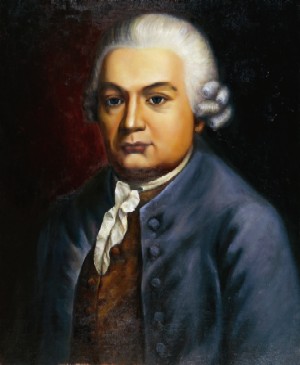
Johann Sebastian Bach had twenty children, if you don't count P.D.Q. Bach. Ten of them survived into adulthood. Of them, four of his sons grew up to be famous composers. Wednesday evening's concert at Alice Tully Hall offered argument for the reappraisal of Carl Philip Emmanuel Bach, whose work serves as an important bridge between the music of his father and the classical style as developed by Haydn and Mozart in the latter half of the 18th century.

The Orchestra of the Age of Enlightenment is an acclaimed period performance ensemble from the United Kingdom, under the direction of Sir Roger Norrington. Sir Roger is now 77, and has had a long career leading period performance ensembles. Although he has met with wide criticism for his dry-toned, unromantic accounts of Beethoven, Wagner and even Mahler, these four symphonies and two concertos were ideally suited to his plain-spoken approach. They were played by the small orchestra (about two dozen, all told) with melodic drive and energy throughout.

The highlight of the performance was the C Major harpsichord concerto. It is difficult to play with lyricism on the harpsichord, but soloist Steven Devine overcame the limitations of that instrument. His cadenzas were played with beauty and skill, an impressive blend of dexterity and phrasing as he made the harpsichord sing.

C.P.E. Bach. Image © Naxos.
The same could not be said for the A Major cello concerto, with Richard Lester playing the solo part. Mr. Lester played with passion but hit some number of wrong notes in the first movement. Although he settled in and played the next two movements with singing tone and skilled bow-work, the errant opening undermined the whole performance.

When Haydn referred to Bach as the "father of us all", he was referring not to Johann Sebastianm but to C.P.E. Bach. This was proved by the four string symphonies on this program, which were written for a patron (Baron Gottfired von Swieten) who wanted Bach to push the envelope of instrumental writing farther than it had ever been pushed before. Using only strings and harpsichord, the younger Bach creates a riot of emotional color in the course of three movements each. Impressive, since each symphony is an average of just ten minutes in length.

Trending on Superconductor

Translate

Share My Blog!

Share |

Critical Thinking in the Cheap Seats