Support independent arts journalism by joining our Patreon! Currently $5/month.

About Superconductor

Our motto: "Critical thinking in the cheap seats." Unbiased, honest classical music and opera opinions, occasional obituaries and classical news reporting, since 2007. All written content © 2019 by Paul J. Pelkonen. For more about Superconductor, visit this link. For advertising rates, click this link. Follow us on Facebook.
Showing posts with label Movies. Show all posts

Monday, April 6, 2015

Concerning Hobbits, Wizards and Leitmotifs

An introduction to the other Ring cycle.
by Paul J. Pelkonen
Frodo Baggins (Elijah Wood, center) Sam Gamgee (Sean Astin, left) and
Gollum (Andy Serkis, right)in a tense moment from The Lord of the Rings: The Two Towers.
Image from The Two Towers © 2002 New Line Cinema/Wingnut Films, used for promotional purposes only,
This week Superconductor will visit the other massive Western art-work concerned with some dwarves, some heroes and a Ring of Power that these creatures will kill to possess. We will be attending and writing about the 21st Symphony Orchestra and Chorus's current stand at Lincoln Center's David H. Koch Theater. There,  conductor Ludwig Wicki will lead 250 musicians and singers in composer Howard Shore's orchestral score of The Lord of the Rings in conjunction with screenings of the Academy Award-winning trilogy.

Wednesday, August 22, 2012

Happy Birthday, Claude-Achille Debussy

The father of modern French music turns 150.
Claude-Achille Debussy
Today we're celebrating the sesquicentennial birth of one Claude-Achille Debussy, composer, pianist and artist extraordinaire. And we're also going to talk about the movies.

I had a "Debussy moment" the other day. I was watching a movie I've seen many times, David Fincher's The Game.

(Plot spoilers follow after the jump.)

Thursday, July 19, 2012

Putting Ideas Together VI: "I'm Sorry, Dave."

When Pink Floyd's Echoes meets 2001: A Space Odyssey.
by Paul J. Pelkonen

The members of Pink Floyd (l.-r. Roger Waters, Nick Mason,
David Gilmour, Rick Wright) meet their new friend HAL 9000.
Image of HAL 9000 © 1969 Turner Pictures. Image of Pink Floyd © 1971 EMI Records.
Photoshop by the author.

Classical music aficionados and science fiction geeks alike know that Stanley Kubrick's seminal film 2001: A Space Odyssey features a whole slew of great music, from the opening use of Richard Strauss' Also Sprach Zarathustra to Johann Strauss' Blue Danube. Later scenes feature Atmospheres by iconoclastic Hungarian composer Gyorgi Ligeti.


Movie geeks know that if you watch The Wizard of Oz with the sound off while listening to Pink Floyd's The Dark Side of the Moon, weird things are supposed to happen. But what is the result when you combine the grand final act of 2001 with Pink Floyd? 

Thursday, July 5, 2012

Raindrops in Outer Space

Chopin's Prelude in D features in Ridley Scott's Prometheus.
Renaissance android: David (Michael Fassbender) enjoys Chopin in Prometheus.
Image from Prometheus directed by Ridley Scott © 2012 20th Century Fox/Scott Free/Dune Entertainment.

Yesterday was the Fourth of July, and I took a much-needed break from the heat and hustle to see Prometheus, Ridley Scott's new science fiction opus, a prequel to the British filmmaker's first smash hit, Alien.

Alien is one of my favorite horror films of all time, a chill-inducing re-take on the sci-fi classic The Thing from Another World. It is basically a creature flick with an eight-foot-tall bio-mechanical monster stalking and killing crewmen aboard an atmospheric, dark space-ship. Prometheus is more cerebral, an H.P. Lovecraft-inspired quest for the origins of life on Earth that--you guessed it--leads to crew members being horribly killed in all sorts of inventive ways.

Among the flickering lights, black goo, alien technology and tentacles that one expects from this franchise, there was a small musical pleasure: Chopin's Prelude in D minor, the Raindrop. The pianist is Philip Howard.

Sunday, April 17, 2011

Classical Music Goes to the Movies...Again

(or..."Hey, isn't that Sibelius?")

Classical music has been a big part of film ever since the early days of silent movies played to piano accompaniment. But works by the great masters show up in some pretty unexpected places. Here's a quick look at some (less than) famous appearances of the great composers' works in Hollywood.
On the run, with a cello. James Bond (Timothy Dalton)
and Kara Milovy (Maryam D'Abo) in The Living Daylights. 
© 1987 EON Productions/MGM-United Artists/Danjaq S.A.
The Living Daylights (1987)
Timothy Dalton's first Bond film was John Barry's las, and the late great British soundtrack composer loaded it with classical music. There's excerpts from Act II of Le Nozze di Figaro, the andante from Borodin's String Quartet No. 2, and the finale of Dvorak's Cello Concerto. Small wonder: the "Bond girl" in Daylights is a Czech cellist played by Maryam D'Abo.

The movie's most memorable music-related image: Dalton and D'Abo escaping into Austria...riding on a speeding cello case.

Die Hard 2 (1990)
Michael Kamen's score for the first Die Hard movie made extensive use of Beethoven's Ninth Symphony to accompany its tale of a lone-wolf cop (Bruce Willis) trapped by terrorists in an L.A. skyscraper. The sequel (yes it's also known as "Die Harder") was directed by Finnish filmmaker Renny Harlin.
"Whaddya mean there's no Beethoven in this one?" Bruce Willis in Die Hard 2.
© 1990 20th Century Fox/Silver Pictures
Like the first, Die Harder is set at Christmas. Our hero is at Dulles Airport, during a snow storm, when it gets taken over by (you guessed it) terrorists. Inspired by the winter setting (and possibly the Finnish director) Kamen chose to make Finlandia, the nine-minute tone poem by Jean Sibelius, the heart of the soundtrack. The ominous opening chords accompany the terrorist takeover, while the triumphant final march section bursts forth as Bruce Willis (once again) saves the day.


Anaconda (1997)
Verdi's least popular, least-performed opera, Alzira, is set in South America. But that didn't stop the makers of Anaconda from using the opera composer's music in their film about hapless explorers and one very big, very hungry computer-generated snake.

As their boat chugs up the river, one of the characters blasts ""Dio Che Nell'alma Infondere", the friendship duet that comes early in Don Carlo. It's the Metropolitan Opera recording with Michael Sylvester as the Don and Vladimir Chernov as the Marquis de Posa. The giant snake doesn't attack during this scene. Guess it liked opera.


The fountain scene from Ocean's 11. © 2001 Warner Brothers Pictures.
Ocean's 11 (2001)
This star-studded remake of the classic Vegas heist flick makes extensive use of Debussy's Clair de lune from the Suite Bergamesque. It first appears on the soundtrack in a modified electronic version when Tess Ocean (Julia Roberts) makes her entrance, and represents her character throughout the movie.

Later, you hear Eugene Ormandy conducting the Philadelphia Orchestra in the orchestral version of the piece, as the gang celebrates a successful triple casino robbery by standing and contemplating the fountains in front of the Bellagio. If this seems familiar it is: director Steven Soderbergh included the scene as an homage to the ending of The Right Stuff.

xXx
 (
2002)
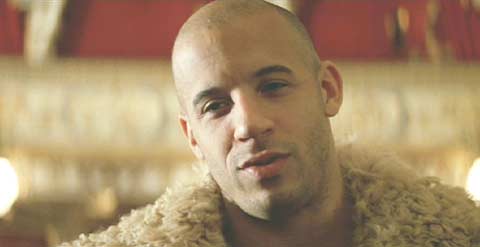
Vin Diesel's hyperkinetic take on spy movies and extreme sports culture features live performances by German metal band Rammstein and the British electronica duo Orbital. But when he's brought in for a briefing with the "M"-like Augustus Gibbons (Samuel L. Jackson) you hear...Mozart?
"Oh you've gotta be kidding me." Vin Diesel as Xander Cage (Agent XXX) in xXx.
Frame capture from xXx, © 2002 Revolution Studios.
Gibbons conducts his briefing in a Prague opera house, where he's enjoying a dress rehearsal of Don Giovanni. (Never mind that these two guys are talking through the first act.) Vin's response to this cultural exposure? The famous "Oh, you've gotta be kidding me."

Tuesday, March 29, 2011

Five Movies Featuring the Ride of the Valkyries

The helicopter attack from Apocalypse Now. © 1979 American Zoetrope Studio/Lions Gate Pictures
In the 20th century, the surging strings and triumphant horn calls that open Wagner's Ride of the Valkyries have transcended the operatic stage and the Germanic gods of the Ring Cycle to become standard Hollywood accompaniment to movie scenes featuring Wagnerian amounts of butt-kicking. Let's take a look at movies that use the curtain-raiser as a different kind of dramatic device.

Tuesday, February 16, 2010

Ten Great Opera Movies

From the Marx Brothers to 007--a history.
by Paul Pelkonen
The world of opera and Hollywood have a long association. Opera composers of the 20th century won Oscars for their work, and the epic sweep of Grand Opera led to giant spectacles like Ben-Hur, and even Avatar. With that in mind, here's a list of ten movies where you'll suddenly find youself at (or in!) the opera.
Feed my Frankenstein: Boris Karloff in Charlie Chan at the Opera

  1. A Night At The Opera
    The Marx Brothers' classic farce has the boys trying to help a young opera singer make good in New York while at the same time doing hilarious damage to the Verdi war-horse Il Trovatore. Kitty Carlisle delivers some beautiful singing in the final "Miserere", a few bits of Pagliacci and of course that stateroom scene.

  2. Citizen Kane
    Orson Welles' dramatization of the life of William Randolph Hearst has his titular character attempting to make over his mistress into a successful opera singer. Watch their frustration build as she repeatedly mangles "Una voce poco fa" from Act I of The Barber of Seville.

  3. Charlie Chan at the Opera
    One of the better examples of the early Chan movies, this thriller stars Warner Oland as the cheerful Chinese sleuth, and Boris Karloff as a Mephistophelean baritone who has escaped from an insane asylum to another haven for the insane--the opera house. The opera in this one is called "Carnivale" and was written for the movie by singer/pianist/composer Oscar Levant.
  4. The Tales of Hoffmann
    This is a haunting, fairly straightforward adaptation of Offenbach's unfinished final opera. It follows the old-school practice of placing the "Antonia" act last, and for some reason she is a ballet dancer, not an opera singer. The music is gorgeous and the visuals (by The Red Shoes directors Michael Powell and Emeric Pressburger) will haunt you after the credits roll.
  5. Hannah and Her Sisters
    Puccini is the order of the day in this Woody Allen comedy--one of his best films of the 1980s. In this case, Sam Waterston plays an opera-loving architect who briefly dates Diane Wiests character and takes her to a performance of Manon Lescaut at the Met. He brings in a bottle of wine and two glasses, something that today's bag-searching security strictly forbids. But hey, it was 1983.
  6. Amadeus
    This Oscar-winning film is historical hokum, but an excellent examination of the relationship between rival composers Mozart and Salieri. Includes scenes from Die Entfuhrung aus dem Serail, Le Nozze di Figaro, Don Giovanni, Die Zauberflöte and even an excerpt from Salieri's little heard opera Assur.
  7. Meeting Venus
    Currently out of print, this excellent Hungarian film chronicles a troubled production of Tannhaüser at the "Opera Europa" in Paris, an international company where "you can be misunderstood in twelve different languages." The plot resembles Wagner's opera, with a conductor torn between his marriage and a passionate affair with the soprano, played by Glenn Close and voiced by Kiri Te Kanawa.
  8. The Fifth Element
    Luc Besson's futuristic Bruce Willis vehicle features a rendition of Donizetti's "Il dolce sono." Yes, the Mad Scene from Lucia di Lammermoor sung in an opera house on an intergalactic luxury liner by an eight-foot bright blue diva with tentacles growing out of her head. As a cabaletta, the Diva Plavalaguna sings the "Diva Dance", a blend of techno, rock and dizzying vocal acrobatics. Brava!
  9. Topsy-Turvy
    Operetta is the focus here, specifically the partnership between W.S. Gilbert (Jim Broadbent) and Sir Arthur Sullivan (Alan Corduner). The movie chronicles the pair's creative split and eventual reunion, which occurred during the writing of The Mikado. You also get to see scenes from Princess Ida and The Sorcerer performed by an excellent cast.

  10. Quantum of Solace
    James Bond has been to the opera before (notably in 1987's The Living Daylights), but a Bregenz performance of Tosca fuels a key plot point in this most recent Daniel Craig theater. As Bond discovers members of the secret organization "Quantum" hiding in the audience, the villain takes off his identifying "Q" pin, turns to his date and drily says "I guess Tosca isn't for everyone."

Trending on Superconductor

Translate

Share My Blog!

Share |

Critical Thinking in the Cheap Seats