Support independent arts journalism by joining our Patreon! Currently $5/month.

About Superconductor

Our motto: "Critical thinking in the cheap seats." Unbiased, honest classical music and opera opinions, occasional obituaries and classical news reporting, since 2007. All written content © 2019 by Paul J. Pelkonen. For more about Superconductor, visit this link. For advertising rates, click this link. Follow us on Facebook.
Showing posts with label John Adams. Show all posts

Tuesday, March 26, 2019

Concert Review: The Weight on His Shoulders

Jaap van Zweden leads Brahms, Adams and Ives at the New York Philharmonic.
by Paul J. Pelkonen
Man at work: Jaap van Zweden rallies the New York Philharmonic at David Geffen Hall.
Photo by Chris Lee © 2018 The New York Philharmonic
It's not easy to be music director of the New York Philharmonic.

America's longest-serving orchestra has a proud history of conductors and composers at its helm, legendary figures too numerous to list here. On Saturday night, Jaap van Zweden, who is in the homestretch of his first season at the helm of the Philharmonic, led the second of three programs that were firmly in the expectations that this city has of its music director. The concert was evenly split between twentieth century American music and the 19th century German repertory that is so beloved by the Philharmonic's more conservative subscribers. It was the sort of program that a Bernstein or Boulez might assemble, an adroit and canny mix of old and new sensibilities.

Monday, February 4, 2019

Concert Review: Journey Into Imagination

Jeremy Denk returns to Carnegie Hall.
by Paul J. Pelkonen
Jeremy Denk and friends.
Photo © Nonesuch Records
Since making his New York recital debut in 1997, the pianist Jeremy Denk has led audiences on fearless explorations of some pretty dark corners of the standard repertory. On Friday night at Carnegie Hall, Mr. Denk concluded his current American recital tour with a slate of concert fare by major composers that is, well, not obscure, but--let's say stuff that you don't hear programmed that often.

Saturday, July 22, 2017

Concert Review: The New Teen Titans

The National Youth Orchestra of the United States of America marks five years at Carnegie Hall.
by Paul J. Pelkonen
Members of the National Youth Orchestra of the United States of America,
also known as the Red Pants Brigade. Photo courtesy Carnegie Hall.
A concert performed by an orchestra of musicians between the age of sixteen to nineteen is usually not an occasion for comment. However, on Friday night, the National Youth Orchestra of the United States of America played at Carnegie Hall, under the baton of Marin Alsop. The NYO-USA was established five years ago through the good offices of Carnegie Hall’s Weill Music Institute and remains an important initiative in the sadly neglected and underfunded field of American music education.

It would be fallacious to hold these young musicians, in their uniform of black jackets, red concert slacks and low-cut canvas sneakers to the same standard as the Berlin or Vienna Philharmonics. There were missed notes, or notes played past the measure. There were some lured and awkward phrases. However the lack of polish in their playing was compensated for with a raw energy and enthusiasm, and a fearlessness as they took on the challenge of two works by modern composers and one of Gustav Mahler’s most familiar and most forbidding symphonies: the First.

The concert started with Short Ride in a Fast Machine, a four minute curtain raiser by John Adams that epitomizes the phrase “truth in advertising.” A repeatedly tapped woodblock provided the piston pump on that machines engine, with violins  winds and brass sawing, chirping and bellowing Mr. Adams’ trademark short cells of sound. Rough this the woodblock persisted, embodying either the ticking of an overworked engine or an excited woodpecker strapped firmly into the passenger seat. This is a work of propulsive movement that climaxes in a golden glow of sound.

Ms. Alsop proved to be a rally-class driver of this very large ensemble, navigating Mr. Adams’ gear-shifts of meter and phrase. She whipped the big orchestra around the hairpin turns while immersing the listener in the dens orchestral soundscape, Somehow this short piece seemed a lot longer and more absorbing then its four-minute length would indicate.

The orchestra seemed more enthusiastic about the second piece of the evening, the three movement Apu: A Tone Poem for Orchestra from the pen of Gabriella Lena Frank. This was a kind of concerto for orchestra in three movements, with complicated lines for woodwind a and high percussion. Its purpose: to depict the Apu, a wilderness spirit that appears to travelers high in the mountain passes of Peru. Like the playful mountain spirit, the spiritual center of Ms. Frank's work revealed itself slowly and proved to be well worth the journey. The final movement was exuberant and demanding.

Mahler's First Symphony is one of the composer's most accessible: an early statement of purpose loaded with quotes from the composer's own songs, children's rhymes and even a fragment of Humperdinck's Hansel und Gretel. It remains popular with audiences and regularly programmed as a result. However the four movements of this symphony (once nicknamed “the Titan”) are a stiff climb for even the most seasoned professional band. Here. The NYO-USA players seemed challenged in the first movement where woodwind phrases were overextended and the first roar of the horns feeble and timid. However, Ms. Alsop recognized the difficulties and responded with an urgent tempo, letting the energy of the movement build and build before erupting in a storm of timpani and trumpet in its closing pages.

The dance movement was taken at a similar urgent pace, with the cellos chugging out the rollicking almost nautical rhythm. Some slurred string phrases in the trio were forgivable. E slow movement was super, a smoldering funeral march that ascended into a manic celebration before relapsing into the quiet meditation of the opening theme. The final movement detonated, with Ms. Alsop letting her charges burst forth into exuberant fanfares. Wind and brass. Indeed, the horn section did the heroic, heavy lifting at the end. They stood and played proudly with robust tone and bells raised for maximum volume, hammering home the last notes of this audacious and ebullient work.

Monday, April 3, 2017

Concert Review: Another Trip to Golgotha

The St. Louis Symphony Orchestra offers John Adams' The Gospel According to the Other Mary.
by Paul J. Pelkonen
At the controls: conductor David Robertson. Photo by Scott Ferguson.
There is some debate as to whether The Gospel According to the Other Mary, the 2013 work for soloists, chorus and orchestra by composer John Adams, is an opera or an oratorio. For Friday night's performance at Carnegie Hall, conductor David Robertson chose the latter option, presenting a straight concert performance of this two-act work on the wide but shallow stage of Stern Auditorium.

Saturday, April 1, 2017

Concert Review: A Minimal Fuss

Steve Reich’s Three Generations opens with John Adams and Terry Riley.
by Paul J. Pelkonen
John Adams and Terry Riley. Their music was celebrated on Thursday night at Zankel Hall.
Photo courtesy Carnegie Hall.

The composer Steve Reich currently occupies the Debs Composers' Chair at Carnegie Hall. That makes 2017 a good spring season for New Yorkers whose tastes run to the masterworks of the late 20th century. Two of those masterpieces were programmed on Thursday at the opening night of Three Generations, a four-concert series that Mr. Reich is curating at Carnegie’s subterranean venue Zankel Hall. Following the performance, Mr. Reich led a short discussion with fellow composer John Adams and Brad Lubman, leader of the evenings performance.

Friday, March 17, 2017

Concert Review: A Composer's Fancy

Alan Gilbert and Yo-Yo Ma premiere the Salonen Cello Concerto.
by Paul J. Pelkonen
Yo-Yo Ma onstage with the New York Philharmonic.
Photo by Chris Lee © 2017 The New York Philharmonic.
The New York premiere of a new concerto by a major composer is always an event. On Wednesday night at David Geffen Hall, that composer was the new music rock star Esa-Pekka Salonen, currently composer-in-residence at the New York Philharmonic. The work: his new Concerto for Cello and Orchestra. The soloist: Yo-Yo Ma, the most famous cellist in the world. Mr. Ma and Mr. Salonen played this work together on March 9, giving its world premiere in Chicago. Here, the conductor was Alan Gilbert.

Sunday, March 12, 2017

Concert Review: Memories of the Adams Administration

The New York Philharmonic presents two sides of John Adams.
The composer John Adams. Photo by Margaretta Mitchell.
John Adams is no longer the nervy young composer who rode a minimalist wave to popularity with operas like Nixon in China. He is 70 now, and his belated birthday celebration was the subject of this week's set of all-Adams concerts at the New York Philharmonic under Alan Gilbert. He was at Friday's matinee concert, a known quantity warmly greeted by an audience that is often hostile to any music written after 1910.

Wednesday, April 1, 2015

Concert Review: A Ride on the Orient Express

The Philharmonic premieres John Adams' Scheherazade.2.
by Paul J. Pelkonen
A woman against the masses: violinist Leila Josefowicz at the New York Philharmonic.
Photo by Chris Lee © 2015 The New York Philharmonic.
As music director of the New York Philharmonic, Alan Gilbert has been instrumental in engineering the premieres of new works by still-living composers. One of those premieres took place last week with the first performances anywhere of Scheherazade.2, John Adams' new "dramatic symphony for violin and orchestra." It is in fact a hybrid creation: a four movement symphony with  aspects of a violin concerto, minus any structural resemblance to the latter form. The solo part was played by Leila Josefowicz.

Monday, October 13, 2014

Metropolitan Opera Preview: The Death of Klinghoffer

The Met presents John Adams' controversial opera for the first time.
by Paul J. Pelkonen
Leon Klinghoffer, 1916-1985.
In the lead-up to the 2014 season Metropolitan Opera general manager Peter Gelb's decision to stage John Adams' 1991 opera The Death of Klinghoffer has drawn controversy, outrage and (on opening night) protests in front of the opera house. Mr. Gelb responded to the controversy by cancelling both the Live in HD telecast and the NPR radio simulcast of the show, so the only way to see or hear Klinghoffer is by going to the opera house.

Sunday, June 29, 2014

Sailing Toward the Rocks

How the Met's Klinghoffer cancellation could wreck more than an opera.
by Paul J. Pelkonen
The Achille Lauro was hijacked by terrorists in 1985.
The Metropolitan Opera's abrupt decision to cancel the Live in HD broadcast and radio broadcast of John Adams' The Death of Klinghoffer has already damaged the company's artistic credibility. The long-term costs could be even more serious.

Saturday, May 17, 2014

Concert Review: The Last and the Biggest

The Bavarian Radio Symphony Orchestra returns to Carnegie Hall.
by Paul J. Pelkonen
Balancing act: conductor Mariss Jansons brought the
Bavarian Radio Symphony Orchestra back to Carnegie Hall this week.
Photo from the orchestra's official site, © 2014 Bavarian Radio Symphony Orchestra.
Although the concert season at Carnegie Hall is breathing its last, Friday night marked the return of one of Germany's greatest orchestras to that historic venue. This was the first of three performances this week featuring the Bavarian Radio Symphony Orchestra under the baton of Mariss Jansons. The program featured concert hall standard by Richard Strauss and Hector Berlioz, preceded by the first Carnegie Hall premiere of John Adams' 1996 work Slonimsky's Earbox.

Saturday, May 10, 2014

Concert Review: Finishing the Exodus

The Cincinnatti Symphony Orchestra and May Festival Chorus at Spring For Music.
by Paul J. Pelkonen
Conductor James Conlon.
Photo by Dan Steinberg © 2013 Los Angeles Opera.
The conductor James Conlon has a reputation for making fearless choices when it comes to repertory. On Friday night, Mr. Conlon brought the Cincinnatti Symphony Orchestra and the May Festival Chorus to Carnegie Hall for the fifth and penultimate installment of this year's Spring for Music festival. The program was bold and innovative: pairing John Adams' tripartite choral work Harmonium with The Ordering of Moses, an oratorio by composer R. Nathaniel Dett.

Friday, March 29, 2013

Concert Review: The Passion, California Style

John Adams' The Gospel According to the Other Mary with the L.A. Philharmonic.
by Paul J. Pelkonen
The cast of The Gospel According to the Other Mary with conductor Gustavo Dudamel (left).
Photo by Richard Termine © 2013 Richard Termine Courtesy Lincoln Center.
Gustavo Dudamel and the Los Angeles Philharmonic are back in New York. On Wednesday night, the fiery Venezuelan conductor led the New York premiere of The Gospel According to the Other Mary, a massive, nearly three-hour oratorio by composer John Adams. Other Mary (as it is called in the program) is a follow-up to Mr. Adams' 2000 composition El Niño. It recounts the late works, death, and resurrection  of Jesus from a distinctly feminist perspective.

Thursday, March 28, 2013

Concert Review: Allegations and Alligators

The Attacca Quartet plays John Adams.
by Paul J. Pelkonen
The Attacca Quartet and a former escalator rider.
Photo © AttaccaQuartet.com
The Attacca String Quartet are one of the bright lights of the chamber music scene in New York right now. On Tuesday night, the group celebrated the release of Fellow Traveler, their new CD featuring the chamber music of John Adams with a concert Le Poisson Rouge.  Mr. Adams was in attendance.

Wednesday, March 27, 2013

The Superconductor Interview: The Attacca Quartet

A morning sit-down with this New York chamber ensemble.
by Paul J. Pelkonen
Fiddlers on the roof: The Attacca Quartet
(L.R. Amy Schroeder, Keiko Tokunaga, Andrew Yee, Luke Fleming)
Image © 2013 The Attacca Quartet.
"On the second day of undergraduate," Andrew Yee says, "there was one of those team-building seminars, I met Amy (Schroeder) who was a friend of a friend. After we met we asked each other, 'Do you like chamber music?'"

Wednesday, March 28, 2012

Concert Review: It's All Happening!

American Mavericks comes to Carnegie Hall.
by Paul Pelkonen
A key component of John Cage's Song Books, and a valuable source of potassium.
(Andy Warhol was an "American maverick too!)
The stage of Carnegie Hall on Tuesday night had a poker table on it. Some microphones, two pianos, and a counter with a typewriter at one end, some fruits and vegetables, and a blender. 

Thursday, March 22, 2012

Festival Preview: American Mavericks

The modern music festival comes to Carnegie Hall.
Redshirts: Michael Tilson Thomas (left) with composer Lou Harrison.
Photo © San Francisco Symphony Orchestra.
John Cage. Charles Ives. John Adams. Steve Reich. Meredith Monk.

These are just a few of the composers featured at American Mavericks, next week's week-long festival at Carnegie Hall celebrating the bold music of American composers who continue to push the envelope in the 20th century and beyond. The program seeks to challenge the traditional conservatism of Carnegie audiences by presenting these modern composers next to each other instead of trying to contrast them with better known music by Brahms or Tchaikovsky.

The week-long concert series is curated by Michael Tilson Thomas, music director of the San Francisco Symphony Orchestra. "M.T.T.", (as he is known) has assembled an exciting series that should make the staid plaster arches of the Stern Auditorium echo with exciting new sounds. 

The sound moves upstairs on Tuesday, with the first of two concerts by the San Francisco Symphony Orchestra. Jessye Norman joins the orchestra to sing works from the Cage Song Books. But the real plum here is the New York premiere of John Adams' Absolute Jest, a kind of concerto for string quartet and orchestra.

Wednesday night features special guest Emanuel Ax, playing Morton Feldman's Piano and Orchestra. Also featured: Sun-Treader by the underrated composer Carl Ruggles, and A Concord Symphony by American pioneer Charles Ives. 

The festival ends with two concerts at Zankel Hall, featuring members of the SFSO. Thursday night features the fantastical music of Harry Partch, whose kit-bashing approach to composition resulted in the creation of some truly unique instruments. The concert also features music by David Del Tredici, the New York premier of Mason Bates' Mass Transmission, and the Concerto for Organ with Percssion Orchestra by Lou Harrison. 

Friday night features Music for Pieces of Wood by Steve Reich and the New York premiere of Ms. Monk's Realm Variations. The concert (and the festival) ends with Echoi by Lukas Foss and Jacob's Room a monodrama by Morton Subotnick.

Monday, July 18, 2011

Concert Review: Revelation Calling

Bruckner's Ninth Brings Cleveland Residency to a Mystic Close.
by Paul J. Pelkonen
Anton Bruckner: Master of the Mystic Arts. He composed, too.
The final installment of Bruckner (r)Evolution, the Cleveland Orchestra's four-concert residency at the 2011 Lincoln Center Festival, paired Anton Bruckner's Ninth (and final) Symphony with the Doctor Atomic Symphony by contemporary minimalist composer John Adams. Franz Welser-Möst conducted. His intent: to show Bruckner's influence on modern music.

Friday, July 15, 2011

Concert Review: The Total Perspective Vortex

Night Two of Bruckner (r)Evolution with the Cleveland Orchestra.
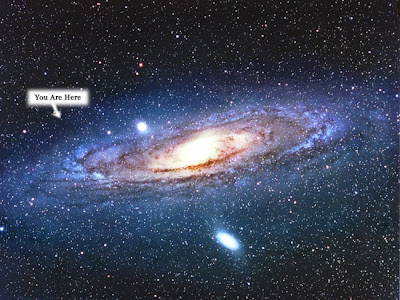
Bruckner's music puts everything in perspective for the listener.
With thanks to Douglas Adams for the idea.
The second concert in the Cleveland Orchestra's four-evening survey pairing the late Bruckner symphonies with minimalist composer John Adams outstripped the first. Franz Welser-Möst conducted the second in this concert series, pairing the two composers in an effort to show Bruckner's influence on contemporary minimalists.

The main reason for this was the presence of violinist Leila Josefowicz. The Canadian soloist stunned the audience with her fearless, fleet interpretation of Mr. Adams' three-movement violin concerto, a treacherous composition from the pen of the composer of Nixon in China. Placed next to the Bruckner, the influence of one composer on the other was clear, creating the fresh perspective that is Mr. Welser-Möst's intent.

This concerto is written on a large scale, with a long difficult solo part that never seems to yield the stage to the orchestra. Ms. Josefowicz tore eagerly into the opening movement, and produced sweet lyric tone in the long, slow chaconne. Mr. Welser-Möst accompanied the soloist with a sensitivity, keeping the pace of the chaconne smooth and flowing, with a slow circular groove that was almost percussive in its steadiness.

Ms. Josefowicz displayed astounding technique in the final movement, racing over the chugging ostinato rhythms with such force that she shredded the horse-hair on her bow. Without missing a beat, she conducted a swift bow repair and raced to the finish line of the piece. It was a bravura monologue for this talented soloist, the kind of reading that makes a good case for further exploration of Mr. Adams' music by the most conservative music lover.

Bruckner's Seventh Symphony is the composer's most popular work, the piece which "broke" him with the Viennese public and finally earned the grudging respect of critic Eduard Hanslick. The Seventh is written on the same large scale as the other late Bruckner works, with the addition of four Wagner tubas to the brass choir. This is a hybrid of horn and tuba, invented by Wagner for the first performances of his own Der Ring des Nibelungen.

The Seventh builds to a series of slow, relentless climaxes before pausing and building again, rising to a mighty height at the end of its first movement. The coda of the opening Sonata Allegro pays homage to Wagner himself, with the entire 13-strong brass section playing a chorale that sounds like the opening of Das Rheingold played backward. It is an astonishing effect.

Anton Bruckner.
Bruckner dedicated this symphony to Wagner, and quoted from the composer several times in the score. But these quotes (which range from "Lohengrin" to the Ring do not undercut the power of the second movement, a long, worked-out funerary ode to Wagner, who had died in 1883. This slow movement, which gradually rises to its flowering climax is among this composer's greatest achievements. On the podium, Mr. Welser-Möst respected the composer's intentions and maintined the slow surge of power.

The third movement, a bucolic series of Austrian peasant dances, allowed the conductor and orchestra to show their playful sides. Woodwinds and strings whirled and stomped through the trio section, in the form of a Ländler, a kind of Austrian Alpine hoedown. Mr. Welser-Möst displayed mastery of the tricky triple-double "Bruckner rhythm" that dominates this movement.

The finale elevated the listener back to the heights of Bruckner's sonic mountain, with a return of the opening brass chorale and a new theme developed within the woodwinds. At the work's climax, the backward Wagnerian chorale returned, leaving the listener on the windy heights, under the starry vault, marvelling at the scope of Bruckner's creation. It was a stirring end to the second New York concert by this fine orchestra, who were in excellent playing form and inspired by the exceptional material in front of them.

Bruckner (r)Evolution concludes this weekend with the Eighth and Ninth Symphonies. Tickets are available through Lincoln Center Festival.

Thursday, July 14, 2011

Concert Review: First Shots Fired

Bruckner (r)Evolution Opens at the Lincoln Center Festival
Anton Bruckner. Portrait by Josef Büche.

Wednesday night at Lincoln Center saw the opening of Bruckner (r)Evolution, the four-night stand at Avery Fisher Hall featuring the Cleveland Orchestra. Cleveland music director Franz Welser-Möst led the program, which paired Bruckner's Fifth Symphony with Guide to Strange Places, a 20-minute orchestral roadmap by minimalist composer John Adams.

This unusual marriage is part of Mr. Welser-Möst's ambition behind the festival, to demonstrate the influence of Bruckner's unusual symphonic style and cement the Austrian composer as a predecessor of modernism. The humble Bruckner would have been suspicious of the idea, preferring his colossal achievements to stand for themselves as abstract works of art.

The Adams work opened, a dense, harmonically rich four-movement structure played as one on the model of Jean Sibelius' Seventh Symphony. Thick orchestral textures, chugging strings and the guttural honk of the contrabass clarinet combined to create eerie landscapes like the cinematic soundtrack to a recent William Gibson novel.

Like that author's recent trilogy of books, Mr. Adams' work exists in the long shadow of September 11th, and was seen as a kind of threnody for the victims of those terrorist attacks. However, the composer explained in the accompanying concert note that his piece was actually conceived before the attacks, and that it was inspired by an annotated map of Provence in France that provided information on the strange and weird history of that remarkable slice of countryside.

Bruckner's Fifth Symphony has labored under similar misconceptions. It was written at a fiscally difficult time in the composer's life, following the fiasco of his Third. That, and its descending main theme have earned it the nickname "Tragic." But this is a misnomer. The Fifth is like a great stretching bridge to some otherworldly dimension, its span held together by great piers of unison brass and guy-wired by a pizzicato theme that opens the first movement and comes to dominate the finale.

Under Mr. Welser-Möst, the Cleveland Orchestra led the audience on a leisurely tour of this remarkable structure. The brass played with stirring power. The strings gave warm voice to the long melodic lines of the opening movement's second theme and the most lyric pages of the Adagio. The woodwinds came to the fore in the scherzo, written as a pair of interlocking Austrian country dances and reflecting Bruckner's country roots.

The finale led to the most magnificent playing of the evening, a 20-minute movement in which the ideas from the previous three are recapitulated in sonata form and then made to run in place with a colossal double fugue. The effect is remarkably like Beethoven's Ninth Symphony, minus the solo voices and the chorus.

Throughout, Bruckner's writing for the orchestra reflects his mastery of counterpoint and his decision to treat a full symphony orchestra as if it were a giant pipe organ. The Cleveland forces responded to this magnificent music with power, enthusiasm and an odd, awkward grace, making this concert a strong opening to this four-night festival.

Bruckner (r)Evolution continues tonight with the Adams Violin Concerto, paired with Bruckner's Symphony No. 7. Symphony No. 8 bows on Saturday, with the 9th at 2pm on Sunday. Watch this space for full and continuing coverage.

Trending on Superconductor

Translate

Share My Blog!

Share |

Critical Thinking in the Cheap Seats