Support independent arts journalism by joining our Patreon! Currently $5/month.

About Superconductor

Our motto: "Critical thinking in the cheap seats." Unbiased, honest classical music and opera opinions, occasional obituaries and classical news reporting, since 2007. All written content © 2019 by Paul J. Pelkonen. For more about Superconductor, visit this link. For advertising rates, click this link. Follow us on Facebook.
Showing posts with label lincoln center. Show all posts

Sunday, June 9, 2019

Opera Review: No Escape, No Parole

The Philharmonic unlocks David Lang's prisoner of the state.
by Paul J. Pelkonen
The climactic confrontation of David Lang's prisoner of the state.
Photo by Chris Lee © 2019 The New York Philharmonic,
The New York Philharmonic ended its Lincoln Center season this week with prisoner of the state, a new opera from the pen of contemporary composer David Lang. Mr. Lang, whose unconventional list of stage works include battle hymns (set deep within the bowels of the U.S.S. Intrepid and an opera created entirely from whispers, seemed like an ideal choice for this endeavor. This new opera, co-commissioned with ensembles in five other cities, is an ambitious re-telling of Beethoven's Fidelio. However, unlike many of Mr. Lang's stage works, this production, mounted on a specially built stage in David Geffen Hall, proved itself a serious misfire.

It should have worked. prisoner (the lower case is a Lang trademark) follows the plot of Beethoven's lone opera, a work that composer revised many times until achieving its final form. The story is simple: a wife with a husband in the hoosegow shears off her hair, dresses as a man and helps rescue him from certain death. This new libretto strips out Beethoven's awkward attempts at domestic opera-comedy. It also relieves the characters of their names. Finally Mr. Lang chose a dark "twist" ending worthy of middle-season Game of Thrones. (We'll get to that in the last paragraph.)

Mr. Lang is a fearless, ground-breaking composer, but his choices offer little relief to the listener over 70 minutes, especially if Beethoven's opera is familiar to the listener. This new score is percussive and repetitive, with blasts of bass drum and stark minimalist harmonies. The choral writing is skilled and the male members of the Concert Chorale of New York were on point. These fellas were confined to the acoustically dodgy back line of this house crowded together on a high walkway above the stage. Even in their singing, the optimism of Beethoven has been replaced with something much more astringent.

At Saturday night's performance (the final one of this short run) the strong cast did their best with this stuff. Coloratura soprano Julie Mathevet was a feisty and welcome presence as the Assistant, this opera's light-voiced substitute for Beethoven's dramatic heroine. She sings with alacrity and energy but was not allowed in the tight time frame to develop much as an interesting character. Eric Owens was in excellent voice Saturday night, and his dark heavy portrayal of the Jailer reminded viewers that people who work in corrections are locked up along with their charges every day. He was flanked by a chorus of four menacing guards, stacking the odds.

As the Prisoner himself, baritone Jarrett Ott had to sing his first lines, Salome like from a specially built well beneath the acting surface. He did a decent job of appearing tired and emaciated but his warm tone and burly presence were at clear odds with the character's plight. As The Governor, the opera's villain, tenor Alan Oke gleefully chewed scenery and sang with piercing force into an obvious head mic. He was draped in a purple greatcoat uniform that made him look as if the Joker had gotten a job as a hotel doorman.

The show looked great (the design is by Matt Saunders)  aside from the lighting designer's (Theatermachine) occasional decision to shine high-powered theater pieces right into the eyes of the audience. The orchestra was divided in two, to make a lane for the actors. The chorus, in chrome shackles and sodium-yellow jumpsuits (they looked like the "Kiln" prison outfits in Guardians of the Galaxy) looked appropriately oppressed. Their population was swollen with black and white film of more prisoners, suggesting a vast correctional facility with a large and seething population, ready to burst into riot at any moment.

At the climax of the work, the Assistant reveals herself and draws a gun just as the Governor is going to murder her husband. The trumpets sound offstage. The inspectors have arrived. And then the bad guy calmly takes the Assistant's gun away, delicately slipping it into the pocket of his purple greatcoat. All the characters, the now-uncuffed Prisoner included, sing at the audience about how all of us in the world are in shackles, it's just that some of them are more visible than others. This ending, (or lack of one) may reflect the problems of a world that uses private incarceration, torture and hidden "black prisons" to make its population feel safe and secure. In this "Shawshank," there was no redemption for anyone.

Become a Patron!
Superconductor is free for everyone to read but it does cost money to produce. If you enjoyed this article, it's time to click over to Superconductor's Patreon page, and help support the cost of independent music journalism in New York City. Our Patreon program starts at the low cost of just $5 per month, less than a fancy cup of coffee in this town.

Tuesday, May 14, 2019

We've Got a Horse Right Here: The 2018-19 Metropolitan Opera Season

Perqs, re-creations and the Metropolitan Opera season that was.
by Paul J. Pelkonen
Yes, this is a parody of Parks & Recreation starring (l.-r.) Javier Cammarena, Federica Lombardi
Stefan Vinke, Anna Netrebko, Kyle Ketelsen, Christine Goerge, Ambrogio Maestri and Greer Grimsley.
Original image © NBC, opera singers © The Metropolitan Opera, photoshop by the author.
Another Metropolitan Opera season is in the books, and the hard-working singers, actors, dancers, musicians, stagehands and army of support that makes up America's largest opera company is on their way to Pawnee, Indiana for some much deserved recreation at America's biggest Harvest Festival. So this year, let's call the awards the "Little Sebastians" and celebrate by awarding tiny statues of small horses, so small that you can't even see them on the Internet.

Or something.

Anyway, Here's the awards for the Met season-that-was.

Presenting: the Little Sebastians!

Monday, May 6, 2019

Concert Review: Mister Lovejoy

David Robertson brings the Turangalîla-Symphonie to Juilliard.
by Paul J. Pelkonen
David Robertson leads the Juilliard Orchestra. Photo by Jennifer Taylor.

It is one of the seminal symphonic works of the 20th century but  Olivier Messiaen's Turangalîla-Symphonie has always struggled to find its audience. Of massive length and requiring an army of skilled musicians, this hybrid of symphony and concerto has in the past cleared halls of would-be listeners or been avoided by concert subscribers altogether. On Friday night conductor David Robertson led the expanded forces of the Juilliard Orchestra in this huge ten-movement work. Despite the technical difficulty of music this was a performance brimming with love, joy and the enthusiasm of an orchestra come priced entirely of conservatory students.

Thursday, April 25, 2019

Opera Review: He Sleeps With the Fishes (and Everyone Else)

The Juilliard Opera mounts Don Giovanni.
by Paul J. Pelkonen
Take my wife, please. Masetto (Gregory Feldman, right) looks on as the Don (Hubert Zapiór)
woos Zerlina (Jessica Niles) in a scene from Act I of Don Giovanni.
Photo by Richard Termine.
Wolfgang Amadeus Mozart's music is timeless. But are the ribald, sexist opera libretti of Lorenzo da Ponte still workable on the stage in this era of #metoo? That is the question asked by the Juilliard Opera and director Emma Griffin. Her new staging of Don Giovanni bowed Wednesday night at the Peter Jay Sharp Theater. In its two acts, Ms. Griffin sought to turn this opera, the story of a rabid sexual predator at play in the streets of Seville, Spain on its head and deliver a message about today's sexual ethics.

She partly succeeded.

Saturday, April 13, 2019

Concert Review: A Very Unexpected Journey

Simone Young leads the New York Philharmonic in the Mahler Sixth.
by Paul J. Pelkonen
The Big Bang: Daniel Druckman swings the hammer at the climax of the Mahler Sixth.
Photo by Caitlin Ochs © 2019 The New York Philharmonic.
Nobody expected that this would be the week that Simone Young would make her long-awaited return to the New York Philharmonic. The Australian conductor, acclaimed for her work with the Hamburg Philharmonic, had not taken the podium at David Geffen Hall in twenty-one years. (However. she is on the schedule for next season, leading Elgar and Strauss.)  Ms. Young is no stranger to New York audiences, but most of her conducting engagements in this city have been at the Metropolitan Opera, and this is her first appearance with the orchestra since her debut in 1998.

Friday, March 15, 2019

Concert Review: Vocation or Avocation?

Esa-Pekka Salonen brings back his Cello Concerto.
by Paul J. Pelkonen
And usually just a t-shirt: Esa-Pekka Salonen.
Photo by Laurie Lewis.
In recent years, Esa-Pekka Salonen declared himself to be more interested in composition than the daily drudgeries of running a major symphony orchestra. However, his recent slate of podium appearances with the Philharmonia Orchestra indicate that Mr. Salonen's baton has lost none of its bite. On Monday night, Mr. Salonen led the Philharmonia (which he will depart from in 2020 for a job with the San Francisco Symphony) in the second of two concerts at Lincoln Center this week, with his own Cello Concerto flanked by orchestral works by Sibelius and Stravinsky.

Monday, March 11, 2019

Concert Review: Some Famous Last Words

Long Yu conducts the New York Philharmonic.
by Paul J. Pelkonen
Yo-Yo Ma. Photo © 2019 Sony Classical.
The last compositions by any composer, especially those with shortened lives like Modest Mussorgsky and Piotr Ilyich Tchaikovsky, command a certain respect from listeners. This week at the New York Philharmonic, the orchestra played works by each man, flanking the New York premiere of a new concerto for pipa and cello by the second-generation Chinese composer Zhao Lin. The orchestra was conducted by Long Yu, who has developed a tremendous reputation in his own country (he has been referred to as the "Chinese Valery Gergiev") but has yet to break into podium stardom here.

Wednesday, February 27, 2019

Concert Review: Inspiration, Persperation and Adaptation

The Chamber Music Society offers a series of "farewell" works.
by Paul J. Pelkonen
Seven from twenty-three: the musicians of the Chamber Music Society of Lincoln Center
play Strauss' Metamorphosen. Photo by Tristan Cook for the Chamber Music Society of Lincoln Center.
Even the best music is often borrowed from somewhere else. Composers throughout history often draw their melodic inspiration from somewhere else, be it folk song, a medieval church mode or in some cases, other composers. It is always a moment of minor joy when one first hears a most memorable musical idea. Chagrin follows when one figures out the source material, or realizes where a thematic idea has been re-used.

Thursday, February 21, 2019

Concert Review: He's Happiest On the Bench

Mikhail Pletnev returns with the Russian National Orchestra.
by Paul J. Pelkonen
Mikhail Pletnev (at piano) with members of the Russian National Orchestra in 2017.
Photo courtesy the Russian National Orchestra © 2017.
When you're a world-class composer, conductor, arranger and concert pianist who is also the founder and artistic director of an important international orchestra, you can pretty much sit wherever you want. That's the home truth from Wednesday night's appearance at Lincoln Center by the Russian National Orchestra. For this concert, Mikhail Pletnev, who founded the orchestra in Moscow in 1990, chose the role of soloist, letting conductor Kirill Karabits make his New York podium debut.

Tuesday, February 5, 2019

2019-20 Season Preview: Suffragette City

The New York Philharmonic celebrates the 19th Amendment with its new schedule.
by Paul J. Pelkonen
This season, conductor Jaap van Sweden and the New York Philharmonic board the Hogwarts Express.
Original images © Warner Brothers Entertainment and Philharmonic photographer Chris Lee. 

"The right of citizens of the United States to vote shall not be denied or abridged by the United States or by any State on account of sex. Congress shall have power to enforce this article by appropriate legislation."

Last night the New York Philharmonic, in the person of President Deborah Borda and Music Director Jaap van Zweden unveiled its 2019-20 season, the second year to be forged from this new artistic partnership at Lincoln Center. The announcement was made (as with last year) in the sparkling Stanley H. Kaplan penthouse, in a relaxed, loungey atmosphere with strolling hors d'ouevres and a signature cocktail created for the occasion, the "Negentiende" ("Nineteenth" in Dutch, Mr. van Zweden's native tongue.

Tuesday, January 22, 2019

Concert Review: The Boss is Back

Jaap van Zweden returns to the New York Philharmonic.
by Paul J. Pelkonen
A storm of swords: Jaap van Zweden rallies the troops at the New York Philharmonic.
Photo by Chris Lee © 2019 The New York Philharmonic.
We are at the halfway point of the New York Philharmonic's first year with music director Jaap van Zweden on the podium. Friday's morning concert could be taken as a microcosm of what that year has been so far: a marriage of sophisticated players to a conductor steeped in the European podium tradition: solid craftsmanship and a conservative-leaning musical mentality that (the orchestra hopes) will keep the seats filled at David Geffen Hall.

Sunday, January 13, 2019

Concert Review: A Folio of Femme Fatales

Jakub Hrůša returns to the New York Philharmonic.
by Paul J. Pelkonen
The in-demand Mr. Jakob Hrůša returned to the New York Philharmonic last week.
Photo by Andreas Herszau © 2018 Bamberger Symphoniker courtesy IMG Artists.
Rudyard Kipling once wrote that the female of the species is more deadly than the male. On Friday afternoon, conductor Jakub Hrůša tested that theory with a program of works by Janacek and Rimsky-Korsakov depicting females of cunning and wit. These orchestral showpieces flanked the Piano Concerto No. 3 of Serge Prokofiev, the most elegant, energetic and outré of the composer's five.

Monday, December 10, 2018

Concert Review: A Journey Into Mystery

Matthias Goerne at the New York Philharmonic.
by Paul J. Pelkonen
Baritone Matthias Goerne joined the New York Philharmonic for a set of Schubert and Strauss lieder.
Photo by Caroline de Bon.
For their last program before the annual dive into holiday season concerts (carols, brass concerts, Messiah, Renée Fleming)  Jaap van Zweden and the New York Philharmonic gave their audience something unique: a song cycle created from the work of two composers and featuring the voice of Matthais Goerne, the German lieder specialist who sings Wotan on Mr. van Zweden's new recording of Wagner's Ring.

Saturday, November 3, 2018

Concert Review: He's Ready For His Close-Up

Frank Huang takes the spotlight at the Philharmonic.
by Paul J. Pelkonen
Taking solo flight: concertmaster Frank Huang at the New York Philharmonic.
Photo by Chris Lee © 2018 The New York Philharmonic. 
The New York Philharmonic welcomed conductor Juraj Valčuha to its podium on Wednesday night. The Slovak conductor led a program which focused on the particular confluence of European and American music that characterized the first half of the 20th century, in a program of works by Korngold, Rachmaninoff and Samuel Barber.

Friday, November 2, 2018

Opera Review: Country Over Party

The Hungarian National Opera presents Bánk bán.
by Paul J. Pelkonen
Which way to Gagsorszag? Bánk bán (left) and Tiborc reminisce in Act II of Bánk bán.
Photo by Attila Nágy for the Hungarian National Opera.
The musical tradition of Hungary is as rich as any other neighboring country in central Europe. However, the vocal music written by Hungarian composers has not traveled well outside its borders, hampered by the forces of history and the formidable difficulties of the Hungarian language. Of Hungarian operas, the most popular and beloved is Ferenc Erkel's 1861 Bánk bán which finally had its North American debut on Tuesday night at Lincoln Center.

Monday, October 1, 2018

Festival Preview: Hungarian National Opera

Two weeks of opera and ballet, Budapest style.
by Paul J. Pelkonen
Baritone Levente Molár in a scene from Erkel's seminal Hungarian opera Bánk Bán.
Photo by Attila Nagy. Image © 2018 the Hungarian National Opera.
The Hungarians are coming! For the first time since 2010, the David Koch Theater on the south side of Lincoln Center Plaza will resound with the sound of opera as the Hungarian National Opera comes to New York for a two week festival. The company is currently facing major renovations of its own house in Budapest. So they've decided to bring the exciting and colorful variety of operas from its own country to one of the big Lincoln Center stages. All performances will feature the Hungarian Symphony Orchestra under the baton of music director  Balázs Kocsár.

Monday, September 24, 2018

Festival Preview: White Light Festival 2018

Lincoln Center bridges music, art, theater and spirit in its annual offering.
by Paul J. Pelkonen
Image of white light hitting a compact disc.
Running from October 16 to Nov. 18, the White Light Festival is Lincoln Center's annual celebration of the human spirit as expressed through the magic of music and art. Each year has a different focus on aspects of the human condition, seeking to answer the questions of existence:

  • Why are we here?
  • What are we doing here?
  • And where around Lincoln Center can we afford to get something to eat after the show?

Sunday, September 16, 2018

Concert Review: A Long Trip to Jupiter

The New York Philharmonic brings back 2001.
by Paul J. Pelkonen
Class in session: the man-apes and the Monolith in 2001: A Space Odyssey.
Image © 1968 Warner Bros. Used for promotional purposes only.
What is 2001: A Space Odyssey really about?.

Stanley Kubrick's seminal 1968 classic is now 50 years old, and remains as puzzling as ever. On Friday night, as part of this year's The Art of the Score festival, the New York Philharmonic performed the complete orchestral and choral music of 2001 as accompaniment to a large scale screening of the film at Lincoln Center.

Thursday, September 13, 2018

Concert Review: Journey to the Center of the Soul

The New York Philharmonic drinks our milkshake.
by Paul J. Pelkonen
Pipe line: Daniel Day Lewis in There Will be Blood.
Image © 2008 Ghoulardi Film Company, Paramount and Miramax.

Ten years ago, Paul Thomas Anderson's There Will Be Blood rumbled, whistled and roared into movie theaters, anchored by a heaven-storming performance by Best Actor winner Daniel Day-Lewis and the American sense of guilt and horror that this nation's relentless march of progress has left in its very wide wake. On Wednesday night, the New York Philharmonic opened its annual Art of the Score Festival with the orchestra's first performance of the film's complete score, a polyglot creation anchored around the music of composer Jonny Greenwood. Conductor Hugh Brunt made his podium debut.

Tuesday, August 14, 2018

Concert Review: Dancing Against the Current

The Mark Morris Dance Group returns to Mostly Mozart.
by Paul J. Pelkonen
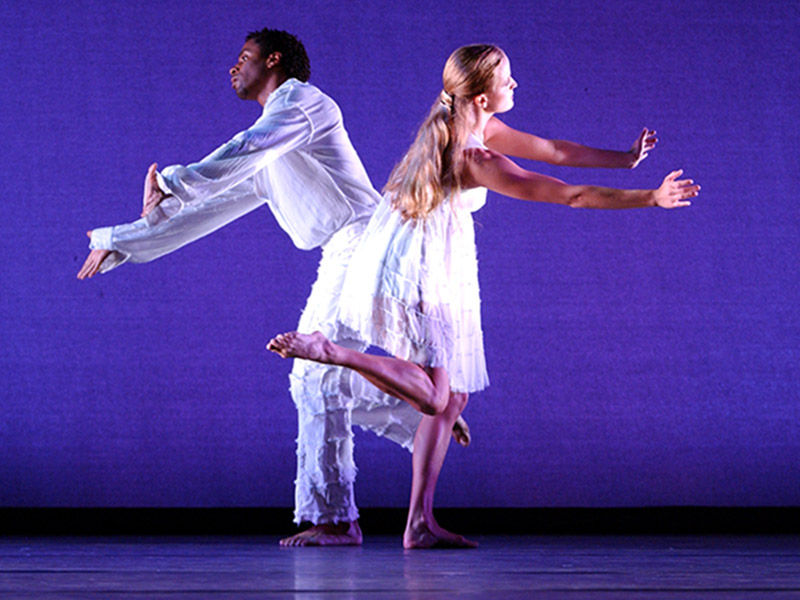
Members of the Mark Morris Dance Group.
Photo © Lincoln Center for the Performing Arts/Mostly Mozart Festival.
Dance is not my beat.

I have never written about ballet. I know little of jazz dance and less of modern choreography other than the occasional gyration the punctuate the grand operas of the 19th century. However last Thursday night at mostly Mozart I was lucky enough to attend a performance by the Mark Morris Dance Group, that was accompanied by three excellent chamber and vocal music performances.

Trending on Superconductor

Translate

Share My Blog!

Share |

Critical Thinking in the Cheap Seats