Support independent arts journalism by joining our Patreon! Currently $5/month.

About Superconductor

Our motto: "Critical thinking in the cheap seats." Unbiased, honest classical music and opera opinions, occasional obituaries and classical news reporting, since 2007. All written content © 2019 by Paul J. Pelkonen. For more about Superconductor, visit this link. For advertising rates, click this link. Follow us on Facebook.
Showing posts with label Ernani. Show all posts

Wednesday, February 28, 2018

The Verdi Project: Ernani

The mature Verdi style emerges in the composer's fifth opera. 
by Paul J. Pelkonen
A post-horn: the instrument blown by Silva to remind Ernani that it is time to die.
Photo from Wikimedia Commons.
Following the wild success of Nabucco and its follow-up I Lombardi, Verdi was on his way as an established composer of Italian opera. And yet, those operas, while having their positive points, do not yet embody the elements that one thinks of when the name "Verdi" comes to mind. Ernani changed all that. Its premiere at La Fenice, in Venice in 1844 was Verdi's first triumph away from the stage of La Scala and cemented his reputation as Italy's newest opera sensation

Thursday, March 19, 2015

Metropolitan Opera Preview: Ernani

This well-worn but classic Met production returns.
by Paul J. Pelkonen
Soprano Angela Meade is Elvira in the Met's revival of Ernani.
Photo by Marty Sohl © 2014 The Metropolitan Opera.
The Metropolitan Opera's ornate production of Verdi's Ernani returns with Francesco Meli in the title role and James Levine on the podium. Lovers of bel canto style will swoon at the return of Angela Meade in the leading role of Elvira. 

Wednesday, November 28, 2012

The Superconductor Interview: Angela Meade

A conversation with the next queen of bel canto.
by Paul J. Pelkonen
"I don't read blogs." Soprano Angela Meade in Ernani.
Photo by Marty Sohl, © 2012 The Metropolitan Opera.
"The essence of a great bel canto opera is beautifully written melodies that seem extremely organic." Soprano Angela Meade should know. In the last five years, Ms. Meade has taken the spotlight as a bel canto specialist, reviving this lost operatic form (the phrase is Italian for "beautiful song") for a new generation of opera lovers.

Tuesday, February 7, 2012

Opera Review: Suicide is Painless

Ernani returns at the Met.
Ernani (Roberto de Biasio, l.) and Elvira (Angela Meade)
in Act IV of Verdi's Ernani at the Met.
Photo by Marty Sohl © 2012 The Metropolitan Opera.
 

The long Metropolitan Opera season always has one surprisingly good revival among its two-dozen-or-so operas. This year, it's Ernani with a strong cast overcoming the vagaries of this Verdi opera, with its goofy Victor Hugo-inspired story of bandits and honor in 16th century Spain.

Despite being the third of Verdi's early successes, the composer's fifth opera has fallen out of fashion in this young century. That might have to do with the romantic idealism of the libretto, which was the composer's first collaboration with Piave, and deals with a highly romanticized kind of Spanish honor. Everything seems to be settled at knife-point in Ernani, even the hero's life. 

As with Il Trovatore, a good cast can surmount the story's limitations and draw you into this heightened world. At the Monday, Feb. 6 performance, the title role was sung by tenor Roberto de Biasio, a talented young singer who bowed in last year's revival of Simon Boccanegra. Mr. Biasio displayed a ringing top note and more importantly, a pleasing timbre in his sturdy young voice. 

Another veteran of that Boccanegra, Dmitri Hvorovstovsky did not have a strong start, but settled into the role as Carlo, the Spanish King who gets elected Emperor (Charles V) in the third act. Mr. Hvorovstovsky was aided by the set designs here, sweeping staircases that helped project his slightly undersized baritone. He was at his best in Act III, with the opening scena ("Oh de' verd' anni miei") in front of Charlemagne's tomb. Verdi's spartan orchestration in this scene helped.

Rising diva Angela Meade shone as Elvira, a role that was her breakout in 2008 when the Washington State native subbed in for an ailing Sondra Radnovovsky. This is the prototype Verdi leading lady, a strong-willed woman who seems constantly ready to commit suicide. Ms. Meade brought her admirable instrument to the part, meeting the challenging high-and-low notes of the opening "Ernani, inviolame" and  the fiery duets and trios that form the backbone of this score.

As Silva, the revenge-obsessed nobleman (who ends the opera by ordering Ernani to commit suicide--you can't make this stuff up) Ferruccio Furlanetto's long experience in Verdi showed. Here, he was essential to the performance's success, playing an ungrateful, but noble character. Mr. Furlanetto brought his rich, steady bass to this character, singing granite-like low notes as he plotted to first bring down Carlo, and then in the last act, Ernani. 

Although Marco Armiliato is a steady hand in the pit, he does not bring the same level of energy and kinetic drive that is needed for the most successful performances of this opera. But he favored his singers, leading them through the tricky passages and enabling that the translated words of Victor Hugo were audible throughout. The story of Ernani is dated, this performance treated a great early Verdi opera with the respect it deserves.

Wednesday, August 31, 2011

Verdi: The Best of the Galley Years

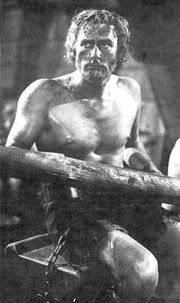
Erroll Flynn rows the boat in The Sea Hawk.
© 1940 Warner Bros. Pictures
A Look at Five Great Early Verdi Operas.
Giuseppe Verdi was one of the most prolific and influential composers of Italian opera in the 19th century. In the course of a long career, he made advances in drama and orchestration that changed his chosen art form forever.

Verdi called the period from 1842 (the premiere of Nabucco) to 1851 (the premiere of Rigoletto) his 'galley years'. In that period, the composer cranked out fourteen operas. He had to satisfy a hungry public, a wide range of singers, and the capricious, difficult censors who tried to force the composer from Busetto to radically alter his work.

Here's the top five operas from Verdi's galley years. Chronological order.

1842: Nabucco (premiered Teatro alla Scala, Milan)
Verdi's third opera (and first real success) retold the story of Babylonian Captivity as a blood-and-thunder story. The plight of the captured Jews resonated with the Italian people, and the chorus "Va, pensiero" became a de facto anthem of Italian nationalism. Nabucodonosor became a beloved opera, affectionately known by its diminuitive.
1846 Ernani (premiered La Fenice, Venice)
Early Verdi operas feature a lot of bandits, from the philosophical robbers of I Masnadieri ("The Bandits") to the romantic pirate of Il Corsaro. The most famous is Ernani, created by Victor Hugo and so honorable that he commits suicide rather than marry the leading lady in the last act. But it is also a great opera with a firebrand tenor part that points the way towards the great things to come in Verdi's mature period. Without Ernani, there would be no Trovatore.
1846 Attila (premiered La Fenice, Venice)
One of the few Italian operas with a bass lead, Attila is known for the swaggering sex appeal of its title character. The barbarian invader is presented as a sympathetic anti-hero brought down by the treachery of a rapidly falling Roman Empire. The line "Take all the world, but leave Italy for me" (actually sung by a Roman general negotiating for his life) became a battle cry as Italy moved toward unification and independence.
1847 Macbeth (premiered Teatro della Pergola, Florence. Revised version premiered 1865 in Paris.)
Verdi's version of the "Scottish play" is always known by its English title. That oddity aside, this is a straight-up adaptation of the tragedy of an ambitious Scottish laird who embarks on a murderous march to the throne. Macbeth's leading Lady is one of the composer's most memorable creations: bloody-minded at the start of the opera she is ultimately destroyed by her own harrowing guilt. "Va, il tico maladetto!"
1851 Rigoletto (premiered La Fenice, Venice)
Most Verdi scholars put this story of a hunchbacked jester at the start of the composer's 'mature' period. It could be argued that Rigoletto is transitional, owing much to the operas that came before. The opening features an onstage banda (small orchestra), playing the lilting rhythm that was an early Verdi trademark. The innovative storm scene (with its humming chorus) and the dark climax owe something to I Masnadieri and Macbeth. Rigoletto sums up and ends Verdi's early period, and is the first peak of his genius.

Wednesday, March 26, 2008

Opera Review: That Wacky Bandit

Tenor Marcello Giordani in Ernani.
Ernani at the Met.
On Monday, March 18, the Metropolitan Opera opened its first performance of Verdi’s Ernani in a quarter of a century with powerhouse tenor Marcello Giordani giving a stirring performance of the title role.

Written in the incubating fires of the Italian Risorgimento, Ernani is a setting of a fiery Victor Hugo play about a love-struck bandit whose code of honor is so strict that it eventually causes him to commit suicide on his wedding day.

Yeah. I know.

But the silliness of the plot didn’t stop Mr. Giordani from tearing up the stage. This tenor has been singing lead roles at the big house for the last decade (I first saw him as a memorable des Grieux opposite RenĂ©e Fleming in Massenet's Manon) and his instrument has evolved. He has a ringing top register, a smooth middle, and, when necessary, a serviceable low end. He looks the part of a dashing Italianate opera hero and is a believable actor, even in the silliest parts.

Ferrucio Furlanetto, a 20-year veteran of the Met stage, dominated his scenes in the key role of Silva. Honorable to a fault, Silva gets the better of the bandit in the final act. Mr. Furlanetto, who came up through the Salzburg Festival under the wing of conductor Herbert von Karajan, has had a long, varied international career. His fine basso cantante voice remains a pleasure to hear. A compelling presence, physically and vocally, his performance was the bedrock upon which this Ernani rested.

American super-baritone Thomas Hampson also gave a typically intelligent performance as Don Carlo, the King of Spain who becomes Charles V, Holy Roman Emperor in the third act. Although he seemed outclassed by the other two male leads, Mr.  Hampson managed to seize to spotlight in the climactic third act, when Charles seizes power.

Caught in the middle: Elvira, one of the great Verdi heroines. She was sung by soprano Sondra Radnavovsky,  who coped admirably with the role's difficult tessitura despite being hobbled by a cold. It's not easy being caught in the middle of this opera, forced to struggle with Verdi's acrobatic vocal writing that almost stems from another era, and she more than met to this role's difficult requirements. Roberto Abbado's conducting didn't quite have the same fire as his singers, but kept the composer's rhythms moving nicely along.

Trending on Superconductor

Translate

Share My Blog!

Share |

Critical Thinking in the Cheap Seats