Support independent arts journalism by joining our Patreon! Currently $5/month.

About Superconductor

Our motto: "Critical thinking in the cheap seats." Unbiased, honest classical music and opera opinions, occasional obituaries and classical news reporting, since 2007. All written content © 2019 by Paul J. Pelkonen. For more about Superconductor, visit this link. For advertising rates, click this link. Follow us on Facebook.
Showing posts with label Victor Hugo. Show all posts

Monday, April 23, 2018

The Verdi Project: Rigoletto

In which our composer creates a sensation and changes the world of opera, forever.
by Paul J. Pelkonen
Tito Gobbi (with Renata Scotto) looking suitably demented in a scene from Rigoletto.
There are Verdi operas and then there are those that stand as immortal pillars of the repertory. It is the opinion of this writer that the greatest of these is Rigoletto, a shattering tragedy that has captured the imagination of the public since it first took the stage in Venice in 1850. Verdi's fifteenth opera changed the art form permanently, and established him as the most beloved composer in Italy.

Wednesday, February 28, 2018

The Verdi Project: Ernani

The mature Verdi style emerges in the composer's fifth opera. 
by Paul J. Pelkonen
A post-horn: the instrument blown by Silva to remind Ernani that it is time to die.
Photo from Wikimedia Commons.
Following the wild success of Nabucco and its follow-up I Lombardi, Verdi was on his way as an established composer of Italian opera. And yet, those operas, while having their positive points, do not yet embody the elements that one thinks of when the name "Verdi" comes to mind. Ernani changed all that. Its premiere at La Fenice, in Venice in 1844 was Verdi's first triumph away from the stage of La Scala and cemented his reputation as Italy's newest opera sensation

Monday, March 19, 2012

Opera Review: Half Made-Up

The American Symphony Orchestra present Franz Schmidt's Notre Dame.
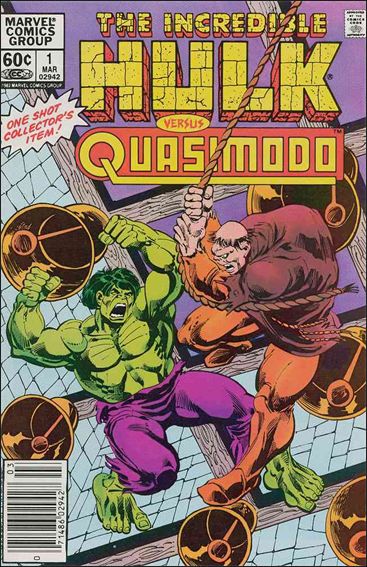
Another unlikely adaptation: The Incredible Hulk
vs. Quasimodo
. 
Art by Sal Buscema and
Steve Mitchell.© 1983 Marvel Comics Group.

In its long history, Victor Hugo's novel Notre-Dame de Paris (a.k.a. The Hunchback of Notre Dame) has been subject to many adaptations. On Sunday afternoon, Leon Botstein and the American Symphony Orchestra presented a rarely heard one: Franz Schmidt's 1914 opera Notre Dame

Schmidt (1874-1939) was an Austrian composer, the author of four powerful symphonies that are favorites with brass players. He faded into obscurity after World War II, although he has his champions: including Dr. Botstein and Austrian conductor Franz Welser-Möst. A post-Wagnerian (who played cello in the Vienna Philharmonic under the direction of Gustav Mahler) Schmidt's musical idiom falls between the brassy religiosity of Bruckner and the Viennese wit of Richard Strauss. 

The music uses leitmotifs, a series of short themes depicting Hugo's colorful characters. Traces of tambourine and minor-key Hungarian violins depict Esmerelda. Powerful brass themes  reference the bell-ringer and his master, the Archdeacon. The two acts feature three scenes each, separated by long symphonic intermezzos to cover the complex stagecraft needed for a full performance of this opera. An organ lends weight to the scene in front of the cathedral. The great bells of Notre Dame are depicted by crashing gongs at the opera's close. 

Leon Botstein managed the big forces of this opera with skill, drawing some beautiful lyric lines in the Intermezzo, the only part of this work performed with any regularity. There were some dynamic problems in the second act, with the soloists being drowned out by the waves of sound, but the last bars crashed home with stunning power. 

The opera moves the focus of Hugo's story away from Quasimodo, the hunchback, and onto Esmerelda, the innocent Gypsy girl. Here, she was played by soprano Lori Gulbeau, who has a pleasing soprano with spinto power and some flexibility. Ms. Gulbeau projected Esmerelda's deadly cocktail of sexuality and innocence, creating a moving portrayal of this compassionate character. Like a less ruthless version of Carmen, she is a force of nature, causing the downfall of all four male leads by simply existing.

The most significant of these four would-be paramours is the Arch-Deacon of Notre Dame. (Claude Frollo in the novel.) He is the very picture of religious rectitude and sexual frustration. Stephen Powell walked a fine line between piety and desparation, using his potent baritone in the prison scene to convincingly portray the deacon's capricious, ambivalent attitude toward Esmerelda. He repents at the last moment, crying for her to live as she is executed, but falls off the cathedral.

The most difficult casting requirement is a pair of heroic tenors. They're required to play Grigoire (Esmerelda's unloved Gypsy husband) and Phoebus, the young knight she falls for. requires two heldentenors for the roles of Phoebus and Gringoire. Robert Chafin moved between heroic voice and characterful, whispered singing as Grigoire. Corey Bix displayed impressive, ringing tone as Phoebus, with the right hint of metal in his voice. 

Turkish bass Burak Bilgili sang Quasimodo with a harsh,  guttural delivery, growling out the bell-ringer's part with power and authority. One sensed the hunchback's despair following the execution of Esmerelda and his subsequent murder of the Archdeacon. In this final scene, Schmidt's opera rose to the tragic heights of Victor Hugo's novel.

Tuesday, February 7, 2012

Opera Review: Suicide is Painless

Ernani returns at the Met.
Ernani (Roberto de Biasio, l.) and Elvira (Angela Meade)
in Act IV of Verdi's Ernani at the Met.
Photo by Marty Sohl © 2012 The Metropolitan Opera.
 

The long Metropolitan Opera season always has one surprisingly good revival among its two-dozen-or-so operas. This year, it's Ernani with a strong cast overcoming the vagaries of this Verdi opera, with its goofy Victor Hugo-inspired story of bandits and honor in 16th century Spain.

Despite being the third of Verdi's early successes, the composer's fifth opera has fallen out of fashion in this young century. That might have to do with the romantic idealism of the libretto, which was the composer's first collaboration with Piave, and deals with a highly romanticized kind of Spanish honor. Everything seems to be settled at knife-point in Ernani, even the hero's life. 

As with Il Trovatore, a good cast can surmount the story's limitations and draw you into this heightened world. At the Monday, Feb. 6 performance, the title role was sung by tenor Roberto de Biasio, a talented young singer who bowed in last year's revival of Simon Boccanegra. Mr. Biasio displayed a ringing top note and more importantly, a pleasing timbre in his sturdy young voice. 

Another veteran of that Boccanegra, Dmitri Hvorovstovsky did not have a strong start, but settled into the role as Carlo, the Spanish King who gets elected Emperor (Charles V) in the third act. Mr. Hvorovstovsky was aided by the set designs here, sweeping staircases that helped project his slightly undersized baritone. He was at his best in Act III, with the opening scena ("Oh de' verd' anni miei") in front of Charlemagne's tomb. Verdi's spartan orchestration in this scene helped.

Rising diva Angela Meade shone as Elvira, a role that was her breakout in 2008 when the Washington State native subbed in for an ailing Sondra Radnovovsky. This is the prototype Verdi leading lady, a strong-willed woman who seems constantly ready to commit suicide. Ms. Meade brought her admirable instrument to the part, meeting the challenging high-and-low notes of the opening "Ernani, inviolame" and  the fiery duets and trios that form the backbone of this score.

As Silva, the revenge-obsessed nobleman (who ends the opera by ordering Ernani to commit suicide--you can't make this stuff up) Ferruccio Furlanetto's long experience in Verdi showed. Here, he was essential to the performance's success, playing an ungrateful, but noble character. Mr. Furlanetto brought his rich, steady bass to this character, singing granite-like low notes as he plotted to first bring down Carlo, and then in the last act, Ernani. 

Although Marco Armiliato is a steady hand in the pit, he does not bring the same level of energy and kinetic drive that is needed for the most successful performances of this opera. But he favored his singers, leading them through the tricky passages and enabling that the translated words of Victor Hugo were audible throughout. The story of Ernani is dated, this performance treated a great early Verdi opera with the respect it deserves.

Trending on Superconductor

Translate

Share My Blog!

Share |

Critical Thinking in the Cheap Seats