Support independent arts journalism by joining our Patreon! Currently $5/month.

About Superconductor

Our motto: "Critical thinking in the cheap seats." Unbiased, honest classical music and opera opinions, occasional obituaries and classical news reporting, since 2007. All written content © 2019 by Paul J. Pelkonen. For more about Superconductor, visit this link. For advertising rates, click this link. Follow us on Facebook.
Showing posts with label berg. Show all posts

Wednesday, February 7, 2018

Concert Review: It is of Endings I Wish to Speak

Mathias Goerne and Daniil Trifonov in a liederabend at Carnegie Hall.
by Paul J. Pelkonen
Daniil Trifonov and Matthias Goerne brought their lieder collaboration
to Carnegie Hall on Wednesday night. Photos © the artists websites, assembly by the author.
Of all of the forms that the presentation of so-called "classical"music takes, it is the liederabend that is probably at the greatest risk. One singer, and one piano, presenting a carefully curated selection of songs by one or more composer seems quaint by the standards of this frantic century. On Tuesday night in Stern Auditorium at Carnegie Hall, bass Matthias Goerne and pianist Daniil Trifonov demonstrated that in some ways, the old ways are best.

Monday, April 11, 2016

Concert Review: Cliff Notes

The Dover String Quartet at Weill Recital Hall.
by Paul J. Pelkonen
The Dover Quartet (Joel Link, Bryan Lee, Camden Shaw, Milena Pajaro-Van de Stadt)
playing Samuel Barber. Image from DoverQuartet.com
The playing of string quartets remains one of the most cerebral of music disciplines, and the interplay between two violins, viola and cello has fascinated composers and listeners for centuries. On Friday night, Weill Recital Hall was packed to hear the Dover Quartet take on major pieces by Dvořák, Berg and Beethoven, in a performance that was both a watershed and a welcome for this young ensemble.

Wednesday, November 11, 2015

Opera Review: A Fatal Heroine Overdose

A new Lulu tears up the Met.
by Paul J. Pelkonen

lu·lu: ˈlo͞olo͞o/ noun (informal), noun: lulu; plural noun: lulus
1. an outstanding example of a particular type of person or thing. Usage: "as far as nightmares went, this one was a lulu"
Smoking hot: Marliss Petersen as Lulu in the new Met production.
Photo by Ken Howard © 2015 The Metropolitan Opera.
Alban Berg's Lulu is an opera that lives up to the above definition. For his second and final opera Berg set two plays (Erdgeist and Die Büchse der Pandora) by Franz Wedekind and set them to a dizzying score that uses a wide range of techniques: chromaticism, serialism, atonality and even jazz to a kaleidoscopic rush through the life of a femme fatale who destroys every man and woman who crosses her path. This new Met production (seen Monday night) is the second in the history of this illustrious company, who have made this kinky, knotty opera something of a specialty.

Tuesday, October 27, 2015

Metropolitan Opera Preview: Lulu

William Kentridge re-imagines Alban Berg's visionary, violent opera. 
by Paul J. Pelkonen
Isn't she lovely: Marliss Petersen is the femme fatale in Lulu.
Photo by Kristian Schuller © 2015 The Metropolitan Opera.
One of the most eagerly anticipated new productions of the 2015 season is Lulu, staged by the South African artist and director William Kentridge. Mr. Kentridge's previous effort for the Met, The Nose met with critical and audience acclaim. Can he do the same for the sordid story of Lulu, the female "earth spirit" who leaves a trail of broken hearts and dead bodies in her wake?

Thursday, April 23, 2015

Concert Review: The Odd Couple

Dorothea Röschmann and Mitsuko Uchida at Carnegie Hall.
by Paul J. Pelkonen
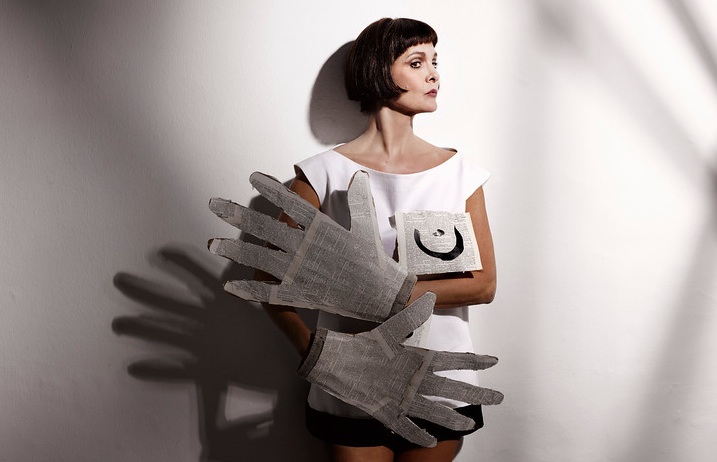
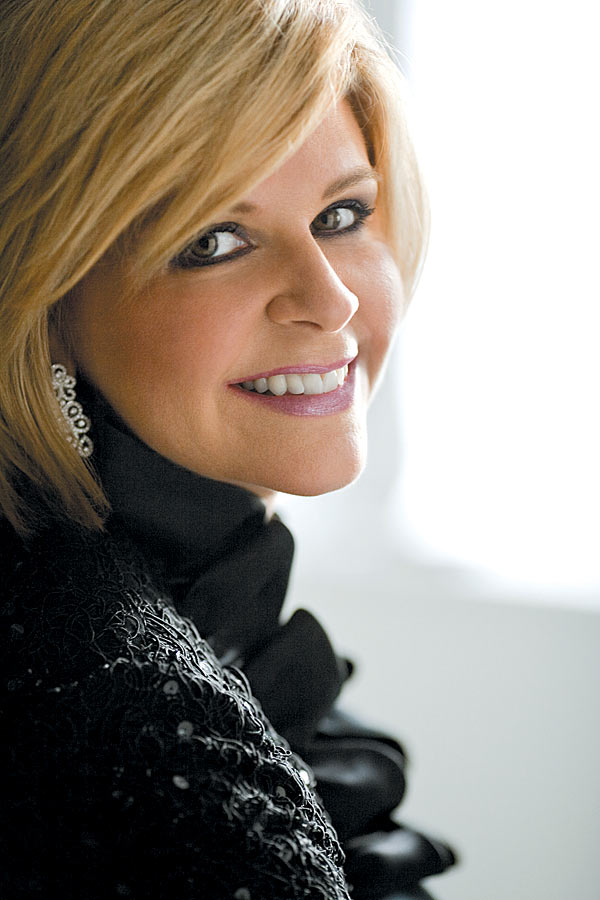
Pianist Mitsuko Uchida (left) and soprano Dorothea Röschmann.
Original photo of Dorothea Roschmann  © Sony Classical. Photo of Ms. Uchida by Justin Pumfrey © Universal Music Group.
Photo alteration by the author because it's nice to have them in the same picture.
Every once in a while in this business you get to see something unique. That happened on Wednesday night at Carnegie Hall, when soprano Dorothea Röschmann gave a lieder recital accompanied by a world-class pianist: Mitsuko Uchida. It is unusual to hear an internationally known virtuoso and a regular touring visitor to Carnegie Hall with a vast repertory in the role of accompanist, but the pairing proved inspired.  The evening, a stop on the artists' current North American tour, featured art songs by Robert Schumann and Alban Berg, in a concert that made the cavernous Stern Auditorium seem intimate and warm despite the crowd in attendance.

Monday, May 19, 2014

Concert Review: The 57th St. Experiment

The Bavarian Radio Symphony Orchestra at Carnegie Hall.
by Paul J. Pelkonen
David Bowman (Keir Dullea) listens to music by György Ligeti.
Image from Stanley Kubrick's 2001: A Space Odyssey
© 1968 MGM/Turner Entertainment.
This week's Sunday matinee concert at Carnegie Hall was the last formal program of the spring 2014 season at the historic venue. The last of three consecutive concerts featuring the Bavarian Radio Symphony Orchestra under the baton of Mariss Jansons, it was also something of an experiment: examining the development of modern music in central Europe by moving steadily backwards in time.

Sunday, May 11, 2014

Concert Review: The Grand Master

Bernard Haitink returns to the New York Philharmonic.
by Paul J. Pelkonen
Bernard Haitink celebrates 60 years on the podium this season.
Photo by Creutziger courtesy New York Philharmonic
The New York Philharmonic celebrates Bernard Haitink's sixtieth year as an orchestra conductor this month, inviting the 85-year old Dutch maestro to Avery Fisher Hall for two weeks of concerts. On Saturday night, Mr. Haitink capped the first of his two concert programs with a program divided neatly between the Second Viennese School and Ludwig van Beethoven.

Sunday, May 19, 2013

Concert Review: The Defense of the New

Sir Simon Rattle conducts the Philadelphia Orchestra.
by Paul J. Pelkonen
Soprano Barbara Hannigan as the Police Chief from Ligeti's Le Grand Macabre.
Image from BarbaraHannigan.com.
Some composers still need an advocate. Today's audiences are filled with skeptics, put off by the idea of atonal music and names like Berg, Webern and Ligeti. On Friday night at Carnegie Hall, the Philadelphia Orchestra returned to Carnegie Hall under the baton of Sir Simon Rattle, the current music director of the Berlin Philharmonic. This program cemented Sir Simon's reputation as a fearless advocate for these new sounds, interpreted through the rich, velvety texture of this top-flight ensemble.

Monday, March 4, 2013

Concert Review: An Angel Came Down

The Vienna Philharmonic's matinee at Carnegie Hall.
by Paul J. Pelkonen
Frank Peter Zimmermann and his 1711 Stradivarius. 
On Sunday afternoon, Franz Welser-Möst and the Vienna Philharmonic concluded their three-concert stand at Carnegie Hall with two works by Austrian composers that have a deep association with the orchestra. The concert featured Alban Berg's Violin Concerto with soloist Frank Peter Zimmermann, and Anton Bruckner's epic Fourth Symphony, known as the Romantic.

Monday, July 2, 2012

Obituary: Evelyn Lear (1926-2012)

Soprano acclaimed for Mozart, Strauss and modern music.
Evelyn Lear as the Marschallin in Der Rosenkavalier.
Photo borrowed from our good friends at parterre.com
Evelyn Lear, the critically acclaimed American soprano who thrilled audiences in repertory ranging from Die Zauberflöte to Lulu died yesterday at a nursing home in Maryland. She was 86.

The death was reported by Ms. Lear's son Jan Stewart. The cause of death was not reported. A full obituary appeared in the Washington Post.

Ms. Lear enjoyed a long stage and recording career, often appearing with her late husband, bass-baritone Thomas Stewart. Her first Met appearance came in the house premiere of Levy's Mourning Becomes Electra. She ended her run at New York's largest opera house with the Marschallin in a 1985 Der Rosenkavalier.

Friday, December 10, 2010

Concert Review: Black Gondolas and Highland Flings at Carnegie Hall

Susan Graham
Photo by Dario Acosta
Thursday night's program at Carnegie Hall featured the Orchestra of St. Luke's taking on unconventional works by Franz Liszt and Alban Berg, paired with a solid, straight-laced performance of Mendelssohn's "Scottish" Symphony. Edo de Waart conducted, joined for Berg's Seven Early Songs by mezzo-soprano Susan Graham.

The concert opened with The Black Gondola, John Adams' 1990 orchestration of La lúgubre gondola, a Liszt tone poem for piano. This is not one of Liszt's Italian postcards from the
Années de pèlerinage. It is a much later, darker work that meditates on death. Edo de Waart led a finely balanced performance.

It was interesting to hear Liszt transcribed for orchestra. For much of his career, the virtuoso pianist and composer specialized in the reverse: reducing orchestral works, opera excerpts, and even whole Beethoven symphonies into fiendishly difficult piano show-pieces. Mr. Adams' orchestration retains all of the original's profundity and power, building somber, chromatic figures into a rich, surging climax. The Black Gondola is Liszt at his most experimental, stretching and pushing the fabric of tonality.


Those who first encountered music of Alban Berg through the opera Wozzeck are often surprised upon hearing the Seven Early Songs. These works are redolent of late Romanticism, evoking a hot-house atmosphere with soaring vocal lines and lush orchestral accompaniment. These are love songs, and they were well suited to Susan Graham's rich instrument. She sang with warmth, power, and unfailing sweetness, making the most of each outpouring in a passionate flood of sound.

Mendelssohn's "Scottish" Symphony (his Third) was inspired by an 1829 visit to Edinburgh and the Highlands, but did not receive its premiere until 1842. This is the most famous of Mendelssohn's five symphonies, and the Orchestra of St. Luke's made the most of their longstanding familiarity with this material. The brass and winds stepped to the fore in the opening Allegro. The strings sobbed throigh the swelling slow movement, and the finale marched to a majestic finish under the skilled direction of Mr. de Waart.

Trending on Superconductor

Translate

Share My Blog!

Share |

Critical Thinking in the Cheap Seats