The 11 Best Operas of 2011
By Paul Pelkonen.
This was a busy year. I saw a total of 69 opera performances. 5 of those were broadcasts or live telecasts, but they count. Anyway it's a sexier number than 64. Here's the 11 best opera performances of 2011. Chronological order.
Boston Lyric Opera: The Emperor of Atlantis (Feb. 6)
"Kevin Burdette made an impressive company debut as Death, mugging with John Cleese-like abandon and delivering his noble, impressive music with flair. Heroic tenor John Mac Master was a good choice for Harlequin, Death's companion and a representation (I think) of the madness of war."
Opera Lafayette: Le Magnifique (Feb. 22)
"As the heroine Clémentine, soprano Elizabeth Calleo displayed a pleasing soprano with an unusual, woody timbre. She sounded best in the ensembles, paired with mezzo Marguerite Krull or the paired villains, played by Jeffrey Thompson and Karim Sulayman."
New York Philharmonic: The Cunning Little Vixen (June 24)
"Isabel Bayrakdarian displayed an agile soprano instrument with a pleasing tone and the right amounts of light and shade. She also manipulated the complex costume (including a nearly prehinsile fox-tail) easily, coping with the challenging choreography on the somewhat limited stage."
Royal Danish Opera: Selma Jezkova (July 30)
"Ylva Kihlberg was a magnetic, heart-tugging presence in the title role, a character created for the film by Icelandic singer Björk. Under Michael Schønwandt's skilled baton, Ms. Kihlberg seduced the listener, leading the audience in Selma's downward spiral."
Bard SummerScape: Die Liebe der Danäe (Aug. 1)
"The soprano part is both long and treacherous, all the way up to a high C# at the very end. Meagan Miller, a past grand finalist at the Metropolitan Opera's vocal competitions, handled the part with power and beauty of tone. Baritone Carsten Witmoser was a moving presence as Jupiter, a high baritonal part that is a mirror of Strauss himself."
Budapest Festival Orchestra: Don Giovanni Aug. 8
"Tassis Christoyannis sang with pleasing tone, tripping nimbly through the Champagne Aria and breaking out an unexpected, sweet head voice for his canzonetta in Act II. His death scene was well played: defiance turned to curiosity but never to fear as he met his fate."
Berlin Ensemble: Der Dreigroschen Oper (Oct. 6)
This is not your standard opera-style singing, but Mr. Kurt embodied the character with cynicism, warmth and energy. His Macheath was a homicidal dandy-about-town who owed something to Jack Nicholson's portrayal of the Joker in the 1989 Tim Burton film Batman.
Metropolitan Opera: Satyagraha (Nov. 9)
"Richard Croft combines his powerful tenor voice and skilled acting to inhabit the part of Mr. Gandhi. Although the nature of the text prohibits dialogue in the manner of a conventional biography, the singer uses movement and gesture to convey the story. He makes a physical transition as well, from suited, briefcase-toting lawyer to the more familiar figure of the Mahatma, clad in a homespun dhoti and carrying a staff."
Gotham Chamber Opera: Dark Sisters (Nov. 13)
"Mr. Muhly writes for different types of female voices. He explores the different combinations effectively, having the five women sing in canon, or breaking them out into duets and later, arias. The musical idiom incorporates American hymns, folk music, Adams-style melodic fragments and straight melodic lines."
Juilliard Opera: Kommilitonen! (Nov. 17)
Conductor Anne Manson held this complex score together with tight, sprung rhythms in the orchestra and clear delineation of tone-rows in the woodwinds. Add in the marching band, the offstage chorus and singers up in the balconies, and Peter Maxwell Davies' opera becomes a tough set of challenges. It came off razor-sharp.
Collegiate Chorale: Moïse et Pharon (Dec. 1)
(Mr. Cutler is) an old-fashioned bel canto tenor who can sing with pliability, accuracy and still be heard over the orchestra. He did a splendid job, despite looking corralled in the close quarters of the concert seating.
Honorable mentions: The Bartered Bride at Juilliard, Cardillac at Opera Boston (R.I.P.), Otello with the Chicago Symphony Orchestra at Carnegie Hall, Ariadne Auf Naxos at dell'Arte Opera Ensemble, Moshe at HERE, Les Contes d'Hoffmann at Regina Opera, Bluebeard's Castle and Erwartung at the New York Philharmonic, L'Elisir d'Amore at New York City Opera, Guillaume Tell at Caramoor, Faust, La Traviata, Le Comte Ory at the Met, La Calista at Vertical Player Repertory.
Visit the rest of the 2011 Year in Reviews, our account of the year that went to "'11".
Contact the author: E-mail Superconductor editor Paul Pelkonen.
By Paul Pelkonen.
 |
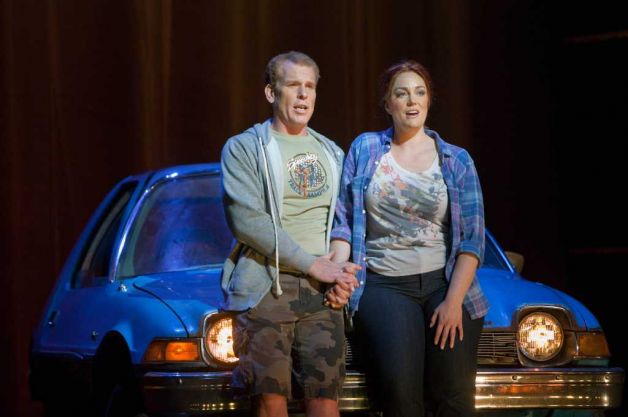
| They are the 99%. Tenor Roger Honeywell, soprano Meagan Miller and fine four-fendered friend. Act III of Die Liebe der Danäe at the Bard SummerScape. Photo by Corey Weaver © 2011 Bard Festival. |
Boston Lyric Opera: The Emperor of Atlantis (Feb. 6)
"Kevin Burdette made an impressive company debut as Death, mugging with John Cleese-like abandon and delivering his noble, impressive music with flair. Heroic tenor John Mac Master was a good choice for Harlequin, Death's companion and a representation (I think) of the madness of war."
Opera Lafayette: Le Magnifique (Feb. 22)
"As the heroine Clémentine, soprano Elizabeth Calleo displayed a pleasing soprano with an unusual, woody timbre. She sounded best in the ensembles, paired with mezzo Marguerite Krull or the paired villains, played by Jeffrey Thompson and Karim Sulayman."
New York Philharmonic: The Cunning Little Vixen (June 24)
"Isabel Bayrakdarian displayed an agile soprano instrument with a pleasing tone and the right amounts of light and shade. She also manipulated the complex costume (including a nearly prehinsile fox-tail) easily, coping with the challenging choreography on the somewhat limited stage."
Royal Danish Opera: Selma Jezkova (July 30)
"Ylva Kihlberg was a magnetic, heart-tugging presence in the title role, a character created for the film by Icelandic singer Björk. Under Michael Schønwandt's skilled baton, Ms. Kihlberg seduced the listener, leading the audience in Selma's downward spiral."
Bard SummerScape: Die Liebe der Danäe (Aug. 1)
"The soprano part is both long and treacherous, all the way up to a high C# at the very end. Meagan Miller, a past grand finalist at the Metropolitan Opera's vocal competitions, handled the part with power and beauty of tone. Baritone Carsten Witmoser was a moving presence as Jupiter, a high baritonal part that is a mirror of Strauss himself."
Budapest Festival Orchestra: Don Giovanni Aug. 8
"Tassis Christoyannis sang with pleasing tone, tripping nimbly through the Champagne Aria and breaking out an unexpected, sweet head voice for his canzonetta in Act II. His death scene was well played: defiance turned to curiosity but never to fear as he met his fate."
Berlin Ensemble: Der Dreigroschen Oper (Oct. 6)
This is not your standard opera-style singing, but Mr. Kurt embodied the character with cynicism, warmth and energy. His Macheath was a homicidal dandy-about-town who owed something to Jack Nicholson's portrayal of the Joker in the 1989 Tim Burton film Batman.
Metropolitan Opera: Satyagraha (Nov. 9)
"Richard Croft combines his powerful tenor voice and skilled acting to inhabit the part of Mr. Gandhi. Although the nature of the text prohibits dialogue in the manner of a conventional biography, the singer uses movement and gesture to convey the story. He makes a physical transition as well, from suited, briefcase-toting lawyer to the more familiar figure of the Mahatma, clad in a homespun dhoti and carrying a staff."
Gotham Chamber Opera: Dark Sisters (Nov. 13)
"Mr. Muhly writes for different types of female voices. He explores the different combinations effectively, having the five women sing in canon, or breaking them out into duets and later, arias. The musical idiom incorporates American hymns, folk music, Adams-style melodic fragments and straight melodic lines."
Juilliard Opera: Kommilitonen! (Nov. 17)
Conductor Anne Manson held this complex score together with tight, sprung rhythms in the orchestra and clear delineation of tone-rows in the woodwinds. Add in the marching band, the offstage chorus and singers up in the balconies, and Peter Maxwell Davies' opera becomes a tough set of challenges. It came off razor-sharp.
Collegiate Chorale: Moïse et Pharon (Dec. 1)
(Mr. Cutler is) an old-fashioned bel canto tenor who can sing with pliability, accuracy and still be heard over the orchestra. He did a splendid job, despite looking corralled in the close quarters of the concert seating.
Honorable mentions: The Bartered Bride at Juilliard, Cardillac at Opera Boston (R.I.P.), Otello with the Chicago Symphony Orchestra at Carnegie Hall, Ariadne Auf Naxos at dell'Arte Opera Ensemble, Moshe at HERE, Les Contes d'Hoffmann at Regina Opera, Bluebeard's Castle and Erwartung at the New York Philharmonic, L'Elisir d'Amore at New York City Opera, Guillaume Tell at Caramoor, Faust, La Traviata, Le Comte Ory at the Met, La Calista at Vertical Player Repertory.
Visit the rest of the 2011 Year in Reviews, our account of the year that went to "'11".
Contact the author: E-mail Superconductor editor Paul Pelkonen.