Support independent arts journalism by joining our Patreon! Currently $5/month.

About Superconductor

Our motto: "Critical thinking in the cheap seats." Unbiased, honest classical music and opera opinions, occasional obituaries and classical news reporting, since 2007. All written content © 2019 by Paul J. Pelkonen. For more about Superconductor, visit this link. For advertising rates, click this link. Follow us on Facebook.
Showing posts with label yes. Show all posts

Tuesday, July 17, 2018

Concert Review: They See Perpetual Change

Yes celebrate fifty years of music on Staten Island.
by Paul J. Pelkonen
The men of Yes (Steve Howe, Geoff Downes, John Davison, Jay Schellen, Alan White (obscured) and Billy Sherwood)
play "Awaken." Photo by Paul J. Pelkonen.
The membership of the seminal British progressive rock band Yes is anything but stable. Yes musicians have  entered, exited, joined, quit , rejoined, quit again and even been replaced by whole symphony orchestras in the course of a stormy and complex  narrative. Every tour is different from the one before, not just in terms of setlist but in terms of personnel. Adding to the complication: the fact that there are currently two touring bands calling themselves Yes. One of these, referred to on Facebook as "Yes Official" is playing North American theaters this summer. That lineup took the stage at the gorgeous St. George Theater on Staten Island on Sunday night. The show was a three-hour celebration, drawing music from all five decades of the band’s thorny existence.

Tuesday, July 10, 2018

Recordings Review: New Maps for Topographic Oceans

Yes compile the five Steven Wilson Remixes.
by Paul J. Pelkonen
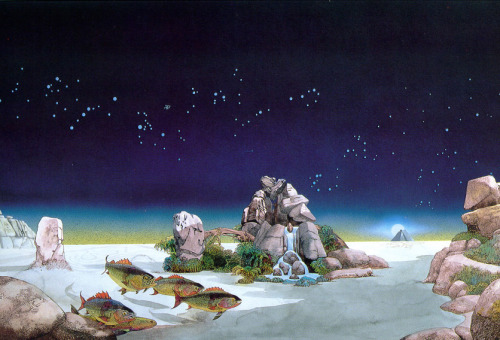
Detail from Roger Dean's cover art for Yes: The Steven Wilson Remixes.
Displayed here for promotional purposes only © 2018 Roger Dean and Yes.
In the vast catalogue of the British progressive rock band Yes, there are five studio albums that are considered (by fans and critics alike) to be the band’s height. Released between 1970 and 1974, they are: The Yes Album, Fragile, Close to the Edge, Tales from Topographic Oceans and Relayer. (Only two of these records feature the same lineup.) Taken in sequence, they track a remarkable evolution, from a jazz-inflected group heavily influenced by psychedelia to pioneers exploring new oceans of sound. The five albums are now available as a luxe vinyl boxed set, a cheaper CD edition or (reviewed here) a set of high-quality .mp3 downloads at a bargain basement price.

Thursday, September 28, 2017

Concert Review: Owner of a Lonely Heart's Club Band

A second Yes rocks Newark.
by Paul J. Pelkonen
Yes featuring Jon Anderson (center left) Travor Rabin (far right) and Rick Wakeman (far right) at NJPAC.
Photo by the author.
What's in a name? For Jon Anderson, Trevor Rabin and Rick Wakeman, an awful lot. The three musicians banded together last year as "ARW" and started touring playing Yes music. Following the induction of eight band members into the Rock and Roll Hall of Fame, the boys are now calling themselves "Yes featuring ARW", putting their band in direct competition with the "official" version of the band led by Steve Howe. Their version of the band rocked NJPAC in Newark last night with a show featuring different eras of the venerable English prog rock band's 49-year history.

Sunday, August 13, 2017

Concert Review: The Survival of the Fittest

Yes bring their touring "Yestival" to Coney Island.
by Paul J. Pelkonen
Yes go close to the edge. L.-R.: Steve Howe, Dylan Howe, Jon Davison, Geoff Downes, Alan White, Billy Sherwood.
Photo by the author, graphics by Roger Dean.
Yes, the British progressive rock band known for long Byzantine songs and perpetual lineup changes, rolled through Brooklyn last night, bringing their tour, dubbed "Yestival", to the Ford Amphitheater on the Coney Island Boardwalk. The veteran band, who are celebrating their past due induction into the Rock and Roll Hall of Fame this year, brought yet another lineup change, and a set that featured ten carefully chosen songs, one from each of] their first ten albums, played in chronological order.

Thursday, August 11, 2016

Concert Review: A View From the Balcony

Yes return to New York for this critic's "night off."
by Paul J. Pelkonen
Yes 2016 (clockwise from left) Steve Howe, Geoff Downes, Jay Schellen, Billy Sherwood, Jon Davison)
unlock the secrets of the universe at the St. George Theater on Staten Island on Tuesday night.
Photo (with an iPhone 6) by the author.
The British progressive rock band Yes returned to New York City on Tuesday night, with a three-hour show at the St. George Theater, a gorgeous 1929 palace located on Staten Island just a short climb from the Staten Island Ferry. The band's current show featured two whole sides of their 1973 opus Tales from Topographic Oceans and the entire Drama album, a 1980 record that has been largely forgotten by fans.

Friday, July 3, 2015

Hold On, Changes Can Happen

Is Yes' 90125 a "concept album"?
by Paul J. Pelkonen
Yes, circa 1983 in the video for "Leave It" from the album 90125.
L-R: Trevor Rabin, Jon Anderson, Alan White, Tony Kaye, Chris Squire.
Image © 1983 Atlantic/Atco Records.
The international community of Yes fans is mourning the passing of bassist and band founder Chris Squire, who succumbed to leukemia at his Arizona home on June 28. In the wake of his passing, the home stereo at Superconductor's Brooklyn headquarters has been playing a lot of Yes, from the airy harmonies of Close to the Edge to the wild experimentation of Tales from Topographic Oceans. Today, the record was the band's 1981 comeback album 90125. This prompted the question: is 90125 a concept album that tells a specific story?

Sunday, January 12, 2014

Ten Decidedly Non-Classical Albums....

that I really like. 
by Paul J. Pelkonen
Detail from the cover of Relayer by Yes because it's a cool album cover.
Painting by Roger Dean. Album art © 1974 the artist/Atlantic Records.
I was working on an article on my ten favorite symphonic/orchestral recordings but got stuck on it. So to shake the cobwebs and freshen up the blog, I thought I'd share with you a list of my ten favorite rock, hard rock and progressive rock albums. This list is always subject to change and is presented in chronological order. And it's not an all-time "top ten" or anything, just some recommended listening for when you need a break from Beethoven and Shostakovich.

Thursday, August 4, 2011

Into "The Gates of Delerium"....and Back.

Or: Another blog post about Yes.
Roger Dean's artwork for the Yes album Relayer, minus the logo.
© 1974 by the artist/Yes/Rhino Records


On September 8, 2001, my ex-partner and I went to Radio City Music Hall to see Yes, who were touring their album Magnification. Due to the band's umpteenth personnel change, Russian keyboardist Igor Koroshev had been booted from the band, replaced with a full symphony orchestra on the record. This was an experiment the band had tried before, on their sophomore effort Time And A Word.

Little could we know that three days later, the towers of the World Trade Center would be destroyed, and the world would go to hell for a decade.

Ironically, the highlight of the show was a live performance of "The Gates of Delerium", a 22-minute epic from the band's 1974 Relayer album. "Gates" contains some of the band's most challenging music, with lyrics that tell of a terrifying plunge into war and the dust settling afterwards over the battlefield. The performance was everything it promised to be, and the symphony orchestra only added to the grandeur of the work.

"Gates" opens with a shimmering, descending figure that sounds like it's right out of Strauss' Die Frau Ohne Schatten--the scene where the Nurse shows untold riches to the Dyer's Wife. This gives way to acoustic guitar and Jon Anderson's voice, singing of the preparation for battle.

As the piece moves forward, the whole band moves in and the lyrics become more aggressive, detailing a society readying itself for battle, marching forth, interrogating spies, and killing civilians.

The music ultimately erupts into the central battle sequence, which features some of the band's most advanced playing. The music careens and lurches, building up, stopping and starting again like a Bruckner symphony stuck in overdrive. Driven relentlessly by drummer Alan White and the searching bass-line of Chris Squire, the song rapidly shifts time changes over Steve Howe's jabbing guitar.

If all that wasn't enough, the band added found objects to the song, car brakes, hubcaps, and other junk that they rattled, banged on and crashed. Add to that Patrick Moraz' whooping "electric slinky" keyboard effect that sounds like black wings moaning over the battlefield, and the total effect is terrifying. And at the section's close, Alan White simply toppled the whole rack over. The crash is audible.

But that is just preparation for the final section, popularly known to Yes-heads as "Soon." A new theme is stated in the steel guitar, and is joined by Jon's high, keening voice in a resigned plea for peace. The effect is not unlike the final scene of Aida. The acoustic comes back, supported by bass, drums and a wash of keyboards. The final words belong to Steve Howe's steel guitar, which resolves all this chaos in an eloquent, final solo.

I still love it. Relayer has been my favorite Yes album since I bought my first copy (on cassette, from the Sears in the Rockaway Townsquare Mall, NJ, on the same day I bought Led Zeppelin III. (I think it was the fourth or fifth one I bought.) I wore that cassette out, and still listen to the song once a week. Playing it now as I write this, I only hope that this decade of senseless, hate-fuelled war will come to an end, and the world can somehow attempt to get back to what used to be normal.

Tuesday, July 19, 2011

Exploring Topographic Oceans

The Symphonic Rock of Yes' Most Complex Record.

Original album art for Yes' Tales from Topographic Oceans.Painting by Roger Dean © 1973 by the artist.
It's hard to believe but 2011 marks the 37th anniversary of Yes' sprawling 1974 double-LP Tales from Topographic Oceans. And since the ever-changing English quintet have just released Fly From Here, their first record since 2001's Magnification, it's time to talk about Topographic, one of the most challenging, and yes, symphonic records of all time.

This is rock and roll with a heavy dose of virtuoso musicianship, stretched to a scale that Gustav Mahler would have envied. Each "song" (the word is a convenient label for these massive suites) clocks in at around 20 minutes, taking up the full side of an LP. Although it was slammed by critics as "psychedelic doodling" on its release, there is music of real value in these vast oceans of sound.

The four tracks represent an ideal fusion between the five Yes-men, working towards a unique, if obscure concept. Singer Jon Anderson based his arcane lyrics on the Shastric scriptures, a foot-note found in the Autobiographby of a Yogi by Paramahansa Yogananda. (And although I've owned Topographic since 1990, I don't know what he's singing about either.)

By this point, Yes had a habit of choosing words for their sound, not their meaning, even resorting on onomatopoeic scat-singing in order to fit words to music. Jon Anderson's high countertenor soars against the band, an intricate four-piece orchestra that occasionally sounds like a legion of players. And that is the secret of Yes: while every member is a virtuoso, the alchemy of the musicians together creates something new, flexible and awe-inspiring.
Yes, exploring the life aquatic at Madison Square Garden, 1974
on the Topographic Oceans tour. They played the whole album in order.
Steve Howe wrote most of the music on Topographic. Not surprisingly, his guitar is to the fore on the opening (and portentiously titled) "The Revealing Science of God", acting like a concerto soloist against the rhythmic complexity of the other musicians. He duels with Rick Wakeman, who uses Hammond organ, Mellotron, acoustic piano and synths to add impressionistic color to the swirling vortex of sound.

It's amazing to hear how Yes are willing to repeatedly shift gears in "The Remembering," the album's second track. But those gears never grind. In less than a minute, a lilting, acoustic ditty yields to a short baroque theme played by Mr. Wakeman. It is swiftly followed by a potent driving section that has all the musicians playing off each other, reaching as one toward the same musical goal.

Chris Squire is the founder of Yes, and the longest-serving member of the band. Here, his distinctive, fat-toned Rickenbacker bass (always picked) drives the engine forward. That engine is drummer Alan White, in his first studio outing as Yes' stickman--a job he still holds today. Their playing together is amazing, especially in the arcane, arrhythmic sections at the heart of "The Ancient," the third piece on the record.

The album ends with "Ritual (Nous somas de soleil)". This is the finale of the "symphony" and fittingly, the toughest nut for the listener to crack. After a horn-like announcement from Mr. Squire's bass, a majestic, searching opening theme is stated, accompanied by joyfuyl, wordless singing. The theme courses like a hungry greyhound, building to a huge climax.

Suddenly, an acoustic guitar announces "Nous sommes de soleil", a gentle, singing melody. This builds from the folksong-like melody to a vast expanse of sound, underpinned by Mr. Wakeman's under-pinnings on the organ and Mr. Squire's driving bass. It careens into a crazy fast section and then turns into...a drum circle?

On first listen, the giant clash of cacophonous, clattering percussion makes no musical sense: another indulgence on a sprawling, excessive record. But listen closely to the percussion part on the section that comes before, and the roots of this jagged chunk of musique-concrete become clear. Then, Mr. White takes a rolling, percussive monster solo against Mr Wakeman's slashing synths.

The final reprise of "Nous somme de soleil" is the reward for this brief interlude of noise. Mr Anderson's voice, the sibilant bass, slinky guuitar and Mr Wakeman's jazzy piano combine to bring the most ambitous album of the 1970s to a serene, perfect close.

Trending on Superconductor

Translate

Share My Blog!

Share |

Critical Thinking in the Cheap Seats