Support independent arts journalism by joining our Patreon! Currently $5/month.

About Superconductor

Our motto: "Critical thinking in the cheap seats." Unbiased, honest classical music and opera opinions, occasional obituaries and classical news reporting, since 2007. All written content © 2019 by Paul J. Pelkonen. For more about Superconductor, visit this link. For advertising rates, click this link. Follow us on Facebook.
Showing posts with label Olivier Messiaen. Show all posts

Monday, May 6, 2019

Concert Review: Mister Lovejoy

David Robertson brings the Turangalîla-Symphonie to Juilliard.
by Paul J. Pelkonen
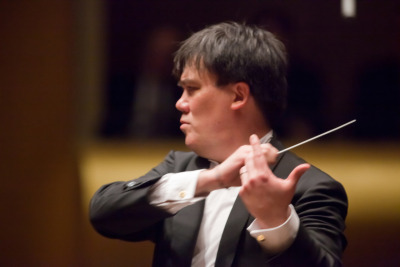
David Robertson leads the Juilliard Orchestra. Photo by Jennifer Taylor.

It is one of the seminal symphonic works of the 20th century but  Olivier Messiaen's Turangalîla-Symphonie has always struggled to find its audience. Of massive length and requiring an army of skilled musicians, this hybrid of symphony and concerto has in the past cleared halls of would-be listeners or been avoided by concert subscribers altogether. On Friday night conductor David Robertson led the expanded forces of the Juilliard Orchestra in this huge ten-movement work. Despite the technical difficulty of music this was a performance brimming with love, joy and the enthusiasm of an orchestra come priced entirely of conservatory students.

Thursday, October 13, 2016

Concert Review: Transcendence Ain't Easy

Gustavo Dudamel conducts the Turangalîla-Symphonie.
by Paul J. Pelkonen
Conductor Gustavo Dudamel led the Turangalîla-Symphonie
at Carnegie Hall on Saturday night. Image © 2016 Deutsche Grammophon/UMG
Olivier Messiaen's Turangalîla-Symphonie is one of the most original and uncompromising large-scale compositions for orchestra of the 20th century. Its 1949 premiere polarized the music world. Sixty-seven years later, performances of this work have the power to enthrall or repel even the most hardened audience. Because of its unwieldy length, stringent instrumental requirements, it is not heard often. It was a bold choice for Gustavo Dudamel and the Simón Bolivar Symphony Orchestra of Venezuela and their leader Gustavo Dudamel, forming the entire content of Saturday night's concert at Carnegie Hall.

Saturday, March 12, 2016

Concert Review: This is Your Brain on Ecstasy

Esa-Pekka Salonen leads the Turangalîla-symphonie.
by Paul J. Pelkonen
Hear the hair: Esa-Pekka Salonen conducted the Turangalîla-Ssmphonie
at David Geffen Hall this week. Photo by Chris Lee © 2014 The New York Philharmonic.
Since its premiere in 1949, Olivier Messiaen's Turangalîla-symphonie has stood alone. Consisting of ten enormous orchestral movements and spanning nearly an hour and a half, this piece that strikes terror into the hearts of conductors and concert-goers. In the wrong hands, this mega-symphony can be a lumbering beast, a composer's ego out of exploding in a flurry of orchestrated bird-song and strange chromatic ideas that can (literally) send patrons running for the nearest exits.

Thursday, March 10, 2016

Concert Review: A Voice in the Crowd

Pianist Eric Huebner gives a Messiaen Week recital.
by Paul J. Pelkonen
Image by commonmarket for zazzle.ca
If you were to list the great concert pianists on the classical scene today, you'd probably miss Eric Huebner. That's because Mr. Huebner is the current holder of the piano chair with the New York Philharmonic. He spends most of his  time providing 88-key support in major orchestral works and occasionally playing chamber music with other orchestra members. On Wednesday night, the Philharmonic's current Messiaen Week festival offered Mr. Huebner a chance at the solo spotlight with a recital all to his own.

Sunday, April 14, 2013

Concert Review: Fifty Shades of Tonality

Spectral music comes to the New York Philharmonic.
by Paul J. Pelkonen
Conductor of many colors: David Robertson.
Original image © Michael Tammaro, color alterations by the author.
The pursuit of the new by modern composers is invariably met with excitement from music people and dread from the ordinary concert-goer, who may prefer the traditional harmonies of Mozart and Beethoven to the experiments of Olivier Messiaen and (his pupil) Tristan Murail. The New York Philharmonic split the difference this week, as David Robertson conducted a performance of Mr. Murail's new piano concerto, (titled Le Désenchantement du monde) framed in the works of the other three, more familiar composers.

Friday, April 29, 2011

Concert Review: The Cost of Modernism

Debussy, Messiaen and Mahler at the New York Philharmonic
Alan Gilbert takes aim.
Photo by Chris Lee © 2011 The New York Philharmonic
Friday's afternoon performance at the New York Philharmonic reunited the orchestra with pianist Emanuel Ax for a program exploring the links between three seminal composers of the 20th century: Claude Debussy, Olivier Messiaen and Gustav Mahler. The concert featured pianist Emanuel Ax. On the night before, Mr. Ax celebrated his 100th concert appearance with the New York Philharmonic.


"Pagodas", the first of Estampes, Debussy's "picture postcards" for piano, opened the concert. Mr. Ax played with flair, drawing out the delicate textures and smoky, Oriental flavor in this music. He then dived into the difficult Couleurs de la cité céleste  "Colors of the Celestial City", Olivier Messiaen's composition for piano, brass, winds and percussion.

Messiaen's music is generally not to the taste of the Philharmonic's über-conservative Friday afternoon audience. (One had the sense that these music-lovers would stream for the exit had there been a break in the program.) Mr. Gilbert led a vigorous performance with rich textures of heavy brass, gongs, and virtuoso clarinet playing. Through the contrasting sections of this piece, (which is meant to evoke a heavenly cityscape) Mr. Gilbert produced Messiaen's unusual clusters of sound: combining brass chords, bird-song and layers of tuned percussion with a deft flick of his baton.


Before the performance, Mr. Gilbert and Mr. Ax addressed their audience explaining the valid musical connection between Debussy and Messiaen, along with brief examples of the latter's work. This mystic French composer is one of the most important musical voices of the 20th century, having influenced everyone from Pierre Boulez to the film music of John Williams. But despite Mr. Gilbert's diplomatic efforts, his subscribers were having none of it.

They were far happier with the second half of the program, the thunderous (and more importantly, familiar) Fifth Symphony by Gustav Mahler. The solo trumpet kicked off the opening funeral dirge, answered by eructations of sound from the fully assembled Philharmonic and low ominous growls from tuba player Alan Baer. Then, Mr. Gilbert let his small army of musicians slide into the three-four lockstep, playing the demented death-waltz that makes up the second subject of the movement.

The second movement was played with thrust and power, the sound of a lumbering giant at play. The third is a Mahler scherzo, which means that it contains some of this composer's boldest, edgiest music. Its opening three-note drop serves a trapdoor, plunging the listener into a deep exploration of the dark corners of the psyche. Its soaring horn solo, played here by the great Philip Myers, was a highlight of the entire performance.

Those in the audience who spent the intermission complaining about Messiaen were probably only there to hear the fourth movement of the Mahler Fifth: the famous Adagietto. Mr. Gilbert conducted Mahler's "greatest hit" with grace and charm. He then proceeded to make the finale fly like a well-swung wrecking ball. What emerged from the rubble was a triumph: not just for the composer conquering his demons but for Mr. Gilbert conquering his audience. After all, a hundred years ago, concert-goers sneered at Mahler, too.

Trending on Superconductor

Translate

Share My Blog!

Share |

Critical Thinking in the Cheap Seats