Support independent arts journalism by joining our Patreon! Currently $5/month.

About Superconductor

Our motto: "Critical thinking in the cheap seats." Unbiased, honest classical music and opera opinions, occasional obituaries and classical news reporting, since 2007. All written content © 2019 by Paul J. Pelkonen. For more about Superconductor, visit this link. For advertising rates, click this link. Follow us on Facebook.
Showing posts with label Clarinet Concerto. Show all posts

Sunday, August 7, 2016

Concert Review: Lifting the Shroud

Paavo Järvi and Martin Fröst at Mostly Mozart.
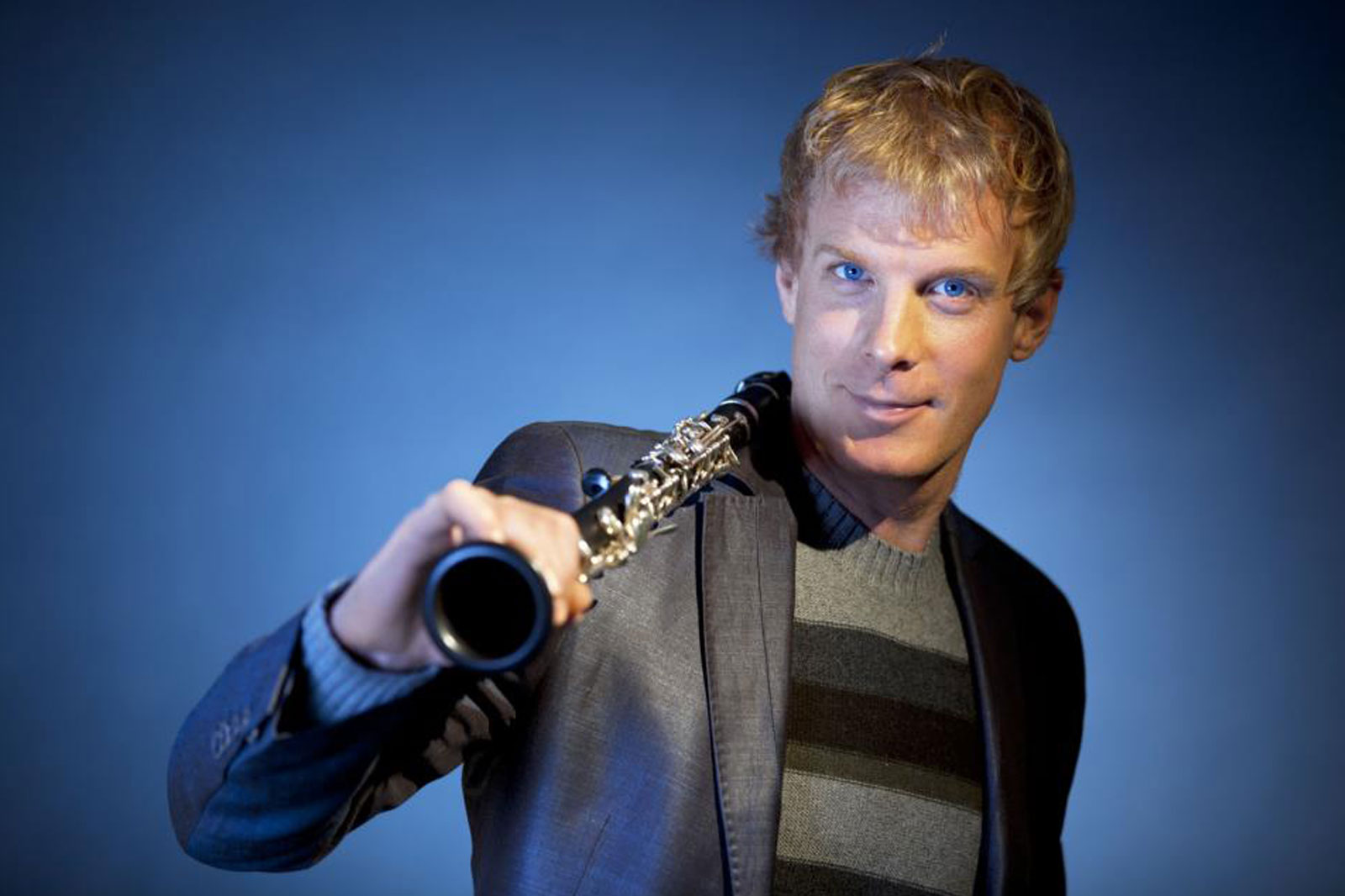
The man and his horn: clarinetist Martin Fröst.
Photo from MartinFrost.se
The Mostly Mozart Festival Orchestra  got a chance to flex its musical muscles on Friday evening. They played the Clarinet Concerto by their namesake composer, bracketed by works from Arvo Pärt and Ludwig van Beethoven. This week’s guest conductor  was Paavo Järvi, eldest son of the conductor Neeme Järvi and (like his father) a versatile maestro with respectable international credentials.

Saturday, June 18, 2016

Concert Review: Freedom For Free

The New York Philharmonic plays Central Park.
by Paul J. Pelkonen
Alan Gilbert (left) conducts soloist Anthony McGill (right) and the New York
Philharmonic (foreground) in Mozart's Clarinet Concerto.
Photo by Chris Lee © 2016 The New York Philharmonic.
The New York Philharmonic Concerts in the Park are a proud 51-year tradition. This year though the concert took place under a cloud, and not the wispy bits of cirrus fluff that hovered high over the stage. The cloud: the June 12 massacre in Orlando, Florida.  At the start of this concert, Philharmonic music director  Alan Gilbert stepped forward to announce a program change for the evening. The loping, playful overture to Rossini's La Gazza Ladra ("The Thieving Magpie") had been scrapped in favor of Samuel Barber's Adagio for Strings, in memoriam of the victims. The remainder of the evening: with a Mozart concerto and a Strauss tone poem, would proceed unaltered.

Monday, January 12, 2015

Concert Review: Reed It and Weep

Alan Gilbert wraps the Nielsen Project with the Clarinet Concerto.
by Paul J. Pelkonen
Reed man: New Philharmonic principal clarinet Anthony McGill and friend.
Photo by David Finlayson.
The Clarinet Concerto ranks among the finest late compositional achievements of Carl Nielsen, the Danish symphonist who remains his country's best known musical export. As such, it was a natural choice to end The Nielsen Project, the ambitious endeavor of New York Philharmonic music director Alan Gilbert to record all of the composer's major works (the six symphonies, the concertos and several overtures) for CD release on the Da Capo label.

Wednesday, September 24, 2014

Concert Review: Ahead of the Curve

The New York Philharmonic opens 2014--for real this time.
by Paul J. Pelkonen
Alan Gilbert in action. Photo courtesy nyphil.tumblr.com
Image © 2014 The New York Philharmonic
The New York Philharmonic turned from movie music this week with its first subscription concert at Avery Fisher Hall. This ambitious program paired a new Clarinet Concerto by composer Unsuk Chin with the Symphony No. 1 of former Philharmonic music director Gustav Mahler under the baton of the orchestra's current leader Alan Gilbert.

Monday, August 27, 2012

Concert Review: Beethoven Gets Eighty-Sixed

Mass in C closes Mostly Mozart Festival.
by Paul J. Pelkonen
Clarinetist Martin Fröst did not wear
this hat on Saturday night.
Photo from tumblr.com 

The 2012 Mostly Mozart Festival ended on Saturday night with the second of two concerts featuring the composer's Clarinet Concerto with soloist Martin Fröst. The concerto, Mozart's last instrumental work, was paired with Beethoven's Mass in C Op. 86, one of the composer's least performed works. Festival music director Louis Langrée conducted.

Mozart wrote the Clarinet Concerto for soloist Anton Städler in 1791, the year he died. It features the sum tota of his abilities as a composer of passionate music that both charm and provoke. The work places great demands on the soloist, who must also provide a sweet tone that takes advantage of the clarinet's uncanny ability to imitate the human voice.

The autograph of Mozart's score is not available, but the work may have been based on an earlier work that the composer had planned for the bassett horn, a kind of alto claarinet with a disticnctive "angled" body. Mr. Fröst, who may be the first woodwind superstar in music since Heinz Holliger, played the work on an extended "bassett" clarinet (down to low C) to meet the required low notes.

Monday, January 16, 2012

Concert Review: She Wants Magic

Renée Fleming and the Met Orchestra at Carnegie Hall.
Renée Fleming. Photo © 2011 QPrime Management.
On Sunday afternoon, the Metropolitan Opera Orchestra came to play Carnegie Hall under the baton of Principal Conductor Fabio Luisi. The program was unusual: alternating two clarinet concertos (by Mozart and Aaron Copland) with short recitals from superstar soprano Renée Fleming.

The afternoon opened with Stephen Williamson playing Mozart's Clarinet Concerto. Mr. Williamson is a principal clarinetist of the MET Orchestra, currently playing with the Chicago Symphony Orchestra. This is the last woodwind concerto written by this composer and one of his final works completed before the (unfinished) Requiem.  He played Mozart's athletic solo lines and octave leaps with agility.

Despite generating a pleasing tone, Mr. Williamson kept pausing between movements. He disassembled his clarinet, examined the cork ends, and fiddled with the action on the keys. At the second pause, he wiped  out the inside of the barrel, and bit in a new reed. So in addition to appreciating Mozart, the Carnegie audience may have learned enough to open their own woodwind repair shops.

Ms. Fleming swept onstage (in a bright magenta gown) to sing Mahler' five Ruckert-Lieder. The soprano's voice sounded impressive in the dreamy heights of Ich atmet' einen linden Duft and the extreme depths of Mitternacht. But in each song, her middle register seemed to vanish. Also, Ms. Fleming is an experienced interpreter of Strauss, but she lent a strange inflection to this German text. That said, the final "Ich bin der Welt abhanden gekommen" was impressive. Mr. Luisi proved a sensitive accompanist.

The second half of the program featured Aaron Copland's concerto, originally written for Benny Goodman. Anthony McGill showed himself to be an outstanding soloist, playing with bright, vibrant tone and racing through Copland's jazz-inflected figures. Mr. Luisi drew some gorgeous sonorities from the Met orchestra, lovely shimmers of strings with Copland's signature tonalities that suggest wide American landscapes and urban bustle.


In the course of her long career, Ms. Fleming has shown commitment to 20th century opera, especially in bringing Carlisle Floyd's powerful Susannah to the Met stage and creating Blanche DuBois in A Streetcar Named Desire. Here, she presented three arias from modern American operas by Samuel Barber and Bernard Hermann.  Two of these arias appear on I Want Magic! the 1998 album which she recorded with the Met Orchestra and Mr. Levine.

She opened the short set with "Give Me Some Music" from Barber's Antony and Cleopatra, the opera that opened the new Met in 1967. Today it is chiefly remembered for director Franco Zeffirelli's extravagant pyramid set, which broke the opera house's brand-new turntable. Here, the soprano battled a sandstorm of orchestration, taxing her instrument to portray the Egyptian queen against the heavy brass and strings of Barber's score. She faced similar challenges in "Do Not Utter a Word" from Vanessa. But Mr. Luisi was more successful in managing the orchestra, creating a rich balance of sound. Ms. Fleming soared to some powerful heights in this frantic scena.

Bernard Herrmann is remembered for his film scores for Alfred Hitchcock: most notably Psycho. "I Have Dreamt" is from his opera Wuthering Heights, and featured Ms. Fleming as Emily Brontë's haunted heroine. Mr. Luisi drew rich tones from the Met orchestra, conveying Mr. Herrmann's rich, Korngold-like textures. But like Catherine's ghost, the middle voice seemed swaddled in the heavy orchestral fabric, and did not make a great case for future mountings of this Gothic opera.

Ms. Fleming offered one encore: "I can smell the sea air" from André Previn's Streetcar. This was a treat for New Yorkers, who have not yet seen this operatic version of the Tennessee Williams play onstage. Ms. Fleming did a powerful job of inhabiting Blanche Dubois's particular descent into madness, arching into Mr. Prévin's lush phrases with ease.
Trending on Superconductor

Translate

Share My Blog!

Share |

Critical Thinking in the Cheap Seats