Support independent arts journalism by joining our Patreon! Currently $5/month.

About Superconductor

Our motto: "Critical thinking in the cheap seats." Unbiased, honest classical music and opera opinions, occasional obituaries and classical news reporting, since 2007. All written content © 2019 by Paul J. Pelkonen. For more about Superconductor, visit this link. For advertising rates, click this link. Follow us on Facebook.

Tuesday, May 11, 2010

A Walk on Bruckner Boulevard

The New York Philharmonic welcomes Kurt Masur back to Lincoln Center Wednesday night. He will conduct the Beethoven First Symphony and the Bruckner Seventh.

Anton Bruckner, the short Austrian church organist who idolized Beethoven and Wagner, spent his life constructing enormous symphonies, designed to glorify the divine and celebrate the human condition.

Like many of his contemporary 19th century composers, Bruckner wrote nine symphonies. (He actually completed 11, but two of them were rejected by the composer. Today, they are numbered "0" and "00" and are performed occasionaly.) Of the nine, the last one was unfinished. Bruckner, in ill health in his last few years, sketched a fourth movement, but never finished it as he was preoccupied with endless revisions on his Eighth.
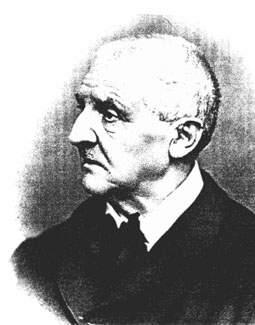

To start listening to Bruckner, try the Fourth or Seventh Symphonies. These are generally considered his most accessible works. The Eighth is the mightiest structure of them all, although probably would have been eclipsed by the Ninth, which survives as a three-movement torso.


Bruckner's music is intended to reach upwards to the heavens. Each symphony starts with hushed tremolo in the strings, evoking Beethoven's Ninth Symphony. He then erects huge spires of brass chords anchored in rolls of timpani and slow, thoughtful melodies. The orchestra plays in gigantic blocks of music, stopping and starting. A phrase will finish. There is a brief pause, and then it will repeat, with richer harmony and heavier orchestration.

Later movements often involve a ländler, the Austrian peasant dance that also appears in Mahler's symphonies. There is inevitably a contemplative, slow movement, and then a triumphant finale in which the sonic structures of the first movement are reassembled, rebuilt and brought to a towering climax.

There are many excellent complete (and incomplete) cycles of Bruckner symphonies, most available as a moderately-priced boxed set. Eugen Jochum's two cycles are excellent. Sergiu Celibdache's unique vision is preserved in a set of live recordings, and Daniel Barenboim's recent set has fine digital sound and the full brass sound of the Chicago Symphony Orchestra.

Monday, May 10, 2010

Concert Review: One Last Sacrifice

New York Philharmonic plays Stravinsky with Gergiev.
by Paul J. Pelkonen

Valery Gergiev, looking remarkably like the bad guy in the Vin Diesel movie xXx.

Saturday morning marked the final performance of The Russian Stravinsky, the New York Philharmonic's three-week festival focusing on the composer and his works. At this concert, Valery Gergiev presented a fresh, completely original approach to one of Stravinsky's most familiar scores: The Rite of Spring.

Art as Music: Five Recordings of Pictures at an Exhibition


Mussorgsky wrote the ten works that make up Pictures at an Exhibition as a tribute to his late friend, the artist Viktor Hartmann. Hartmann's works were immortalized in a series of pieces (originally written for piano) that depict his art-work: paintings, drawings, and even architectural sketches on display. The work, published after Mussorgsky's death, became a concert favorite when it was orchestrated by Maurice Ravel. Here's a look at five very different recordings of Pictures at an Exhibition.

Philadelphia Orchestra cond. Eugene Ormandy
A classic recording displaying the warm Philadelphia sound under Ormandy. The reissue bundles an excellent set excerpts from the opera Boris Godunov, featuring George London in the title role. Thomas Schippers conducts the Columbia Symphony Orchestra.

Ivo Pogorelich, Piano
Pictures was originally written as a piano suite. It was published after Mussorgsky's death in a version edited by his friend Rimsky-Korsakov. The unedited version of the score (played here) gives a better sense of the composer's original intentions. Ivo Pogolerich gives a slow, thoughtful performance, stretching the work by about ten minutes. If you want to hear how Mussorgsky originally concieved the piece, this is a good place to start.

Philharmonia Orchestra, cond. Vladimir Ashkenazy; Vladimir Ashkenazy, Piano
This Decca reissue combines Ashkenazy's piano recording of the original version with his own orchestration of Mussorgsky's score. Ashkenazy is a fine pianist, although he makes some odd decisions: his "Old Castle" is much faster than Pogolerich and he plays the opening of "Bydlo" at full volume. The orchestral transcription gives the listener a slightly different take on the score than the "standard" Ravel version that might be closer to what Mussorgsky intended.


Berlin Philharmonic cond. Claudio Abbado
Well-played, thunderous version from Abbado's tenure with the Berliners. This was Abbado's second recording of the cycle. If you want the Ravel orchestration, this is a well-played recording, with the crack Berlin brass at their very best. You also get a harrowing Night on Bald Mountain and some rare Mussorgsky choral works. The original CD is currently out of the catalogue, but it shows up in used shops from time to time.

Emerson Lake and Palmer
The progressive rock trio (keyboards, bass, drums) started playing a shortened version of the suite at their early concerts. Designed to showcase the virtuosity of ELP, this is even more bombastic than the Ravel version, with liberal use of Hammond organ and Moog synthesizer. Also, in this version. "The Great Gate of Kiev" has lyrics! The original live version was recorded in Newcastle in 1971. In 2003, a reunited ELP recorded a studio rendition for their box set, The Return of the Manticore.

Thursday, May 6, 2010

Concert Review: The New York Philharmonic's 15,000th concert.


The New York Philharmonic celebrated their anniversary on Wednesday night as The Russian Stravinsky, a festival celebrating the composer's works as conducted by Valery Gergiev, rolled into its final week. This concert featured Petrushka, the ballet telling the tale of a love-sick puppet, as well as the Symphony in C and the Capriccio for Piano and Orchestra.

The Symphony in C is a rich, complicated score, combining the composer's neo-classical tendencies with hard-punching percussion and Stravinsky's use of odd rhythms and meters.. Originally commissioned for the New York Philharmonic, the work had been neglected by the orchestra for thirty years. Wednesday night's performance made a case for this acerbic score, with its piano figurations and complex wind writing. Mr. Gergiev also rose to the occasion, giving an energetic performance.


Far more exciting (and even more rare) was the Capriccio for Piano and Orchestra, a four-movement work that is a virtuoso concerto in all but name. Soloist Denis Matsuev showed his mettle, racing through the difficult movements with accurate runs, trills and figurations. Mr. Gergiev gave the work momentum, Unusually, Stravinsky groups the orchestra into small clusters of instruments, and uses the work's four movements to play the sections off against each other. This is the roots of "spatial music", although the technique is derived from antiphonal church music of the Middle Ages.

Petrushka is the second of the great ballet scores that Stravinsky wrote for Diaghalev's Ballet Russe. However, the listener doesn't always hear the full orchestration, which calls for enormous forces. Mr. Gergiev made the puppet dance to his tune, and allowed the rich colors of Stravinsky's imagination to burst forth. From Glenn Dicterow's elegaic violin solo to the rude (but musical) noises emerging from the depths of the tuba, Petrushka is an overwhelming (if somewhat twisted) work. Unlike the Firebird, this ballet ends on a question mark, as the ghost of the murdered puppet avenges itself on those who killed him. But this performance left no question that Gergiev, Stravinsky and the Philharmonic continue to make exciting music together.

Photo: Valery Gergiev: master of puppets.
Photo © 2010 London Symphony Orchestra

Trending on Superconductor

Translate

Share My Blog!

Share |

Critical Thinking in the Cheap Seats