Support independent arts journalism by joining our Patreon! Currently $5/month.

About Superconductor

Our motto: "Critical thinking in the cheap seats." Unbiased, honest classical music and opera opinions, occasional obituaries and classical news reporting, since 2007. All written content © 2019 by Paul J. Pelkonen. For more about Superconductor, visit this link. For advertising rates, click this link. Follow us on Facebook.
Showing posts with label ein heldenleben. Show all posts

Saturday, May 4, 2019

Concert Review: Yankees vs. Twins

The Labèque twins return to the New York Philharmonic.
by Paul J. Pelkonen
Just don't ask us which is which: the piano playing sisters Katia and Marielle Labèque.
Photo by Brigitte Lacombe.
They walked out onstage together, each in sleek, close-fitting leather pants. One wore a nipped white jacket and a black blouse. The other wore the reverse colors. Each took a seat opposite the other at the two twin Steinway pianos that sat, spooned together on the stage of David Geffen Hall. This week the New York Philharmonic welcomed back Katia and Marielle Labèque, the twin virtuoso pianists who always play together.

Monday, July 24, 2017

Recordings Review: He's No Hero, That's Understood

Paavo Järvi and the NHK Symphony Orchestra unleash Strauss tone poems.
by Paul J. Pelkonen
Helmsman: Paavo Järvi leading the NHK Symphony Orchestra.
Photo by Belinda Lawley © 2017 NHK
The NHK Symphony Orchestra is one of the twenty-four professional ensembles that call Tokyo, Japan their home, a mind-boggling number to the critic who lives in a culture where the arts are treated as some sort of afterthought by those  who see to the dispersal of public funds for such matters. So far, the pairing of the orchestra with Estonian conductor Paavo Järvi has been a fruitful one. The first harvest from his term as music director is an exciting new recording, made in Suntory Hall of two very familiar Richard Strauss tone poems: Don Juan and Ein Heldenleben.

Sunday, February 26, 2017

Concert Review: When Time is Illusion

The Vienna Philharmonic returns to Carnegie Hall.
Franz Weiser-Möst led the Vienna Philharmonic on Friday night.
Photo by Michael Pöhm courtesy IMG Artists.

The arrival of the Vienna Philharmonic at Carnegie Hall is a cause for general celebration (if you have tickets) and a reason for people to swarm on the sidewalk seeking a single or a pair to hear this venerable orchestra and its unique sound. On Friday night, the Viennese gave the first of three weekend concerts under the baton of Austrian son Franz Welser-Möst.

Thursday, April 16, 2015

Concert Review: Listening to Inner Voices

Andris Nelsons conducts the BSO at Carnegie Hall.
by Paul J. Pelkonen
New Boston Symphony Orchestra music director Andris Nelsons.
Photo by Marco Borggreve. © 2014 The Boston Symphony Orchestra.

The Boston Symphony Orchestra has a new music director. Andris Nelsons has appeared at Carnegie Hall with that storied ensemble before, but Wednesday night marked the Latvian conductor's first New York performance with the BSO in his first season occupying the post. For the first night of three programmed concerts, Mr. Nelsons chose a program emphasizing the inner monologue of the creative mind, playing works by Mozart, Gunther Schuller and Richard Strauss that delved deep into the psyches of their respective creators.

Friday, July 9, 2010

CD Review: Chicago Symphony Orchestra plays Ein Heldenleben


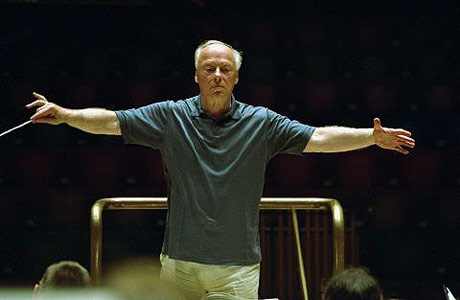
Bernard Haitink


This live recording pairs Richard Strauss' self-regarding tone poem Ein Heldenleben ("A Hero's Life") with Anton Webern's lush Im Sommerwind. It is a showcase for the 81-year old conductor Bernard Haitink, who draws beautiful sounds from the Chicago Symphony Orchestra. Haitink, who is finishing up a 4-year run as the CSO's Principal Conductor, has a particular touch for the late Romantics, with an affinity for Strauss' music. (His 1991 recording of Der Rosenkavalier is one of the finest in the catalogue.)


Ein Heldenleben is one of three autobiographical tone poems written by Strauss, that chronicle various aspects of his life in an odd form of "musical journalism" for large orchestra. (The other two are the Sinfonia domestica and the Alpine Symphony.) It is a popular Strauss work, but one that is regarded as "problematic" by music critics. That might be because the ever-blunt Strauss included a withering portrait of journalists in the second movement: "The Hero's Adversaries."

Mr. Haitink conducts Ein Heldenleben with passion and conviction. The opening is a stirring experience. The Love Scene is a mini-violin concerto within the work (really a portrait of the composer's wife, Pauline). Soloist Robert Chen plays with elegance, drawing out the long melodic lines that recall the best passages of Der Rosenkavalier and Die Frau Ohne Schatten Everything is perfectly balanced in The Hero's Battles, as surges of trumpets and horns clash with the string section in full flight. The winds take center stage for The Hero's Works of Peace, which quotes liberally from earlier Strauss works.

Im Sommerwind is the last gasp of tonality from Anton Webern before he embraced the discordant musical ideas of his teacher, Arnold Schoenberg. This 12-minute tone poem demands the full resources of both the orchestra and listener. Written in Webern's characteristic, compressed style, there is enough music here for an entire symphony. The work shifts between bird calls, percussive scrapes, and the buzzing of cicadas in the low winds. Lyric passages in the strings depict the rustle of leaves and grass, and the whole has a golden sheen of a hot day when the passing wind brings no cooling relief. It is a perfect pairing with Ein Heldenleben and rounds out this excellent document of Mr. Haitink and his Chicago forces in their element.

Trending on Superconductor

Translate

Share My Blog!

Share |

Critical Thinking in the Cheap Seats