Support independent arts journalism by joining our Patreon! Currently $5/month.

About Superconductor

Our motto: "Critical thinking in the cheap seats." Unbiased, honest classical music and opera opinions, occasional obituaries and classical news reporting, since 2007. All written content © 2019 by Paul J. Pelkonen. For more about Superconductor, visit this link. For advertising rates, click this link. Follow us on Facebook.
Showing posts with label Resurrection Symphony. Show all posts

Wednesday, October 31, 2018

Concert Review: It's Time to Rise

The Czech Philharmonic plays Mahler's Resurrection Symphony.
by Paul J. Pelkonen
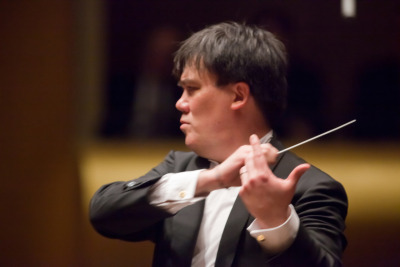
Semyon Bychkov in rapture. Photo by Chris Christodoulou.

In New York City, Gustav Mahler's Symphony No. 2, popularly known as the "Resurrection Symphony", is a work that is played in troubled times. It was performed by the New York Philharmonic after September 11, and on that event's tenth anniversary. So it is appropriate, given the roiling political climate in the United States in recent days, that it was the choice of the Czech Philharmonic for Sunday's concert at Carnegie Hall.

Tuesday, July 24, 2018

The Bernstein Legacy II: Mahler's Resurrection Symphony

The dead rise from their graves...slowly at Lincoln Center.
by Paul J. Pelkonen
Part II of an ongoing series on Superconductor.
(Ed. Note: A helpful reader pointed out that this recording was indeed made with the New York Philharmonic and not the Royal Concertgebouw as previously stated. This error was sourced from the Leonard Bernstein discography and has been corrected in the text below.)

Gustav Mahler (left), Leonard Bernstein (right) and the cover art by Erte for the Mahler Symphony No. 2.
Images © Deutsche Grammophon, the estate of Erte, and the New York Philharmonic.
For Leonard Bernstein, the Symphony No. 2 by Gustav Mahler became a calling card. It was heavily featured throughout his podium career, both in his days leading the New York Philharmonic and in the later years on the international conducting circuit. His recording of the Second for Deutsche Grammophon was made with the New York Philharmonic, his second with that orchestra. The New York Philharmonic one of three participating orchestras in what is referred to as his "second" Mahler cycle but is really his third.

Sunday, December 18, 2016

Concert Review: Mahler's Bones

Christian Gerhaher sings Gustav Mahler's lieder.
by Paul J. Pelkonen
Gerold Hubner (left) and Christian Gerhaher in recital at Wigmore Hall.
Photo by Simon Jay Price © 2014 Wigmore Hall.
The name Gustav Mahler conjures up mighty images. Enormous choral forces, battling huge orchestras as they shouti in terror or triumph. A giant hammer, slamming out a crushing blow of fate at the close of his Sixth Symphony. Or the terrors of the nursery and the grave, present in equal proportion in his Fourth. None of those elements were present on Saturday night, as the longtime pair of baritone Christian Gerhaher and pianist Gerold Huber played a program of Mahler's lieder for a rapt audience at Lincoln Center's Alice Tully Hall.

Sunday, September 11, 2016

On That Day

Brief Reflections on September 11.
by Paul J. Pelkonen

There's no escaping what day this is. This is the fifteenth anniversary of September 11, 2001, the day that terrorists hijacked four jet planes and destroyed the World Trade Center and part of the Pentagon. This is always a hard day for us New Yorkers.

Saturday, November 1, 2014

Concert Review: The Five-Headed Dragon

The Philadelphia Orchestra Resurrects the Mahler Second.
by Paul J. Pelkonen
Yannick Nézet-Séguin.
Photo by Marco Borggreve from the conductor's official site.
Half a century ago, a young conductor named Leonard Bernstein brought the symphonies of Gustav Mahler to the attention of concert-goes around the world. Since then, Mahler's symphonies, and particularly his Symphony No. 2 (known by the unofficial nickname Resurrection) have been a touchstone of the podium. On Halloween night, Philadelphia Orchestra music director Yannick Nézet-Séguin staked his claim as a Mahlerian on Bernstein's old stomping grounds: the Perelman Stage at Carnegie Hall.

Sunday, September 11, 2011

Concert Review: Honoring (and Raising) the Dead

Alan Gilbert leads the Philharmonic's 9/11 Memorial Concert
The Rising: Alan Gilbert conducts Mahler's Resurrection Symphony.
Photo by Chris Lee © 2010 The New York Philharmonic
Music director Alan Gilbert led the New York Philharmonic in an expansive performance of Mahler's Resurrection Symphony on Saturday night. The free concert at Avery Fisher Hall was to recognize the tenth anniversary of the terror attacks of Sept. 11th. The audience was divided between first responders, survivors, families of those killed, and those music-loving New Yorkers who started lining up in Lincoln Center Plaza at 7am.

The history of the New York Philharmonic is intertwined with Mahler and his Second Symphony, a weighty, 85-minute piece requieing two vocal soloists and a large chorus in its concluding movement. Mahler served as the Philharmonic's music director in the last two years of his life. Another music director, Leonard Bernstein, built his reputation (and Mahler's) with frequent performances of the Resurrecton, often leaping into the air at climactic moments.

Mr. Gilbert didn't leap, but he brought tension and energy to the Totenfeier, the long funeral march that opens the symphony. The growling low strings were answered by the orchestra's brass, establishing a solemn mood and driving up towards a mighty climax. Then the palette lightened, as the strings and wind introduced uplifting melodies that anticipated the work's transcendent finish. When the movement paused before the start of the development, the audience, thinking it was over, applauded the players for a moment.

Gustav Mahler.
The second movement offers contrasting lyricism as the strings stepped lightly through a pastoral andante. Mr. Gilbert then drove hard into the scherzo, an instrumental re-working of the song Des Antonius von Padua Fischpredigt ("St. Anthony of Padua's Sermon to the Fishes") from the song-book Des Knaben Wunderhorn. The orchestra recreated the evangelical efforts of Saint Anthony, who preached to the fishes when no-one else would listen. These two movements represent a farewell of sorts to the good things of earthly life, setting the stage for the cosmic apocalypse to come.

The fourth movement is another Wunderhorn song: "Urlicht." Accompanied by a slow, breathing orchestra, mezzo-soprano Michelle DeYoung rose to sing this text with slow, gravid majesty. The singer spooled out the rich melodic lines, injecting real faith into the poet's plea for redemption amidst the suffering of mankind. The orchestra played Mahler's complex, shifting accompaniment with power, warmth, and a golden flow of sound.

The finale of the Mahler Second is longer than Beethoven's Fifth. It is several movements in one: a massive structure that narrates the revelation, the day of judgement, the last trumpet, and the dead physically rising from their graves and marching up a metaphysical stairway to heaven. And all that happens before the chorus comes in.

The heavy, stentorian opening blared out with emphatic force. Mr. Gilbert drew inspired music-making from the veteran winds and strings, playing the uplifting main themes with emotion missing with some other conductors. But the drive and momentum slowed down in the middle, making Dorothea Roschmann's gorgeous soprano solo sound a little vague. The movement picked up only with the exquisite nightingale-song that announces the arrival of the chorus.

The choral part of this symphony builds slowly, entering with quiet phrases and eventually building to a triumph of the forces of light. The singers seemed to find fresh inspiration as they moved from Klopstock's poem Resurrection into the extended stanzas written by Mahler himself. It was as if the composer's words suddenly brought his dynamic presence to the proceedings. Soprano Dorothea Roschmann and Ms. DeYoung joined the triumphant surge of sound, and this mighty symphony ended with a powerful, rising swell that left the audience, and perhaps the entire city, in an elevated state.

Monday, August 29, 2011

Free Mahler Concert Marks September 11

New York Philharmonic Announces Ticket Distribution Details for Free Concert
Alan Gilbert leads the New York Philharmonic.
Photo by Chris Lee © 2010 New York Philharmonic
Details are available for the New York Philharmonic's upcoming FREE concert in memory of the victims of the terrorist attacks of September 11, 2001. The concert, which takes place the day before the tenth anniversary of the attacks, will be held at Avery Fisher Hall on Sept. 10 at 7:30pm.

The program: Gustav Mahler's Symphony No. 2, subtitled the Resurrection. Philharmonic music director Alan Gilbert will conduct. Featured artists are soprano Dorothea Roschmann, mezzo-soprano Michelle DeYoung and the New York Choral Artists.


In a statement, Mr. Gilbert said:
"Mahler‘s Second Symphony, Resurrection, powerfully and profoundly explores the range of emotions provoked by the memories of 9/11. This great masterpiece has a very special place in the history and psyche of the New York Philharmonic, but its message of renewal and rebirth is universal. We offer it as a tribute to those lost ten years ago."

Tickets for the free concert will be distributed starting at 4pm at Josie Robertson Plaza at Lincoln Center on Saturday, September 10, the day of the concert. Tickets are first-come, first-serve with a ticket limit of two per person.

Additionally, the Philharmonic is offering priority ticket access to the families of 9/11 victims, first responders and survivors; members of this community may request a pair of tickets in advance by e-mailing concertfornewyork@nyphil.org by September 1, 2011.

Mahler's Resurrection Symphony has pride of place in the New York Philharmonic's history. Mahler himself served as music director of the orchestra from 1909-1911, and conducted the work (which requires a large orchestra and chorus in addition to vocal soloists) on several occasions during his tenure.

Leonard Bernstein, who did much to improve the stature of Mahler's music over the course of his long career, made the Resurrection a regular part of his repertory. He also recorded the work twice with the New York Philharmonic, once as part of a complete cycle of Mahler symphonies for CBS, and again for DG in 1987.

The concert will be broadcast on PBS on September 11 as part of the Great Performances series. A CD and DVD release is planned for October. The New York Philharmonic will also feature encore performances of the Resurrection Symphony as part of their regular subscription season. For more information and to order tickets, visit the orchestra's official website at NyPhil.Org.

Trending on Superconductor

Translate

Share My Blog!

Share |

Critical Thinking in the Cheap Seats